Jodhpur for Photography Lovers: Best Places & Experiences
Jodhpur hands a photographer a rare combination in one compact city: a blue-washed old town, a sandstone fort with real scale, sharp desert light, and street scenes that need no dressing up. I grew up under that light without ever thinking about it; most visitors work out within an hour why people cross the world to shoot it. This guide to Jodhpur for photography lovers covers where to point the camera, when to show up, and how to plan the trip around getting the shot rather than just seeing the sights.
The Blue Lanes: Jodhpur’s Signature Shot
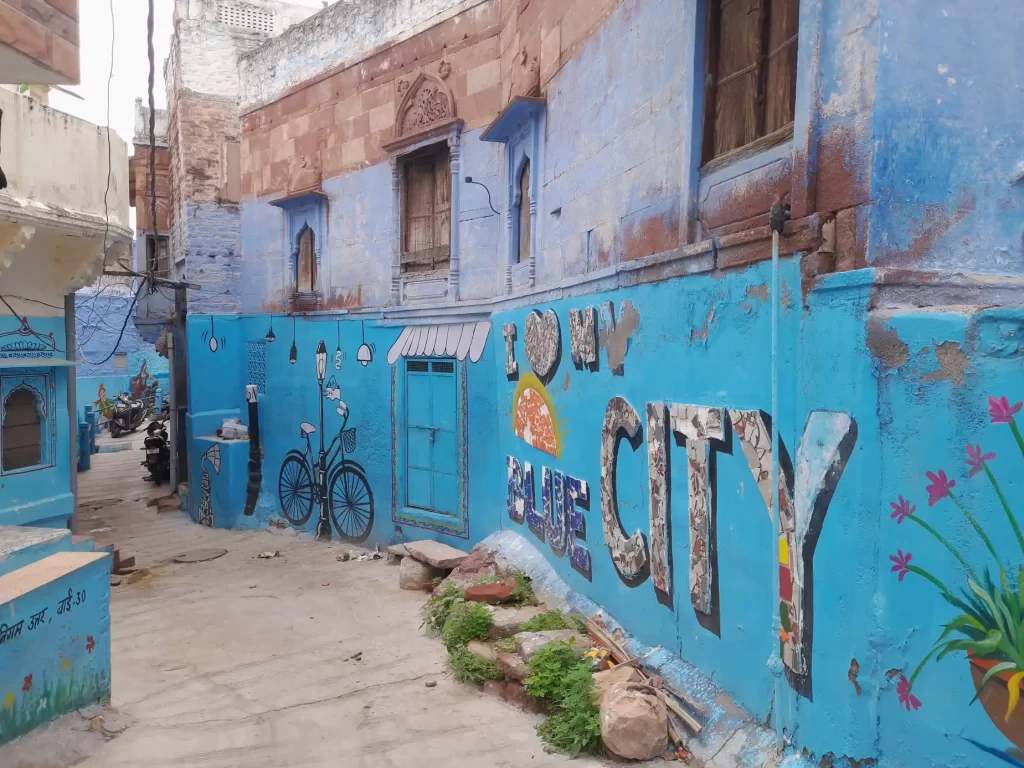
The neighbourhoods below Mehrangarh, washed in shade after shade of blue, are the city’s most recognizable subject — and they photograph as two different places depending on where you stand. From the fort’s elevated viewpoints they become the classic wide panorama. Down inside the lanes, in soft morning light, the same blue turns textured and domestic: doorways, worn steps, a freshly repainted wall next to one fading. Both versions belong in the set. The second one is where the city actually lives.
Mehrangarh Fort’s Photographic Range
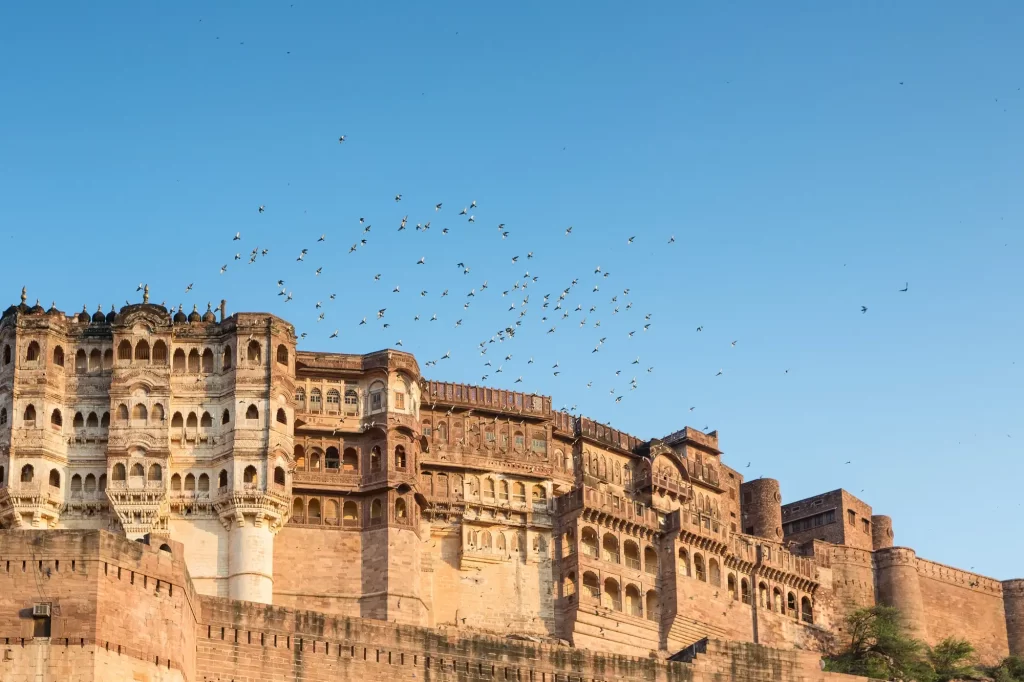
The fort covers more ground than most photographers expect on a first visit — carved sandstone facades, sweeping courtyard views, and the sheer drop to the blue city below. Plan the visit around the hour before sunset, when low light turns warm against the stone and the carving throws real shadow. Midday flattens those same walls into beige.
Toorji Ka Jhalra Stepwell
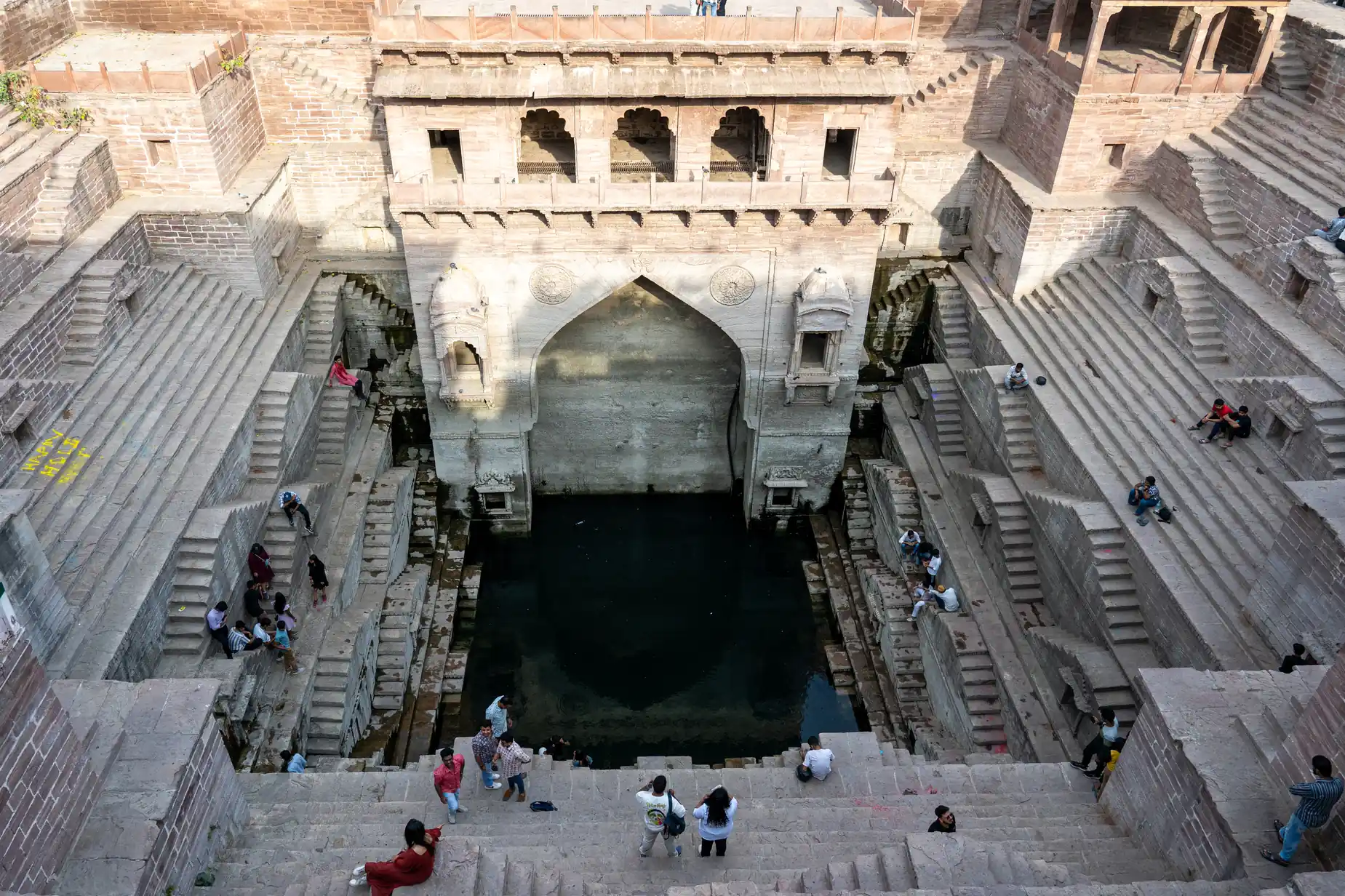
The restored stepwell is quieter than the main blue-city viewpoints and geometrically unlike anything else on this list. Its repeating stone steps reward symmetry — shot from directly above, or from a low angle that lets the pattern stack. Go early: by late morning the steps fill up with people, and the composition becomes a different photograph altogether.
Street and Market Photography
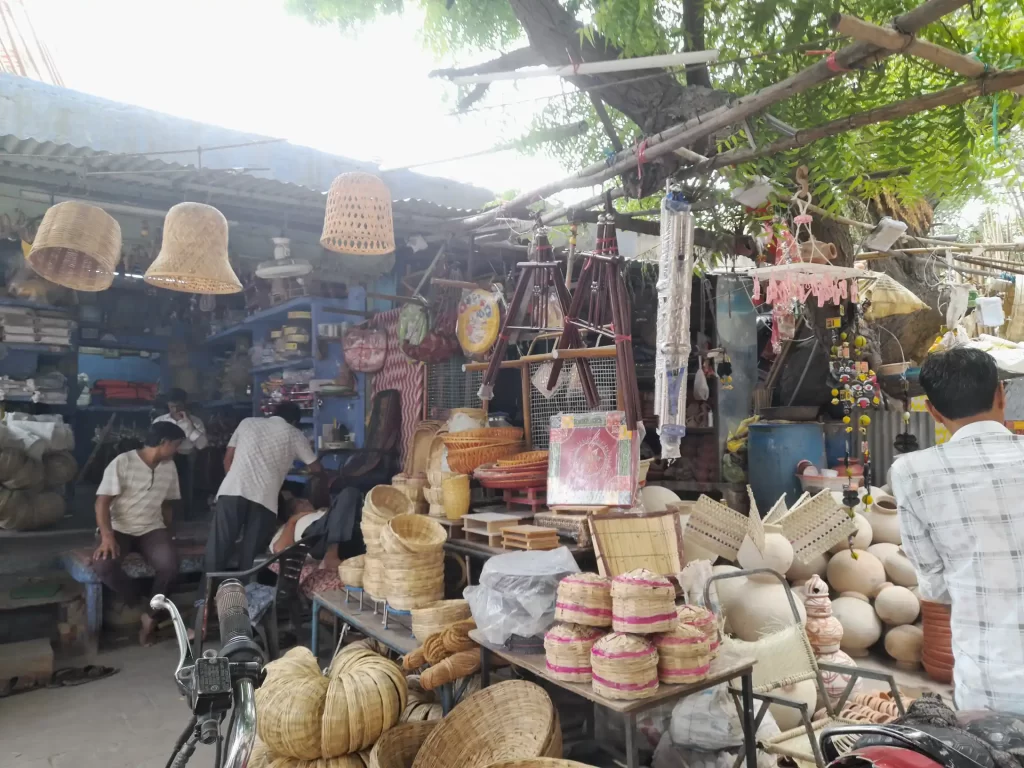
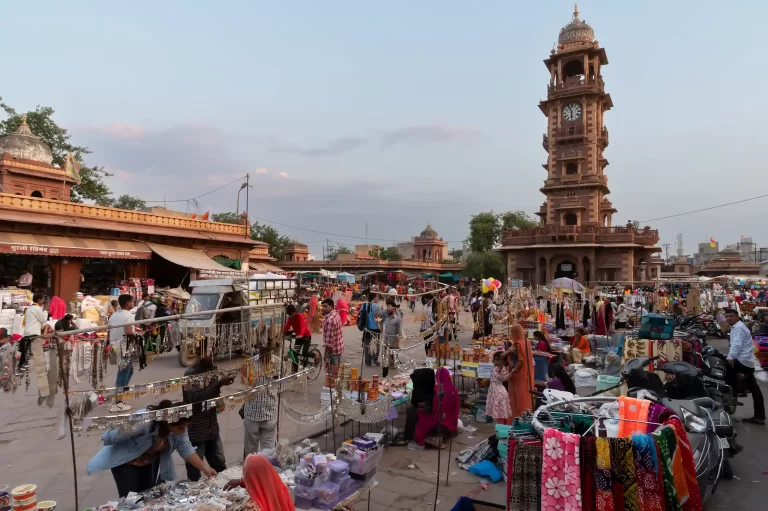
Sardar Market and the lanes around the Clock Tower are the city’s best street ground — candid, busy, and visually dense from early morning onward. Wide market scenes work fine from a respectful distance; for anything closer than that, the portrait etiquette below applies in full.
Portraits and Local Life
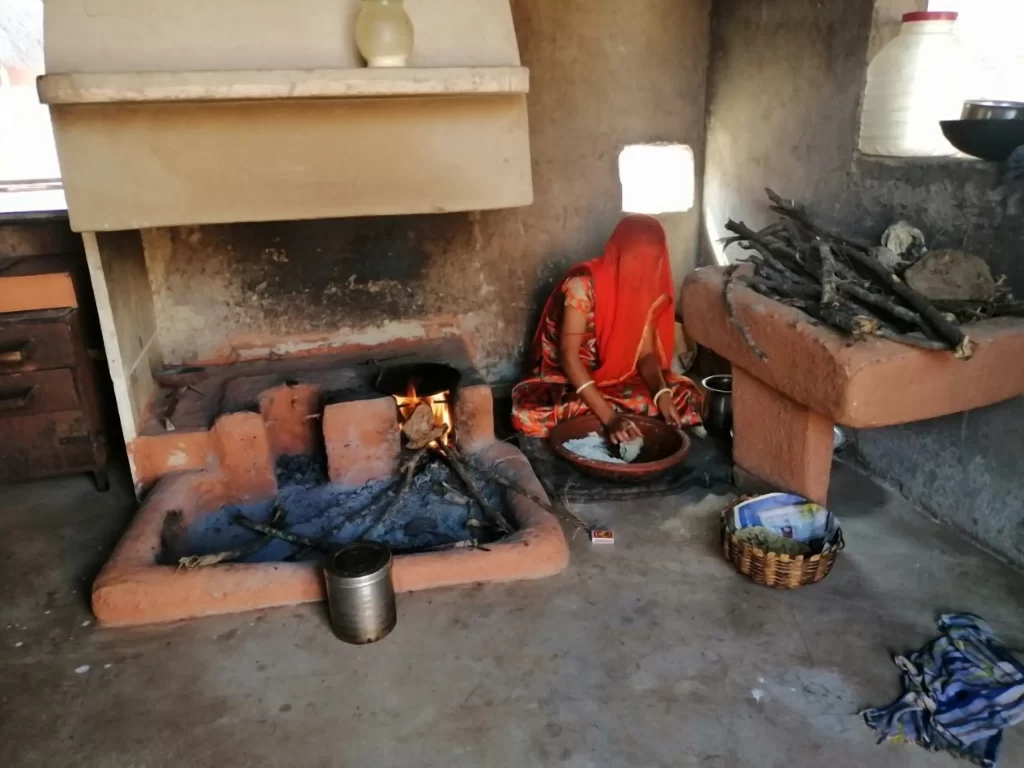
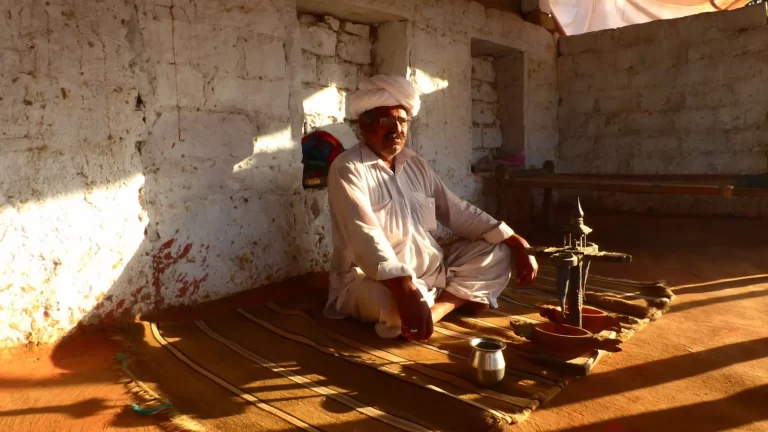
Portrait work here deserves to be treated as its own discipline rather than an afterthought to street shooting. The blue lanes offer real environmental portraiture — residents are often willing to be photographed if asked first, and a person in the frame gives the architecture a scale and warmth it lacks on its own. Around the old city, textile workshops, pottery studios, and metalwork artisans let you document traditional crafts in process; supporting the work with a purchase or a small tip in exchange for the photo is the fair trade, and it is generally how it is received best. Some photographers go further and arrange willing subjects in traditional Rajasthani dress against the blue backdrop — those staged frames produce some of the most widely shared images associated with Jodhpur, but they are a deliberate exercise, not street work.
The etiquette is not complicated, and it matters more to me than any technical advice in this post: the people in these lanes are neighbours, not scenery. Ask before photographing individuals, especially inside temples or private homes. A smile and a gesture toward the camera communicates the request across any language barrier — and a photo taken with consent is consistently more relaxed and more natural than one taken without it.
Night Photography
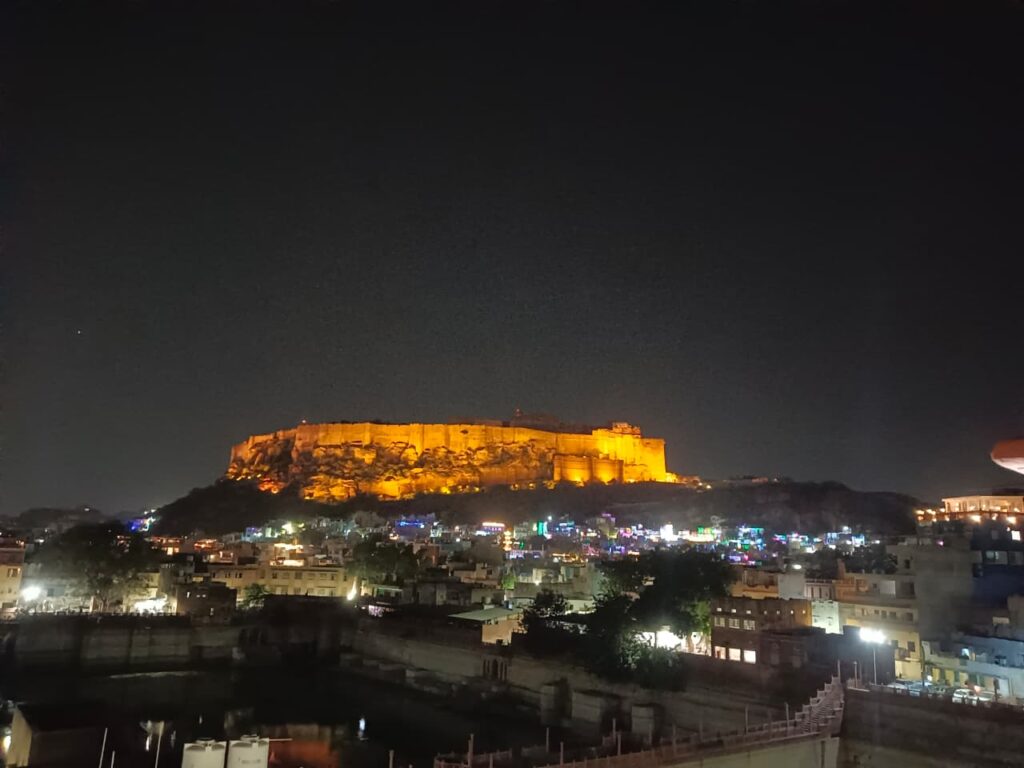
After dark, the illuminated fort seen from old-city rooftops — paired with the warmly lit market lanes below — gives long-exposure work a completely different character from the daytime blue-city material. Build it into the itinerary as its own session rather than an afterthought at the end of a tired day.
Photographing Jodhpur’s Festivals
The Marwar Festival and the Rajasthan International Folk Festival (RIFF) bring costumes, folk performers, and colour-dense crowd scenes that read entirely differently from the city’s usual architecture-led compositions. If the dates line up with your travel window, they are worth planning the trip around.
Drone Photography
Drone use around Mehrangarh and other heritage sites is restricted or prohibited in many areas for security reasons. Confirm current regulations before planning any aerial work — do not assume it will be allowed on arrival.
Best Light: Time of Day and Time of Year
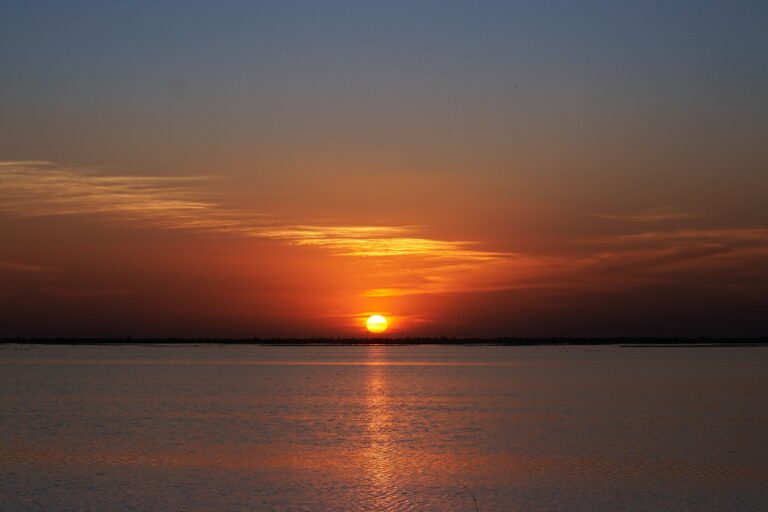
Early morning and the hour before sunset consistently produce the most flattering light for both the blue city and the fort’s stonework; midday sun flattens colour and contrast on both. Across the year, winter brings the clearest skies and the most comfortable shooting conditions, while the brief monsoon occasionally stacks dramatic cloud over the fort — a different photograph, if you are willing to plan around the uncertainty. At the well-known viewpoints, arriving before the busiest midday hours gets you better light and fewer people in frame at the same time.
Gear and Practical Notes
A versatile mid-range zoom covers most fort and street scenarios, and a wider lens earns its place for the sweeping panoramas from the upper ramparts. That two-lens kit usually beats carrying more through narrow, crowded lanes where quick changes are impractical. The dry, dusty climate makes a lens cloth and a protective bag standard equipment rather than optional — and be careful about changing lenses anywhere open and windy, especially on desert-adjacent day trips. Back up the day’s photos every evening, to a laptop, a drive, or cloud storage where connectivity allows; it is a small habit set against a real risk on a longer trip. When editing, the blue-and-gold palette that defines Jodhpur holds up best with restraint — natural saturation, not heavy stylization.
Planning Jodhpur for Photography Lovers: Fitting the Days Together
With one day: start at the fort for sunrise light, move through the blue lanes mid-morning, break during the harsh midday hours, then finish at a rooftop viewpoint for sunset. That covers the key subjects in a single well-paced day. With three days or more, Jodhpur for photography lovers becomes a different trip — the fort at different times of day, the lanes without hurry, market portraits, and at least one outlying excursion; Osian’s desert landscape pairs naturally with the urban blue-city material.
More than most destinations, this city rewards slowing down: the best shots usually come from returning to the same spot at a different hour, not from covering more ground. And if the visit is short, a guided photo walk is worth the booking — a handful of local photographers run them through the old city, with rooftop access and timing knowledge that is hard to work out independently in a few days.
Building Out Your Portfolio
Combine the fort and architecture work with market scenes, portraits, and a desert excursion, and the collection leaves Jodhpur spanning urban blue to open desert. The blue-and-gold identity translates well to large-format prints, so it is worth shooting with eventual physical display in mind. For a broader Rajasthan portfolio, this material sits distinctively alongside Jaisalmer’s golden sandstone or Udaipur’s lakesides. However long the first visit runs, Jodhpur for photography lovers is not a one-trip destination — the fort, the lanes, and the desert keep offering different pictures at different hours, and the city will still be here, blue and patient, for the next one.
FAQ
What makes Jodhpur great for photographers?
The blue old city, dramatic fort architecture, and strong golden-hour light throughout.
What’s the best photography subject in Jodhpur?
The blue-washed old city, best captured from Mehrangarh Fort’s elevated ramparts.
Are guided photography walks available in Jodhpur?
Yes, some local photographers offer guided walks with insider location knowledge.
What time of day suits photography best?
Early morning and the hour before sunset offer the most flattering light.
Is drone photography allowed in Jodhpur?
Drone use is restricted around heritage sites, so check current rules before flying.