Jodhpur Travel Guide: Best Time, Transport, Stay & Costs
This is the practical guide to actually planning a Jodhpur trip — when to go, how to get there and around, where to stay, what it costs, and the safety and logistics questions most first-time visitors have before booking. Everything else in our Jodhpur guides assumes you’ve already sorted these basics; this is where to start if you haven’t. For a single fuller walkthrough covering all of this in one article, see our complete Jodhpur travel guide.
Best Time to Visit Jodhpur
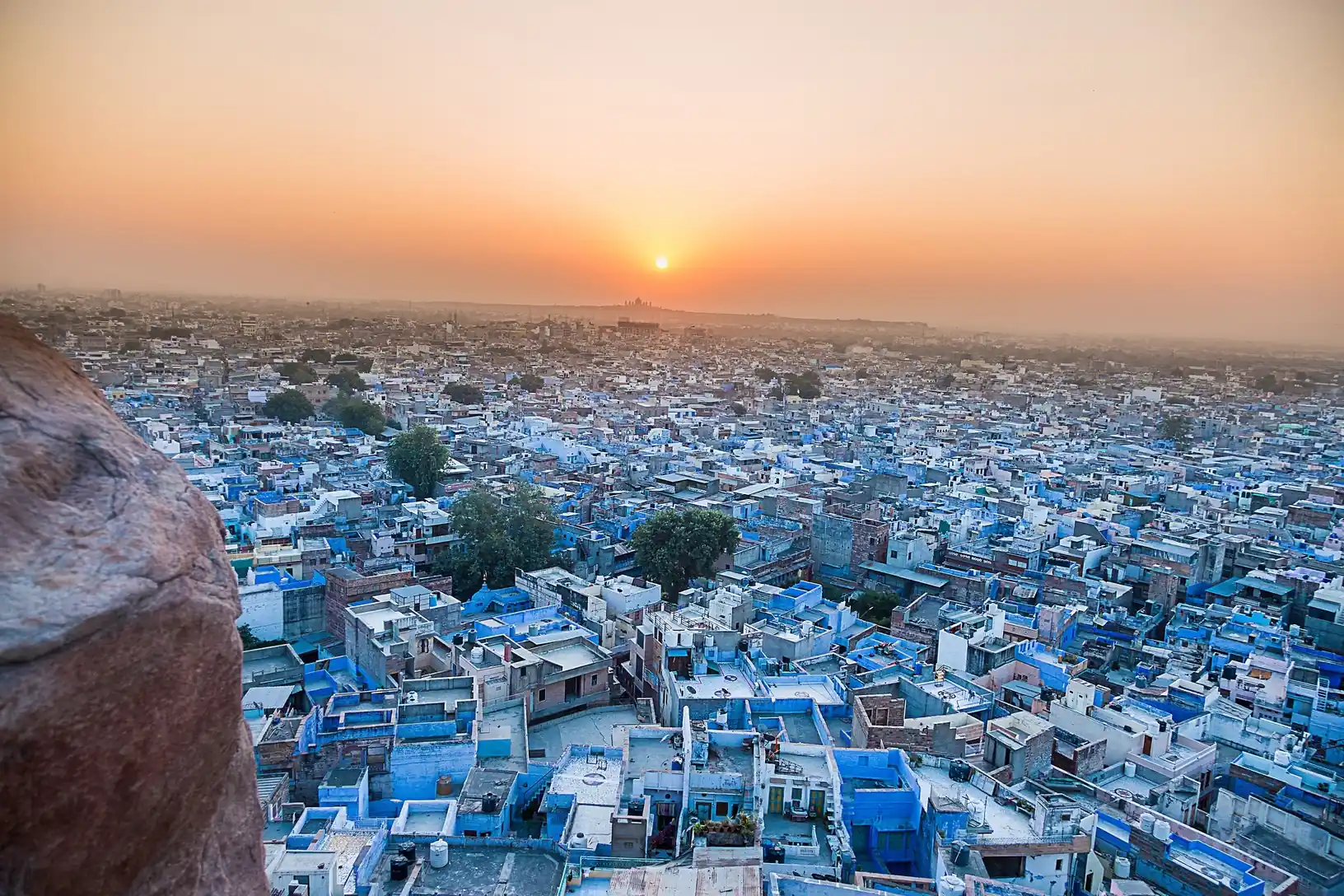
October through March is comfortably the best window, with daytime temperatures typically in the low-to-mid 20s°C and cool, sometimes properly cold, evenings — pack a warm layer for December and January nights especially. This period also covers most of Jodhpur’s major festivals, including RIFF and Diwali. April through June brings serious heat, frequently above 40°C by midday, making outdoor sightseeing considerably more demanding, though indoor sights like Umaid Bhawan Palace’s museum remain comfortable with early starts and midday breaks. July to September, the monsoon months, are quieter and greener than most visitors expect, with lower accommodation prices offsetting the risk of occasional heavy showers. See our full breakdown of Jodhpur’s weather and festival seasons for month-by-month detail.
How to Reach Jodhpur
Jodhpur Airport (IATA code JDH) has direct flights from Delhi, Mumbai, and Jaipur among other Indian cities, with Delhi the best-connected route, operated by Air India, Air India Express, and IndiGo. By rail, the Jodhpur–Delhi Cantonment Vande Bharat Express covers the roughly 604 km route in about eight hours, running six days a week, and is generally the fastest and most comfortable rail option from Delhi; additional trains connect Jodhpur to Mumbai, Jaipur, and other major cities, with journey times and frequency varying by route and worth checking directly on India’s rail booking system for current schedules. By road, Jodhpur connects to Jaipur (roughly 340 km), Udaipur (roughly 250 km), and Jaisalmer (roughly 280 km) via reasonable highway conditions, with private car, bus, and shared taxi all viable options depending on budget and time. Our dedicated guide to reaching Jodhpur by flight, train, and road covers each option in more depth.
Jodhpur Airport to City
Jodhpur Airport sits close to the city centre, generally a short drive of well under half an hour to most old-city hotels under normal traffic. Pre-paid taxi counters inside the terminal offer a straightforward, fixed-price option for arriving visitors, and most hotels can also arrange airport pickup directly, generally a more convenient option for late-night or early-morning arrivals than relying on the taxi counter or app-based options, which have patchy coverage in Jodhpur compared to larger Indian cities. See our Jodhpur airport transport guide for the full range of options.
Jodhpur Railway Station
Jodhpur Junction, the city’s main railway station, is a similarly short distance from most old-city accommodation, with auto-rickshaws and taxis readily available immediately outside. As with the airport, arranging a hotel pickup in advance is generally the smoothest option for late or early train arrivals, particularly for first-time visitors unfamiliar with the local auto-rickshaw negotiation process. Our Jodhpur Railway Station guide also covers what’s worth seeing near the station itself.
How to Get Around Jodhpur
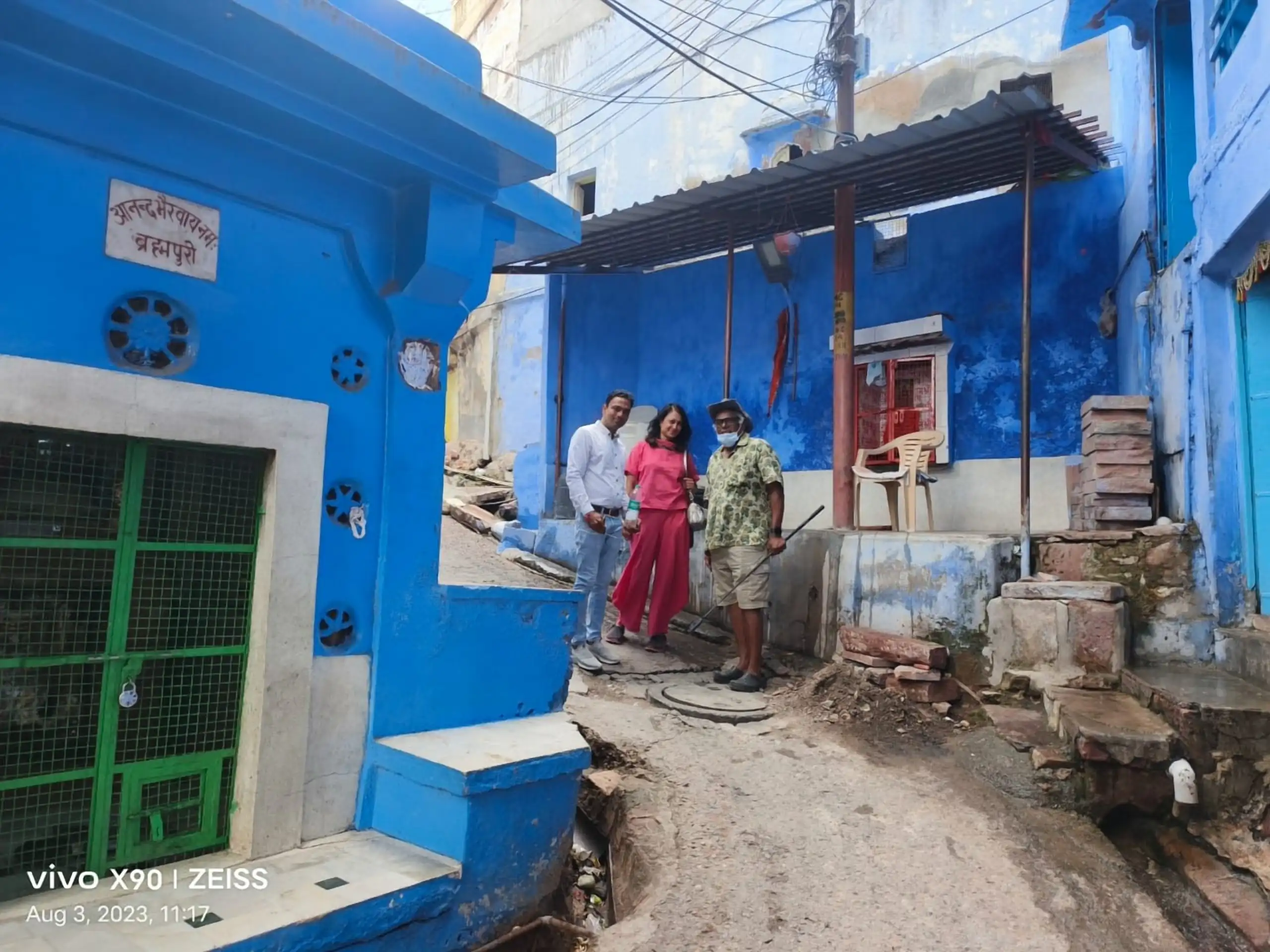
The old city’s sights cluster closely enough together that walking, combined with short auto-rickshaw hops, covers most of a typical itinerary. Auto-rickshaws are the most common short-distance option, with fares best agreed before starting the ride rather than assuming a metered fare will be used. For sights further from the centre — Umaid Bhawan Palace, Mandore Gardens, Kaylana Lake — a taxi or a pre-booked driver for the day is more practical than stringing together multiple auto-rickshaw rides. Ride-hailing apps have limited and inconsistent coverage in Jodhpur compared to Delhi or Mumbai, so don’t rely on them as a primary transport plan. Our full guide to getting around Jodhpur covers auto-rickshaw etiquette and day-driver hire in more detail.
Where to Stay in Jodhpur: Best Areas
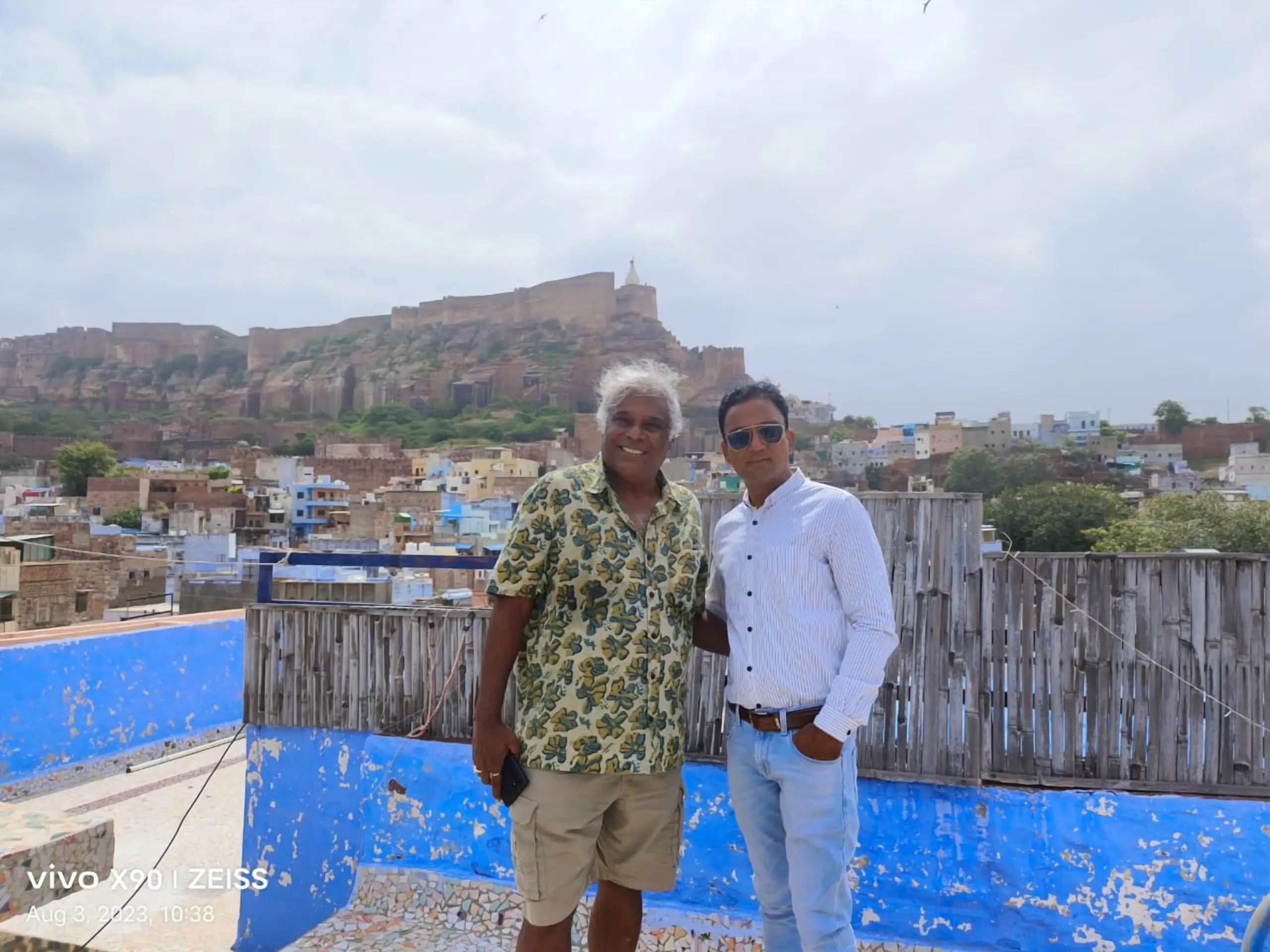
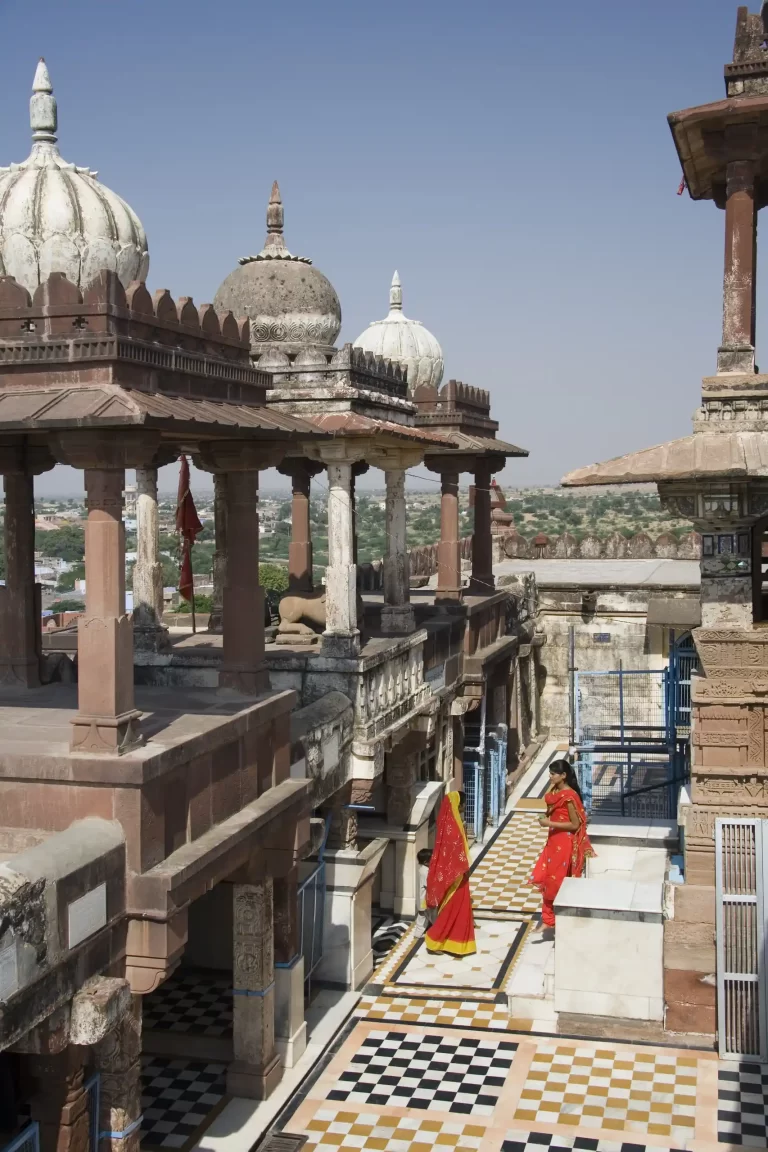
The old city, within or near the walls beneath Mehrangarh Fort, is the most atmospheric base, with a wide range of heritage guesthouses and boutique hotels, many converted from traditional havelis, offering rooftop views toward the fort — the trade-off is navigating narrow lanes, which some vehicles can’t access directly. The area around Umaid Bhawan Palace and the newer parts of the city offer larger heritage and luxury hotels with easier vehicle access and more modern amenities, at the cost of being a short drive rather than a walk from the old-city sights. For most first-time visitors prioritising atmosphere and walkability to the fort, the old city is the stronger choice; for those prioritising comfort, space, and easier logistics, the newer areas around Umaid Bhawan Palace are worth considering. See our full breakdown of Jodhpur’s best neighborhoods to stay in for a closer comparison.
Jodhpur Travel Safety Tips
Jodhpur is generally considered one of the more manageable and lower-hassle Rajasthan cities for visitors, including solo and first-time travellers. Standard precautions apply: agree auto-rickshaw and taxi fares before starting a ride, keep bags secured and close in crowded market areas, drink bottled or filtered water, and be cautious of unsolicited “guides” approaching near the fort entrance or old-city lanes — a licensed guide arranged through your hotel or a reputable operator is a safer and generally better-value alternative. Traffic, rather than crime, is the more relevant everyday hazard — old-city lanes see a mix of pedestrians, motorbikes, and the occasional vehicle in tight spaces, so stay alert when walking. Our dedicated Jodhpur safety guide covers this in more depth.
Jodhpur Travel Costs
Costs vary enormously by travel style, but as a rough framework: budget travellers relying on guesthouses, street food and local restaurants, and public or shared transport can manage a comfortable day on a modest budget; mid-range travellers staying in boutique heritage hotels, eating at a mix of local and visitor-oriented restaurants, and using a private driver for day trips will spend meaningfully more; and luxury travellers staying at properties like Umaid Bhawan Palace’s hotel wing, with private guides and premium dining, should budget considerably higher again. Entry fees at major monuments, particularly for international visitors, add a noticeable but not huge line item on top of accommodation, food, and transport, and are worth budgeting for explicitly given how the tiered pricing structure at sites like Mehrangarh Fort works. See our detailed Jodhpur travel costs breakdown for real budget-to-luxury figures.
Connectivity and SIM Cards
Mobile coverage across central Jodhpur, including the old city and fort, is generally reliable, with major Indian carriers offering good 4G coverage; connectivity thins out somewhat once you’re further into the surrounding countryside on a day trip. International visitors typically find it easiest to arrange a local SIM card either on arrival at the airport or through a hotel, since some Indian carriers require documentation that’s simpler to complete in person at an official outlet than to arrange remotely in advance. International roaming through your home provider is an alternative, generally more expensive but requiring no local paperwork.
Money, Payments, and ATMs
ATMs are widely available in the newer parts of the city and reasonably accessible from the old city as well, though it’s worth withdrawing enough cash for a day or two at a time rather than relying on finding an ATM whenever needed, particularly if planning a day trip to smaller towns like Khimsar or Nagaur where ATM access is more limited. Cards are widely accepted at hotels, established restaurants, and larger shops, while smaller vendors, street food stalls, and auto-rickshaws generally expect cash. UPI-based digital payment, ubiquitous across urban India, is increasingly accepted by smaller businesses too, though this typically requires an Indian bank account or specific traveller-focused UPI services rather than being usable directly from a foreign card.
What to Pack for Jodhpur
- Layers for winter evenings: Daytime warmth and night-time cold can differ dramatically, especially December through February.
- Comfortable, closed walking shoes: The old city’s lanes and the fort’s uneven stone surfaces both call for sturdy, broken-in footwear rather than sandals.
- Modest clothing: Shoulders and knees covered are appreciated at temples and palace interiors.
- Sun protection: A hat, sunglasses, and sunscreen matter year-round given Jodhpur’s consistently strong desert sun.
- A basic first-aid and rehydration kit: Standard travel precautions for stomach upset and dehydration are worth having on hand, particularly during hotter months.
Health Precautions
Beyond sticking to bottled or filtered water, standard travel health precautions for India apply in Jodhpur — being cautious with raw, unpeeled produce and street food from stalls with low turnover, carrying basic rehydration salts for hot-weather travel, and checking with a travel health provider well ahead of departure regarding any recommended vaccinations for your specific circumstances and itinerary. Pharmacies are widely available in the city for common over-the-counter needs, and most reputable hotels can advise on or arrange access to a doctor if needed during your stay.
Language
Hindi and Marwari are the primary local languages, but English is widely spoken across the tourism industry — hotels, guides, and most restaurants in visitor-frequented areas — making language a minor practical concern for most visitors. Learning a few basic Hindi greetings is appreciated but not necessary for a comfortable trip.
Booking Accommodation: Timing and Considerations
Peak season (roughly November through February, and especially around Diwali and RIFF) sees the tightest availability and highest prices at Jodhpur’s better-known heritage properties, so booking a month or more ahead is worthwhile for these periods. Shoulder season (October, March) and the quieter monsoon months offer noticeably better rates and availability, often at the same properties, for travellers with flexible dates. Heritage havelis in the old city, in particular, tend to have limited room counts, so popular properties can sell out well ahead of the date during peak weeks even when larger hotels elsewhere in the city still have availability.
Electricity and Practical Odds and Ends
India uses Type C, D, and M plug sockets and a 230V supply — a universal travel adapter covers this without issue for most visitors’ devices. Power cuts are less common in tourist-oriented areas than in past decades, but many hotels and guesthouses maintain backup generator or inverter systems as a matter of course, particularly during the hotter months when air conditioning load is highest.
A Final Practical Note
Jodhpur’s combination of a well-connected airport, solid rail links to Jaipur and Delhi, and a distinctly walkable, if hilly, Old City core makes it one of the more logistically straightforward Rajasthan cities to navigate independently, provided travelers plan around the desert climate’s more extreme seasonal swings compared to other parts of the state. Not sure how long to budget for the trip itself? Our guide to how many days you need in Jodhpur breaks down realistic itinerary lengths.
Booking accommodation and any private transport in advance during the busy winter season remains the single most valuable piece of practical preparation for a smooth Jodhpur trip. For quick answers to the questions that come up most often, see our Jodhpur travel FAQs.
FAQ
What is the best time to visit Jodhpur?
October through March offers the most comfortable weather for sightseeing and outdoor exploration.
How do I get to Jodhpur?
Flights, trains, and buses all connect Jodhpur to major Indian cities reliably.
Where should I stay in Jodhpur?
Areas near the old city and Mehrangarh Fort offer the most convenient, atmospheric stays.
How much does a Jodhpur trip typically cost?
Costs vary widely by accommodation choice, though mid-range trips remain reasonably affordable.
Is Jodhpur safe for travelers?
Yes, with standard travel precautions, Jodhpur is considered a safe destination for most visitors.