Jodhpur Textiles: Bandhani, Block Prints & Traditional Fabrics
Jodhpur’s textile traditions represent some of the finest craftsmanship in Rajasthan, built around techniques passed down through generations of specialised artisan families, including the distinctive bandhani tie-dye method and intricate hand-block printing that together define much of the region’s visual textile identity. For travellers with a particular interest in fabric and traditional textile arts, Jodhpur textiles offer a distinctly deep well of craftsmanship to explore, from simple scarves to elaborate hand-finished garments and home furnishings, even though several of these techniques are sourced from across the wider Rajasthan and Gujarat craft region rather than produced in Jodhpur alone.
Bandhani: The Art of Tie-Dye
Bandhani involves tying tiny sections of fabric before dyeing, creating distinctive dotted patterns once the ties are removed, a labour-intensive technique requiring considerable skill and patience, with finer, more detailed bandhani work commanding correspondingly higher prices reflecting the time and precision involved in its creation. Rajasthan and Gujarat both have long-standing bandhani traditions with somewhat different colour and design conventions, and Jodhpur functions as a major selling point for the technique alongside its own regional production, so travellers will find bandhani sourced from across this wider craft belt in the city’s markets.
Block Printing Techniques
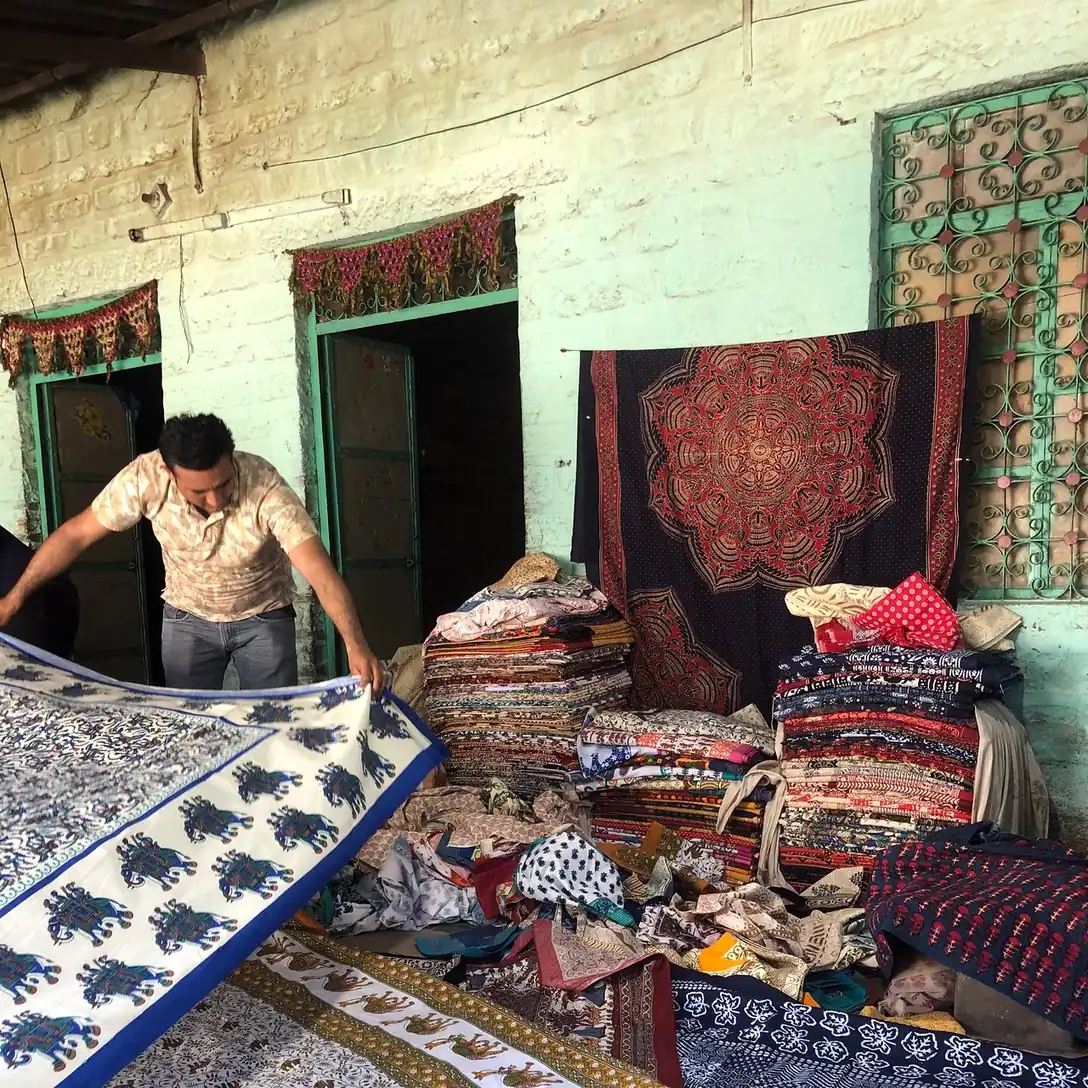
Hand-block printing uses carved wooden blocks, often with organic dyes, with genuine hand-printed pieces showing subtle, characterful irregularities in pattern alignment that distinguish them from mechanically printed imitations. Sanganer and Bagru, near Jaipur, remain Rajasthan’s primary block-printing centres, and Jodhpur functions more as a strong retail market for the craft than a major production hub, though a handful of smaller workshops around the city do continue small-scale printing as part of the broader Rajasthani tradition.
Leheriya: The Wave Pattern Technique
Leheriya, a related tie-dye technique producing distinctive diagonal wave-like stripes, is closely associated with Jodhpur and the wider Marwar region specifically, traditionally used in turbans and sarees and linked to the monsoon season and festive occasions, making it a distinctly regional specialty set apart from the more widely produced bandhani. It’s often found alongside bandhani in Jodhpur’s textile shops and offers travellers another visually striking traditional pattern option beyond the more common dotted bandhani design.
Traditional Fabric Types
Cotton remains the dominant fabric for Jodhpur’s traditional textiles given the region’s hot climate, though silk pieces, often reserved for more formal or ceremonial garments, are also widely available, offering travellers a range of fabric weights and formality levels depending on intended use.
Where to Buy Quality Textiles
Both Sardar Market’s traditional stalls and the boutique shops surrounding Toorji Ka Jhalra offer textile shopping, with the market stalls generally offering lower prices and room for negotiation, while boutique shops provide a more curated, higher-quality selection at fixed, generally higher prices. For Jodhpur textiles specifically, established shops around Sardar Market and the Nai Sarak lanes offer the most reliable selection of traditional Jodhpur and Marwar textiles, with quality and authenticity generally correlating with a shop’s longevity and reputation rather than its proximity to the main tourist circuit.
Textile Workshops and Demonstrations
Several textile-focused workshops around Jodhpur welcome visitors to observe the block-printing or bandhani process firsthand, offering an educational look at the skill and time involved in producing high-quality traditional textiles.
Natural Versus Synthetic Dyes
Traditional textile production historically relied on natural dyes derived from plants and minerals, and while synthetic dyes have become more common for cost and consistency reasons, some artisan workshops and higher-end shops still offer naturally dyed pieces, generally at a premium price reflecting the more labour-intensive and less predictable natural dyeing process.
Home Textiles and Furnishings
Beyond clothing and scarves, Jodhpur’s textile shops offer an extensive range of home furnishing items including bedspreads, cushion covers, and table linens featuring traditional block-printed and bandhani patterns, popular among travellers looking to bring a distinctly Rajasthani decorative element into their home décor.
Caring for Traditional Textiles
Hand-dyed and hand-printed textiles often require gentler care than typical modern fabrics, including hand-washing in cold water and avoiding harsh detergents that could cause colours to fade prematurely, particularly for bandhani and leheriya pieces using traditional rather than colourfast modern dyes, information worth asking about at the point of purchase to properly preserve a textile investment.
Distinguishing Quality Textiles from Imitations
Genuine hand-block-printed and bandhani textiles typically show slight irregularities and variation between pieces, along with natural dye characteristics like slight colour variation, whereas machine-produced imitations tend toward perfect uniformity, a useful distinguishing feature for travellers wanting to ensure authenticity. For bandhani specifically, genuine hand-tied work shows slight irregularities in dot spacing and size compared to machine-printed imitations designed to mimic the pattern, a detail worth examining closely when comparing similarly priced options across different vendors. Hand-made bandhani and block-printed textiles typically cost considerably more than machine-produced imitations, reflecting the significant time and skill investment involved, so unusually low prices for supposedly hand-made items should raise questions about authenticity. Buying directly from a shop that can speak knowledgeably about the specific technique and regional origin of a piece generally provides more confidence in authenticity than purchasing based on price alone.
Can I Have Custom Textile Pieces Made to Order in Jodhpur?
Some workshops and larger textile shops offer custom orders, particularly for larger pieces like bedspreads or curtains, though this typically requires more lead time than purchasing ready-made items.
Are Jodhpur’s Textiles Colourfast, or Will Colours Run When Washed?
Quality traditional dyes are generally colourfast when properly set, though washing hand-dyed textiles separately for the first few washes is a sensible precaution to avoid any colour transfer to other garments.
Leheriya Turbans as a Distinctive Souvenir
A traditional leheriya turban, distinctly associated with Marwar and Jodhpur specifically, makes for a more regionally specific souvenir than generic textile items, reflecting a craft tradition distinctly tied to this particular part of Rajasthan rather than the state more broadly.
What Is the Difference Between Bandhani and Leheriya?
Bandhani produces small dotted patterns through individually tied sections of fabric, while leheriya creates diagonal wave-like stripes through a different folding and dyeing technique, giving each a visually distinct character despite both being traditional Rajasthani tie-dye methods.
Combining Textile Shopping with Craft Demonstrations
Several tour operators in Jodhpur combine textile shopping with visits to nearby block-printing or dyeing workshops, offering a fuller understanding of the production process before making a purchase decision, and often resulting in a more informed appreciation of what distinguishes higher-quality pieces from simpler tourist versions.
Are Jodhpur’s Textiles Suitable as Gifts for People Not Familiar with Indian Fabric Traditions?
Yes, scarves and smaller home textile items make broadly appealing gifts given their vivid colours and patterns, generally well received even by recipients unfamiliar with the specific cultural and technical background of bandhani or block printing.
Textile Shopping Etiquette
Taking time to examine fabric closely, ask about the specific technique and dye process used, and compare a few pieces before deciding is generally welcomed by shop owners proud of their craft, and this kind of engaged, curious shopping often leads to better recommendations and a more informed purchase than rushing through a quick transaction.
How Much Does a Good Quality Bandhani Scarf Typically Cost in Jodhpur?
Prices vary considerably based on fabric, size, and the fineness of the tie-dye work, ranging from quite affordable simpler pieces to significantly higher prices for finely detailed, larger silk bandhani items, so it’s worth comparing a few shops to get a sense of the local price range before purchasing.
Jodhpur textiles, while sourcing from across the wider Rajasthan and Gujarat craft region, remain a distinctly convenient single stop for sampling the range of tie-dye and printed fabric traditions that define much of the state’s broader textile heritage. A dedicated hour or two browsing the textile lanes around Nai Sarak or Sardar Market gives a good sense of the full range available before committing to any single significant purchase. These fabrics, worn daily by generations of Marwar families for both everyday and festival occasions, carry cultural weight well beyond their visual appeal alone, and understanding this background adds genuine meaning to what might otherwise be treated as simply a colourful souvenir.
FAQ
What is bandhani in Jodhpur textiles?
A traditional tie-dye technique producing distinctive patterned fabrics popular across Rajasthan.
Where can I buy authentic bandhani in Jodhpur?
Specialty textile shops in the old city offer genuine, handmade bandhani pieces.
Are block-printed fabrics different from bandhani?
Yes, block printing uses carved wooden stamps, while bandhani relies on a tie-dye resist technique.
Is it worth paying more for handmade textiles?
Yes, handmade pieces generally offer better quality and support traditional artisan techniques.
Can textiles be tailored while I wait?
Some shops offer quick tailoring services, though this varies by shop and complexity.