Jodhpur Forts, Palaces & Historic Places to Visit
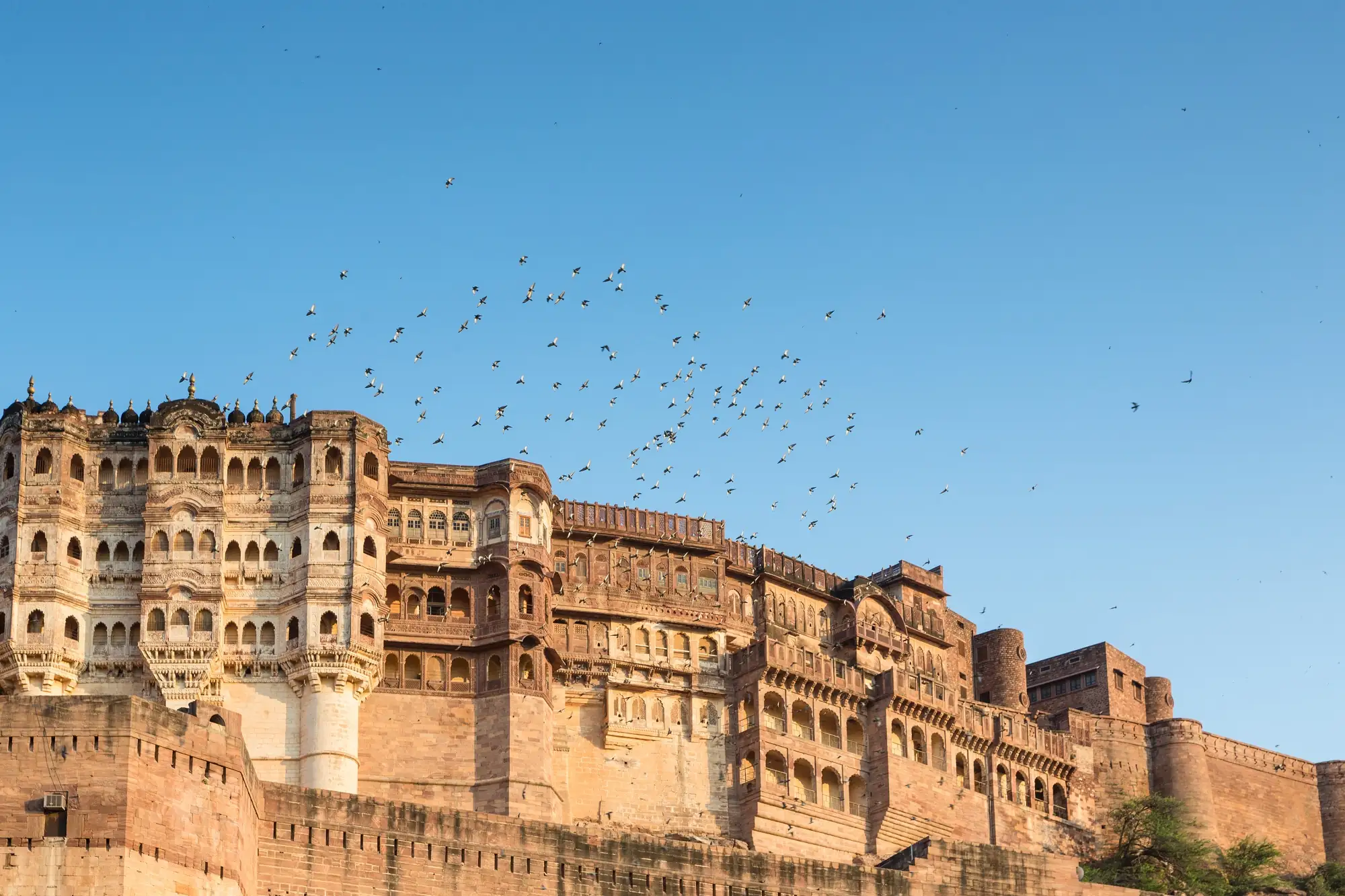
Jodhpur’s skyline is defined by stone. Where many Rajasthan cities scatter their monuments across a wide old town, Jodhpur concentrates its grandest buildings into a tight cluster around the fort — forts, palaces, cenotaphs, and stepwells that together tell the story of the Marwar kingdom from its founding in 1459 to its transition into modern India. This guide takes a closer architectural and historical look at Jodhpur’s forts, palaces, and monuments, beyond the basic visitor logistics covered in our general things-to-do guide.
Mehrangarh Fort: Architecture and Layout
Mehrangarh Fort was begun in 1459 by Rao Jodha and expanded by successive Marwar rulers over roughly five centuries, which is why its architecture isn’t uniform — later palaces inside the fort walls show progressively more ornate, Mughal-influenced detailing than the austere defensive stonework of the original ramparts. The fort is entered through a sequence of seven gates, each historically defensible in its own right, including the Jai Pol (Victory Gate) and the Suraj Pol, which still bears the palm-print memorials (sati handprints) of royal widows.
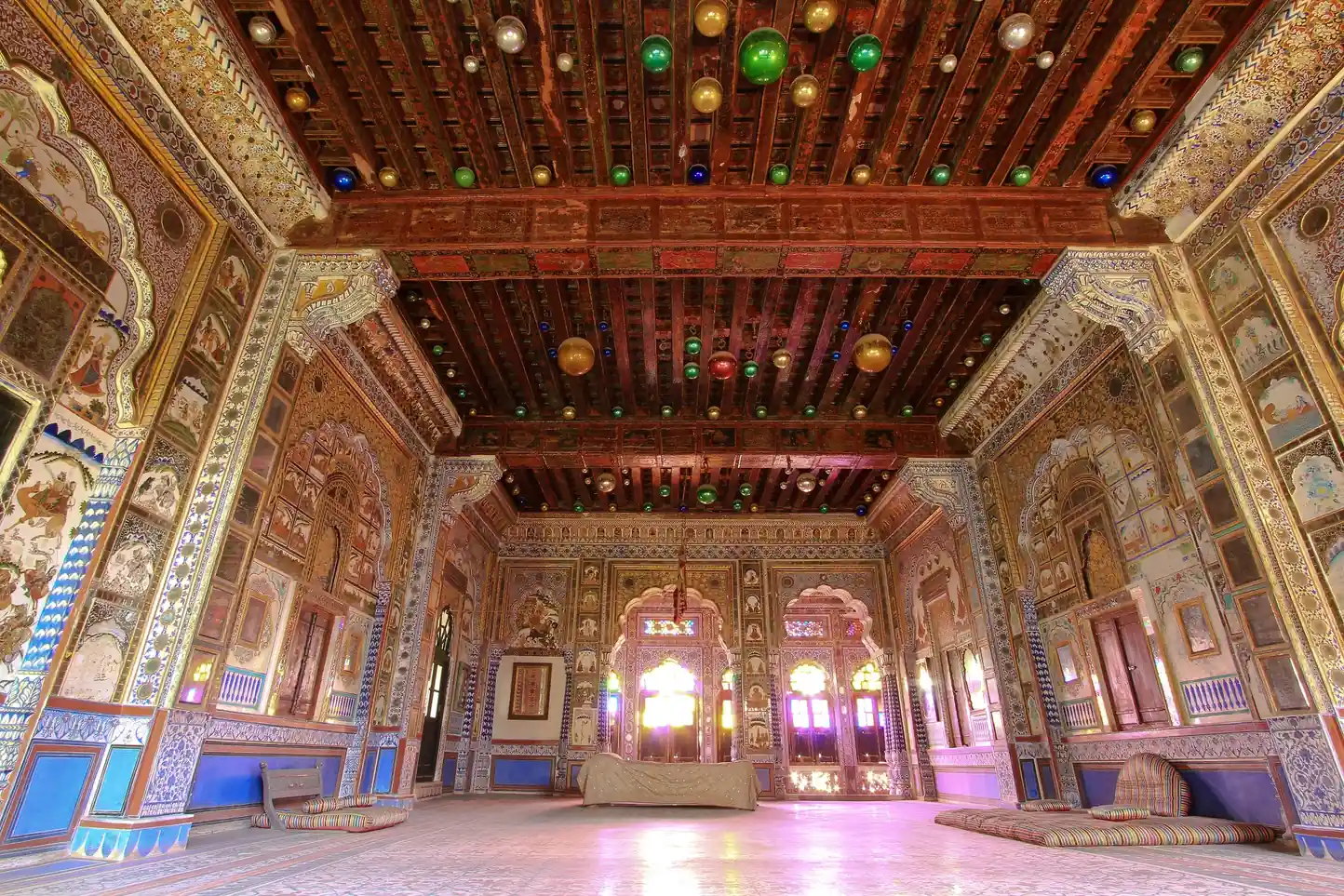
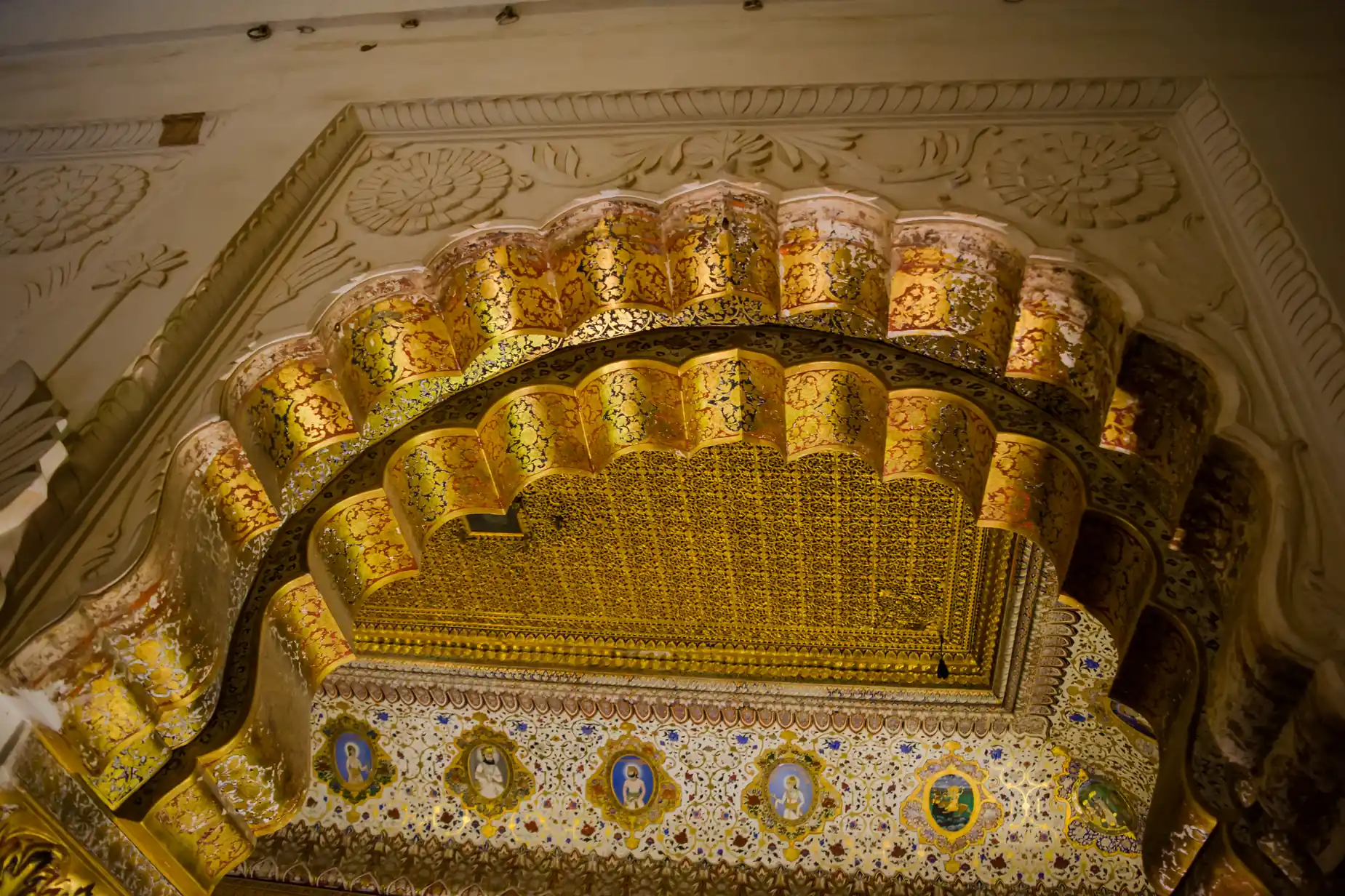
Inside, the palace complex includes several distinct halls worth knowing by name — the gilded Moti Mahal and Phool Mahal reception halls, the latticework-screened Zenana Mahal (women’s quarters), and the mirror-worked Sheesh Mahal. Architecturally, Mehrangarh is often cited as a textbook example of Rajput military-palace design — a fortress on the outside, a richly decorated royal residence within. Our complete Mehrangarh Fort guide covers each hall and the fort’s full history in depth.
Jaswant Thada: Design and Symbolism
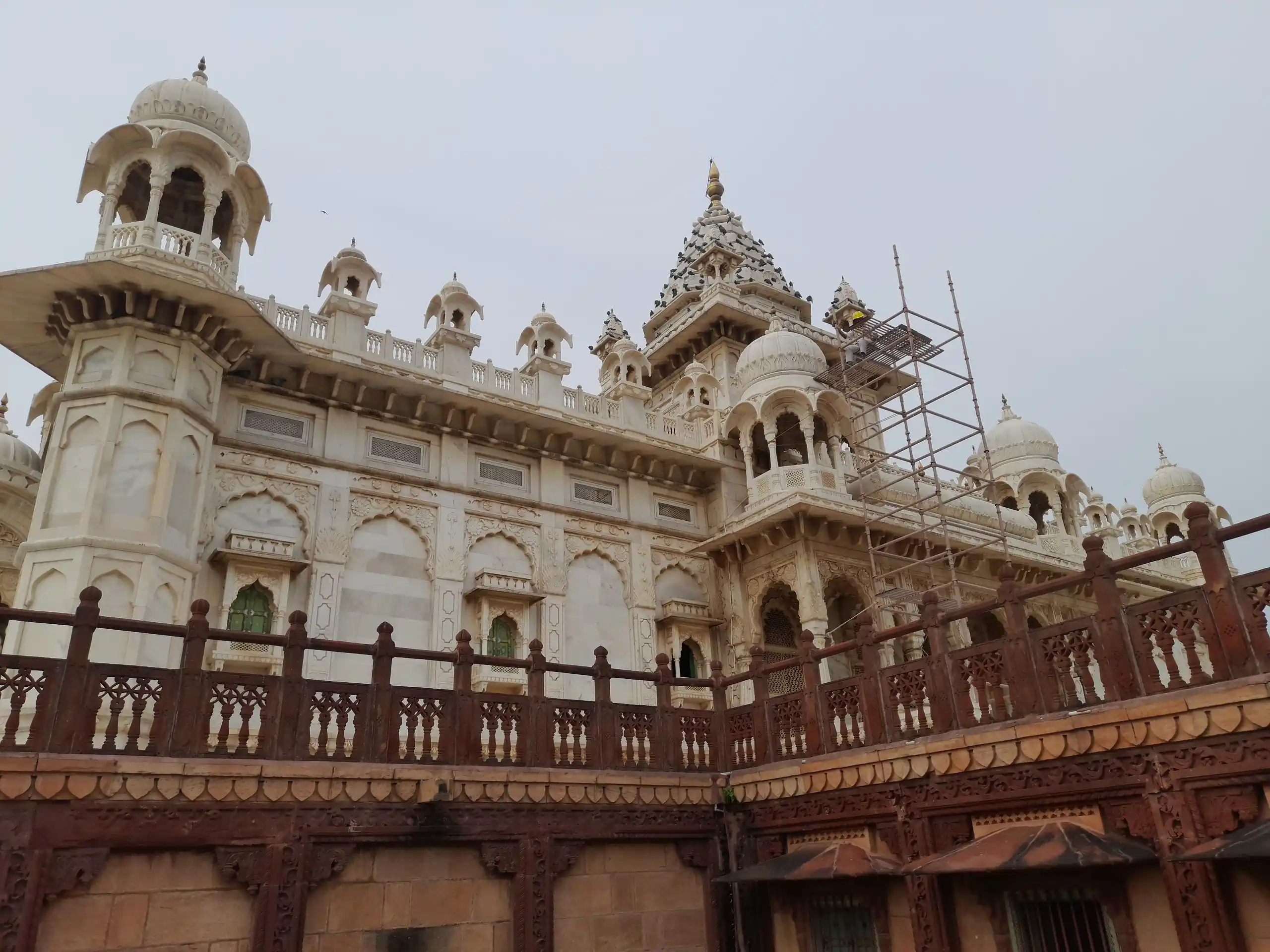
Built in 1899 in memory of Maharaja Jaswant Singh II, Jaswant Thada departs deliberately from the red sandstone that dominates the rest of Jodhpur, using polished white Makrana marble instead — the same marble quarries associated with the Taj Mahal, which is part of why the comparison stuck. The marble sheets are cut thin enough that direct sunlight passes through them, giving the interior a soft, warm glow rather than the harsh light typical of stone interiors. The complex includes several smaller memorial cenotaphs alongside the main one, arranged around a small lake and terraced garden. Our full Jaswant Thada guide covers its history and architecture in more depth.
Umaid Bhawan Palace: The Last Great Palace of British India
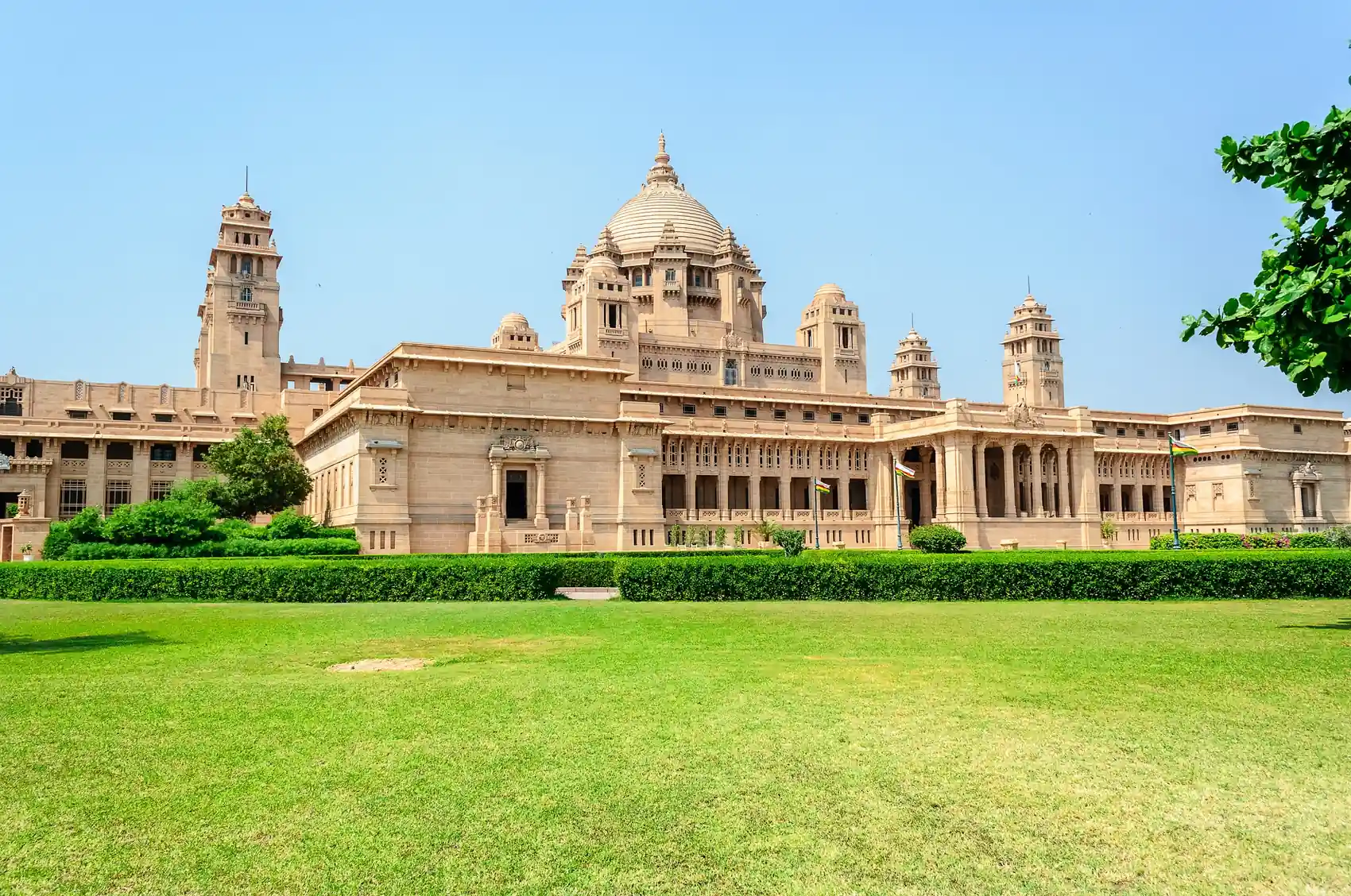
Umaid Bhawan Palace occupies a different architectural world entirely. Commissioned in 1928 by Maharaja Umaid Singh, partly as an employment-generating relief project during a period of severe famine, it was designed by British architect Henry Vaughan Lanchester and completed only in 1943 after roughly 3,000 workers spent fifteen years on construction, built from interlocking sandstone blocks without mortar. Stylistically, it blends Indo-Saracenic elements with full Art Deco detailing throughout the interior, making it one of the very few large-scale Art Deco palaces anywhere in the world, and is generally considered the last of the great palaces built in British-ruled India.
Today the building is split three ways: a private royal residence, a five-star heritage hotel, and a public museum wing — the royal family still lives in part of it, and Mehrangarh Fort itself is managed by a charitable trust connected to the family rather than run as a government monument, part of why its museum standards are unusually high for India. Our complete Umaid Bhawan Palace guide covers its full history and what’s inside the museum.
Rai Ka Bagh Palace
Built in 1663 by Hadiji, queen of Maharaja Jaswant Singh I, Rai Ka Bagh Palace is one of Jodhpur’s older and less-visited royal buildings, with a Durbar Hall notable for its detailed ceiling work and a collection of antique weapons and paintings. Part of the complex now operates as a heritage hotel, and it makes a good stop for visitors interested in royal architecture away from the main tourist circuit around the fort.
Toorji Ka Jhalra and Jodhpur’s Stepwell Tradition
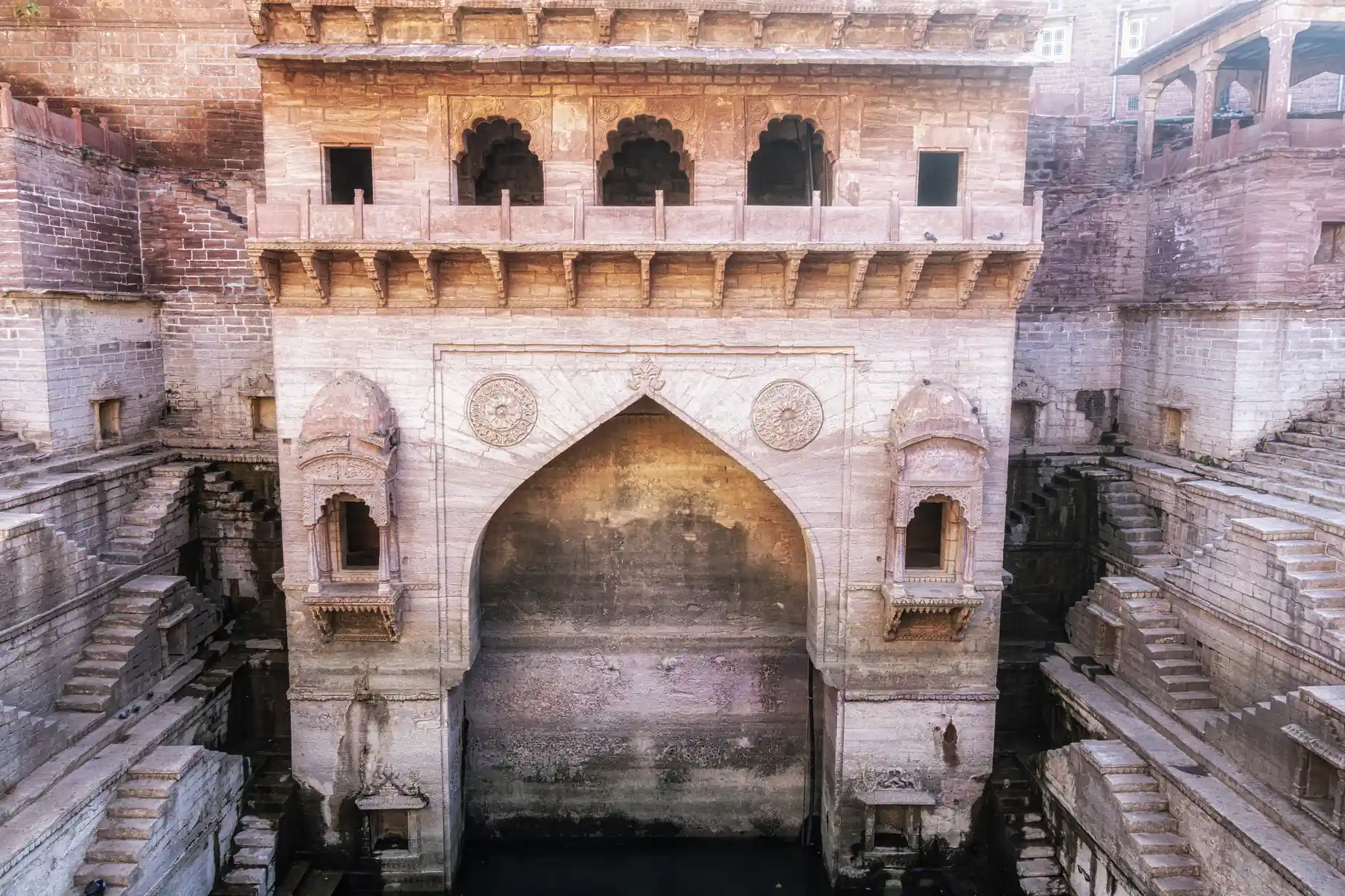
Stepwells (baoris or jhalras) are one of Rajasthan’s most distinctive architectural forms — deep, terraced excavations designed to keep water accessible year-round in a desert climate, often decorated as elaborately as any palace. Toorji Ka Jhalra, commissioned in the 1740s by Maharani Toorji, is the best-preserved and most accessible example in Jodhpur, with symmetrical stone steps descending in a geometric pattern to the water level. Restored in recent years after decades of disuse, it now anchors a small district of cafés and design shops built into the surrounding heritage buildings — a rare example of a functioning historic water structure that has also become a lively social hub. Its central old-city location and recent restoration make it far more accessible than many of Rajasthan’s more remote stepwells, and its integration into a functioning café district keeps it feeling like a living space rather than a preserved ruin. See our dedicated Toorji Ka Jhalra guide, or our guide to Jodhpur’s other historic stepwells for more beyond this one.
The Clock Tower
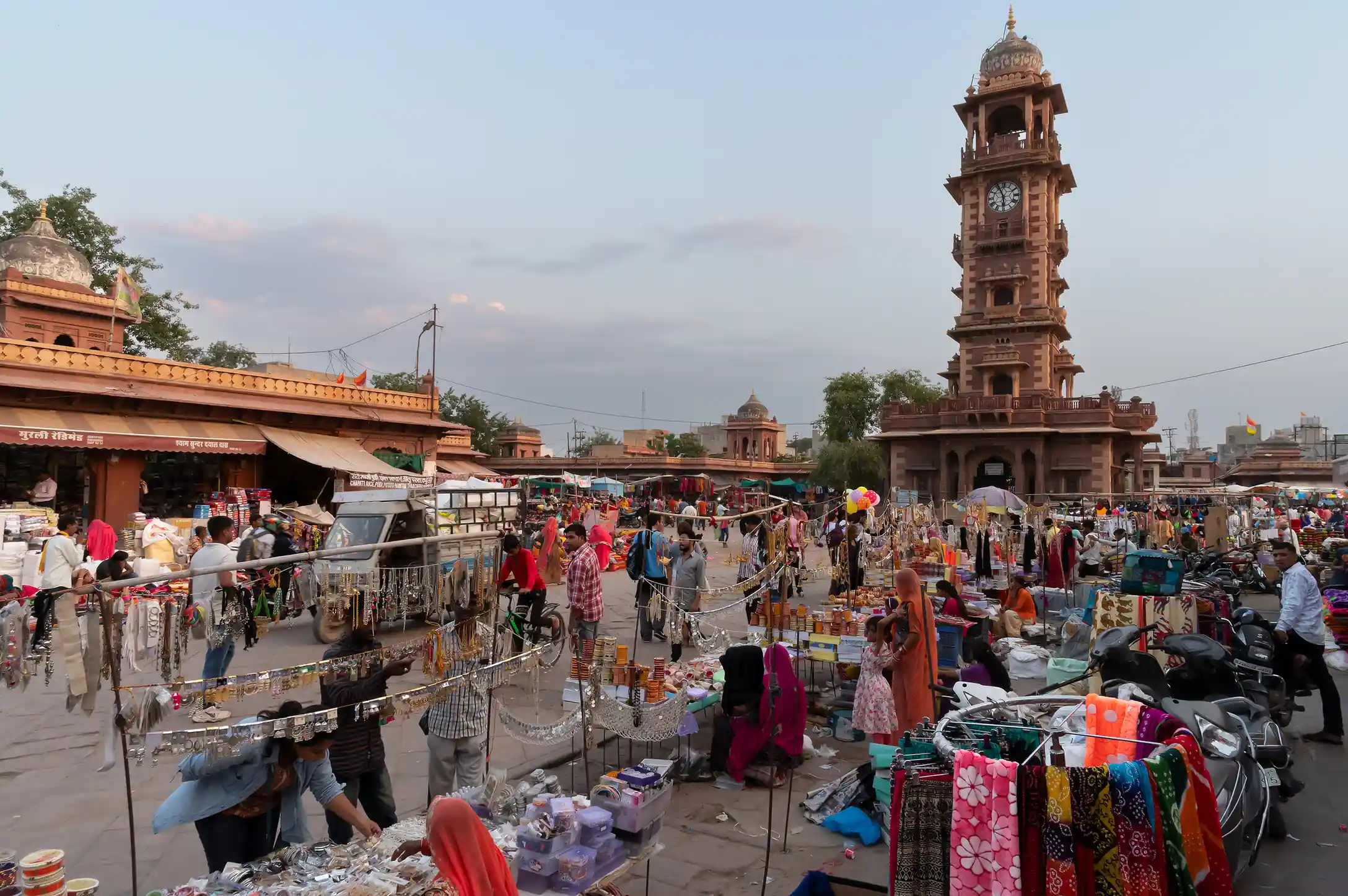
The Ghanta Ghar, built in the early 1900s under Maharaja Sardar Singh, is a comparatively modest structure architecturally, but it functions as the old city’s central landmark and orientation point — nearly every walking route through the old town eventually passes beneath it. Its clock mechanism has been maintained continuously since installation, a small but telling detail in a city where most monuments are centuries older. The market it anchors gets its own coverage in our Clock Tower Market guide.
Best Museums in Jodhpur
Beyond the fort’s own museum, Jodhpur has a handful of smaller collections worth seeking out. The Umaid Bhawan Palace Museum focuses on the royal family’s twentieth-century life — vintage cars, clocks, and gifts from foreign dignitaries, including a ceremonial flag presented by Queen Victoria in 1877. The Government Museum in Umaid Gardens holds a more general collection of sculpture, weaponry, and natural history exhibits, and is a useful option on a day when the heat makes outdoor sightseeing unappealing. Smaller private museums and heritage-haveli collections have also opened in the old city in recent years, often combined with a café or shop, reflecting a broader trend of adaptive reuse of Jodhpur’s historic buildings. Our full guide to Jodhpur’s best museums covers more of these in depth.
How These Monuments Connect Historically
Seen together rather than individually, Jodhpur’s monuments trace a fairly clear historical arc: Mehrangarh Fort represents the defensive, dynasty-founding phase of the 15th century; Rai Ka Bagh Palace and the stepwells represent the settled, prosperous 17th and 18th centuries; Jaswant Thada represents the ceremonial and commemorative traditions of the 19th century; and Umaid Bhawan Palace represents the final, most Westernised phase of princely rule in the early 20th century, built on the eve of independence. Visiting them roughly in this order — fort first, then Jaswant Thada, then the stepwells and markets, then Umaid Bhawan — gives a natural sense of that progression, even though most visitors don’t plan it that deliberately. Our guide to Jodhpur’s historic architecture looks at this same arc through a purely architectural-styles lens.
Entry Fees and Timings at a Glance
Mehrangarh Fort is open daily from 9:00 AM to 5:00 PM, with entry fees tiered by nationality — broadly ₹100–200 for Indian nationals and ₹600–800 for international visitors, plus separate charges for an audio guide and for cameras. Jaswant Thada keeps similar hours and a much lower, largely symbolic entry fee. Umaid Bhawan Palace’s museum wing has historically charged noticeably less than the fort — figures around ₹15–50 have been reported, though this is worth confirming given how infrequently palace museum pricing is updated compared to the fort’s. As with any Rajasthan monument, treat published prices as a guide rather than gospel and confirm at the ticket counter, since revisions happen periodically and aren’t always reflected promptly online.
Photography and Filming Rules
Still photography is generally permitted throughout Mehrangarh Fort and Jaswant Thada with a standard camera, though video cameras and tripods typically require an additional fee and, in some interior galleries, are restricted entirely to protect fragile textiles and paintings from repeated flash exposure. Umaid Bhawan Palace is stricter — photography inside the museum wing is often limited or prohibited outright in certain rooms, since parts of the building remain a private residence. If a specific shot matters to you — drone photography especially — it’s worth checking current rules directly with each site in advance, as regulations on drones over heritage monuments in Rajasthan have tightened in recent years.
Getting Between the Monuments
Mehrangarh Fort, Jaswant Thada, and Toorji Ka Jhalra sit close enough together that a single auto-rickshaw or a combination of walking and short hops covers all three comfortably in a day. Umaid Bhawan Palace and Rai Ka Bagh Palace sit further out, closer to the newer parts of the city, and are best reached by car or auto-rickshaw rather than on foot — the distance and the midday heat make walking between the old city and Chittar Hill (where Umaid Bhawan sits) impractical for most visitors. Many hotels and drivers offer a half-day “palaces and monuments” circuit that covers three or four sites in a single hired car, which tends to be more efficient than arranging transport site by site.
Restoration and Preservation
Much of what makes Jodhpur’s monuments unusually well presented, by the standards of Indian heritage sites, comes down to who manages them. Mehrangarh Fort is run by the Mehrangarh Museum Trust, a charitable body connected to the former royal family, which has invested heavily in conservation, staff training, and museum design over several decades — a model frequently cited by heritage professionals as one of the better-run in the country. Toorji Ka Jhalra’s restoration, completed after years of the stepwell sitting neglected and partly filled with debris, is a similar story on a smaller scale, driven by a mix of public and private investment. Not every monument in the city has benefited equally — several smaller havelis and stepwells around the old city remain in poor condition — which is part of why the well-restored sites stand out so clearly by comparison.
How does Jodhpur’s fort compare architecturally to Amber Fort in Jaipur or Chittorgarh Fort in Mewar?
Where Amber Fort emphasises decorative Mughal-Rajput fusion and Chittorgarh emphasises sheer historical scale and battlefield significance, Mehrangarh is generally considered the most dramatically sited of the three, rising almost sheer from the rock beneath it, and is widely regarded as the best-preserved and best-curated as a museum. Each is worth visiting for different reasons rather than as substitutes for one another, and comparing them is a common talking point among visitors doing a multi-city Rajasthan circuit.
Can visitors go inside the private residential wing of Umaid Bhawan Palace?
No — the residential wing remains a private home for the royal family and is not open to the public under any circumstances. The public museum wing and, for paying hotel guests, the heritage hotel wing are the only accessible parts of the building.
A Note on Conservation Etiquette
Several of Jodhpur’s monuments — the fine jali screens of the Zenana Mahal, the gold-leaf ceiling of the Phool Mahal, the thin marble panels of Jaswant Thada — are surprisingly fragile despite their age and apparent solidity. Flash photography, touching carved stonework, and climbing on ledges for photographs all contribute to gradual, cumulative damage that conservation trusts spend considerable resources reversing. None of this is unique to Jodhpur, but it’s worth keeping in mind given how well-preserved these particular sites are relative to many other heritage monuments in India — a standard that depends partly on visitor behaviour, not just institutional funding.
Lesser-Known Monuments Worth Seeking Out
Beyond the handful of sites every itinerary includes, Jodhpur’s old city holds a scattering of smaller havelis, temples, and gateways that rarely make a first-time list but reward visitors with more time. The old city’s original ring of gates — including Sojati Gate, Chandpol, and Nagori Gate — mark the boundaries of the historic walled town, and several stretches of the old city wall itself are still walkable. A handful of restored merchant havelis in the lanes near Sardar Market, some now converted into guesthouses or small museums, offer a different register of architecture entirely: private, decorative, and built by trading families rather than royalty, reflecting Jodhpur’s long history as a caravan and trade hub connecting Delhi to the ports of Gujarat.
Seeking these out generally requires either a knowledgeable local guide or a willingness to wander the old city lanes without a fixed plan — neither is signposted the way Mehrangarh or Jaswant Thada are, and that relative obscurity is largely the point for visitors who’ve already covered the headline sites on a previous trip. Our full guide to Jodhpur’s best forts and palaces ranks the headline sites first, for those still working through them.
Do I need a guide to appreciate Jodhpur’s monuments, or is the architecture self-explanatory?
Mehrangarh Fort’s audio guide covers the architectural detail in enough depth that a human guide isn’t strictly necessary there. For the smaller, less-documented sites — Rai Ka Bagh Palace, the old city gates, and the merchant havelis in particular — a local guide adds considerably more value, since signage is minimal or absent and much of the historical context exists only in local knowledge rather than published sources.
FAQ
Which fort in Jodhpur is the most important to visit?
Mehrangarh Fort is the clear priority, given its scale, preserved interiors, and central role in Marwar history.
How many forts and palaces are there in Jodhpur?
Mehrangarh, Umaid Bhawan, and Jaswant Thada form the core trio, alongside smaller heritage sites nearby.
Can I visit all major forts and palaces in one day?
It’s possible but rushed; two days allows a more relaxed pace across the main heritage sites.
Are Jodhpur’s forts and palaces family-friendly?
Yes, most offer wide courtyards and manageable walking routes suitable for visitors of all ages.
Do I need separate tickets for each site?
Yes, each major site sells its own entry ticket, though combined passes are sometimes available.