Jaswant Thada Jodhpur: History, Architecture & Visitor Guide
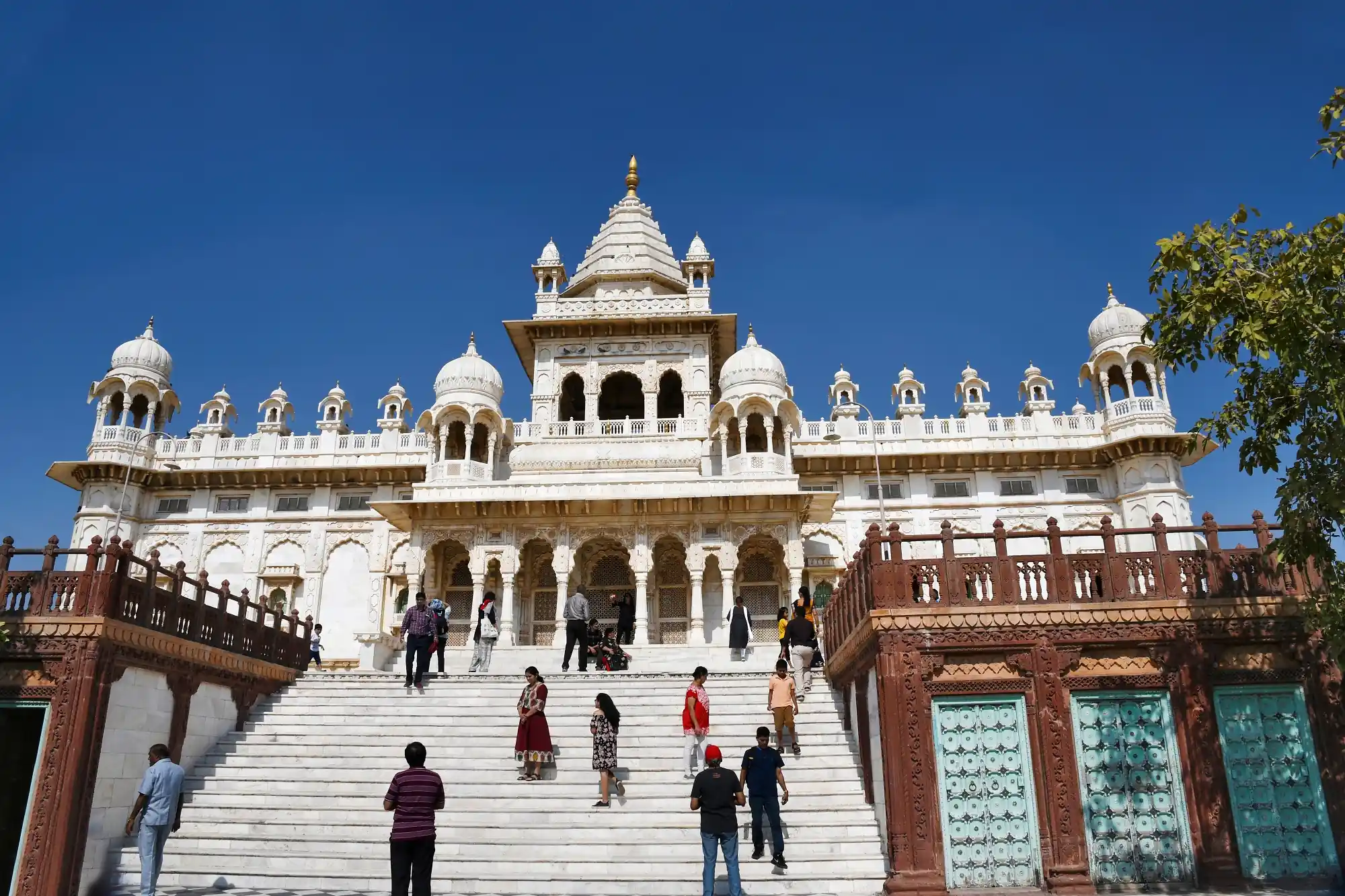
Jaswant Thada is a marble cenotaph built in memory of Maharaja Jaswant Singh II, and it stands today as one of Jodhpur’s most photographed monuments alongside Mehrangarh Fort itself. Located roughly a fifteen-minute walk or short drive from the fort, this white marble memorial is often described as the ‘Taj Mahal of Marwar’ for its intricately carved facade and the way the thin marble sheets glow with a warm translucence when sunlight passes through them. Unlike the fort’s imposing sandstone bulk, Jaswant Thada’s calm, low-lying architecture and landscaped gardens create a deliberately peaceful counterpoint, making it a natural second stop for most visitors after the fort.
History and Construction
The cenotaph was commissioned in 1899 by Maharaja Sardar Singh in honour of his father, Jaswant Singh II, who ruled Marwar from 1873 to 1895 and was known for a range of public works and administrative reforms during his reign. Construction was completed in 1906, using intricately carved sheets of marble sourced from the quarries of Makrana — the same region historically known for supplying the marble used in the Taj Mahal — polished thin enough that light filters through them with a soft glow, a technique that required considerable skill from the artisans involved. Since its construction, Jaswant Thada has continued to serve as a cremation ground for the Jodhpur royal family, and several smaller memorials to subsequent rulers and family members are located on the same grounds, giving the site an ongoing significance beyond its original purpose.
Architecture and Design
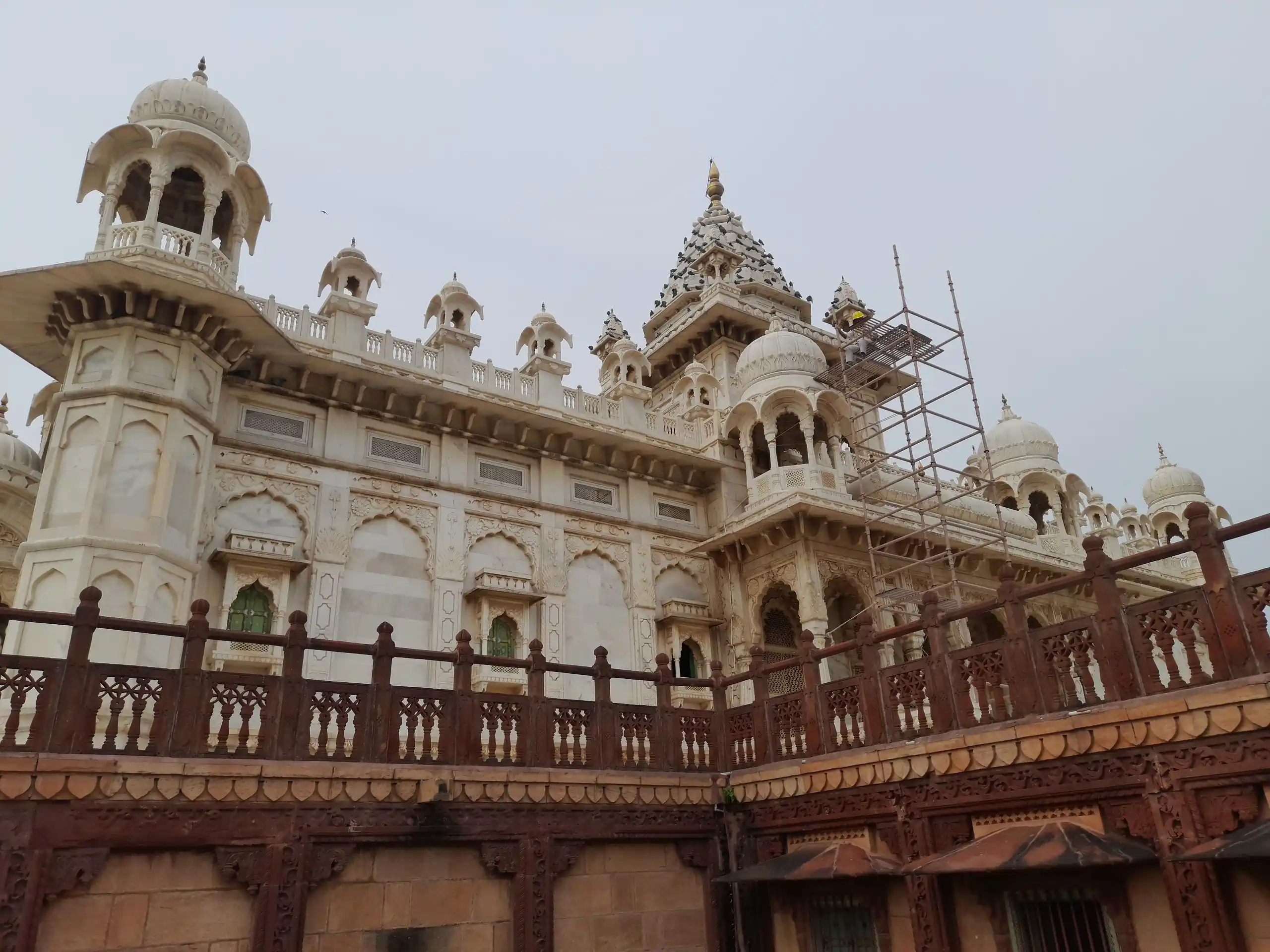
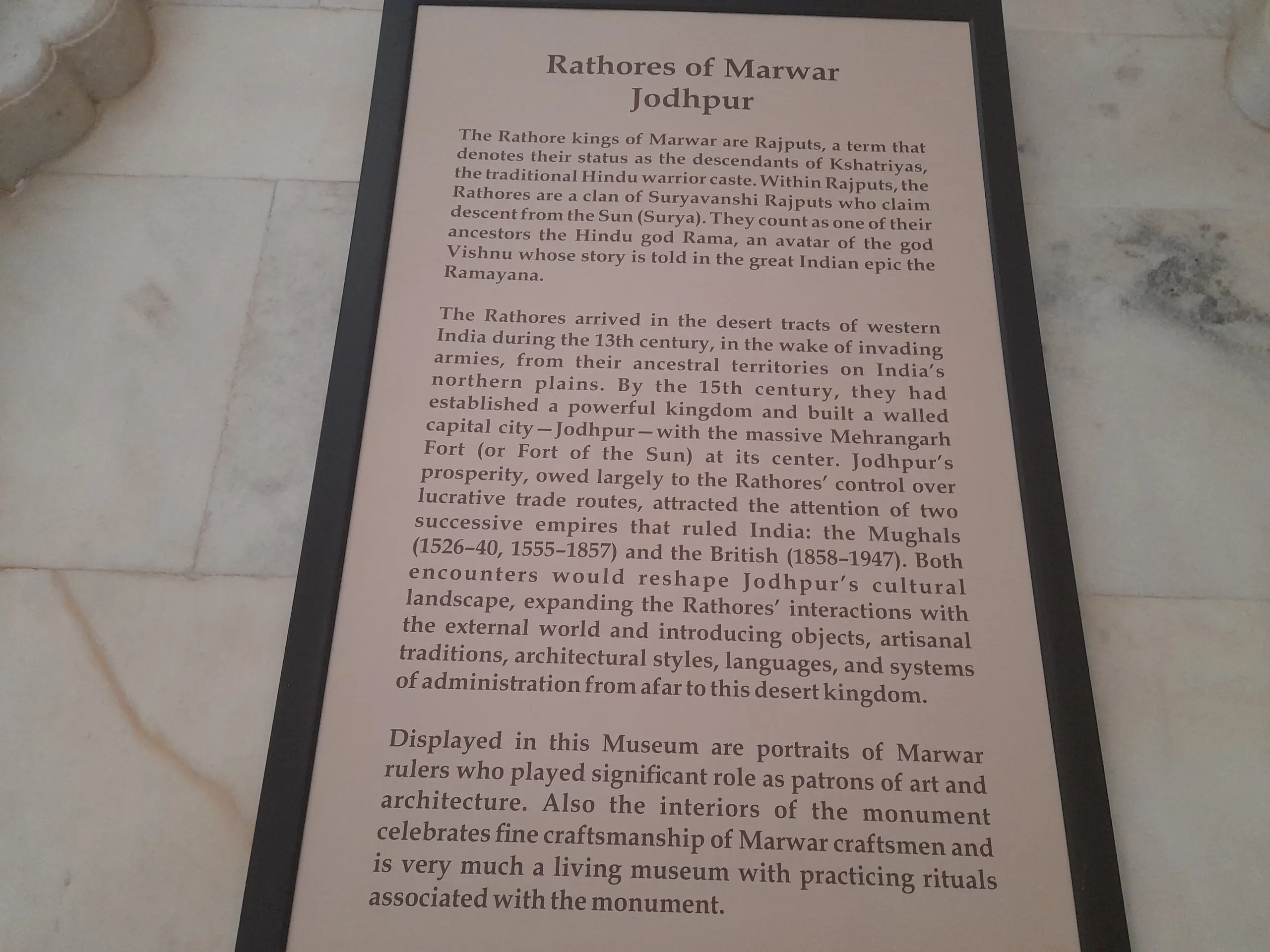
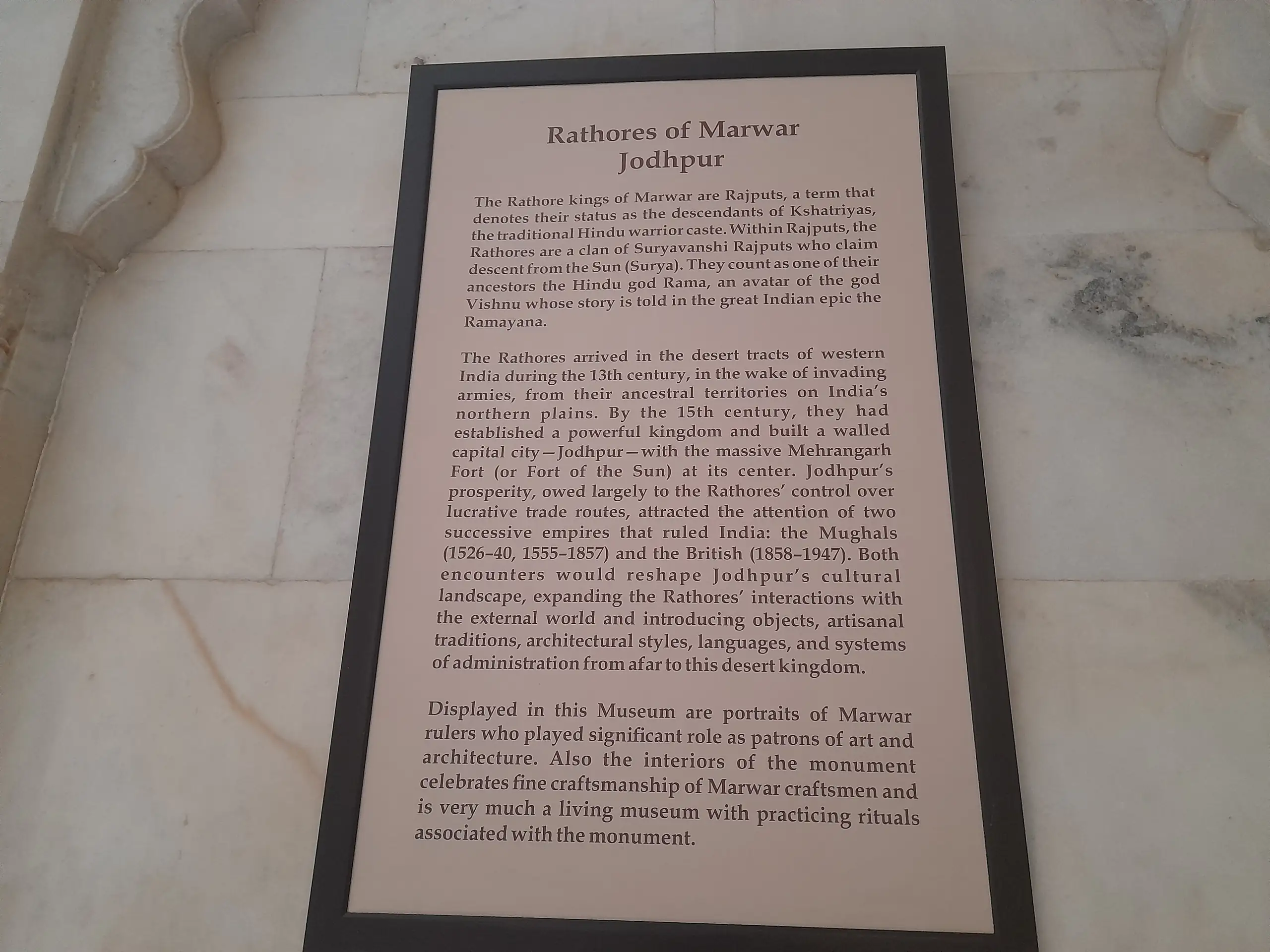
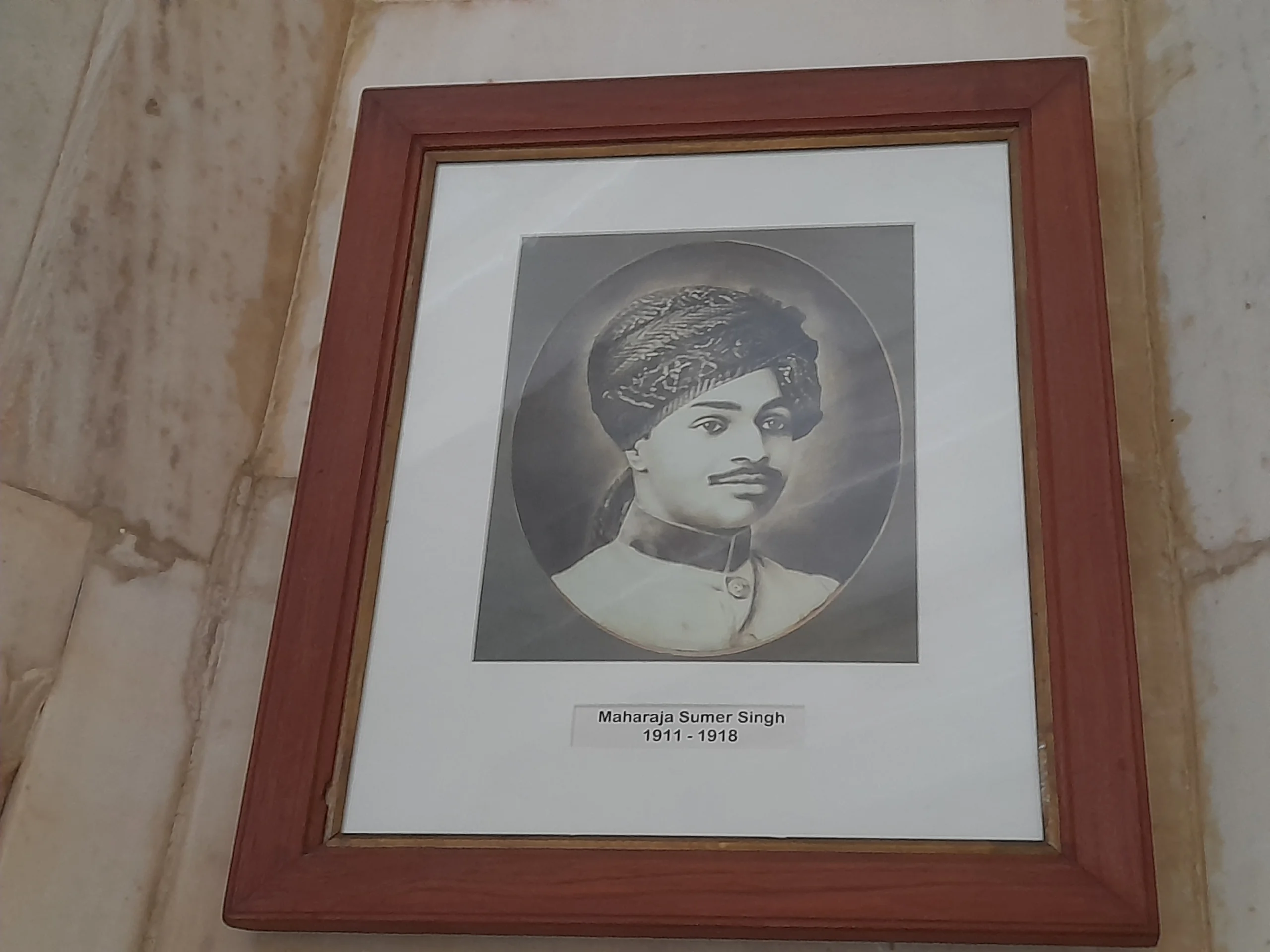
The main structure sits on a raised platform with intricately latticed marble screens (jalis) that allow light and air to pass through while maintaining privacy and a sense of enclosure. Detailed carvings cover much of the exterior, depicting flowers, peacocks, and geometric patterns typical of the Rajput architectural style of the period, and the interior houses portraits of various Marwar rulers, offering a useful visual complement to the dynastic history explained at Mehrangarh Fort nearby. Domed chhatris (pavilions) surround the main cenotaph, echoing the design language seen throughout Rajasthan’s royal memorial architecture, and the entire complex is built from a locally sourced marble that has weathered well over more than a century.
The Gardens and Surrounding Grounds
Jaswant Thada’s landscaped gardens include a small artificial lake, manicured lawns, and pathways connecting the various memorial structures, offering a quietly tranquil setting that contrasts with the busier atmosphere inside the fort. Peacocks are frequently seen wandering the grounds, adding to the site’s calm, unhurried character, and the gardens make for a pleasant place to sit and rest partway through a day of sightseeing. Benches positioned around the lake offer some of the best framed views of the marble cenotaph reflected in the water, particularly appreciated by photographers visiting in the softer light of early morning or late afternoon.
Views of Mehrangarh Fort
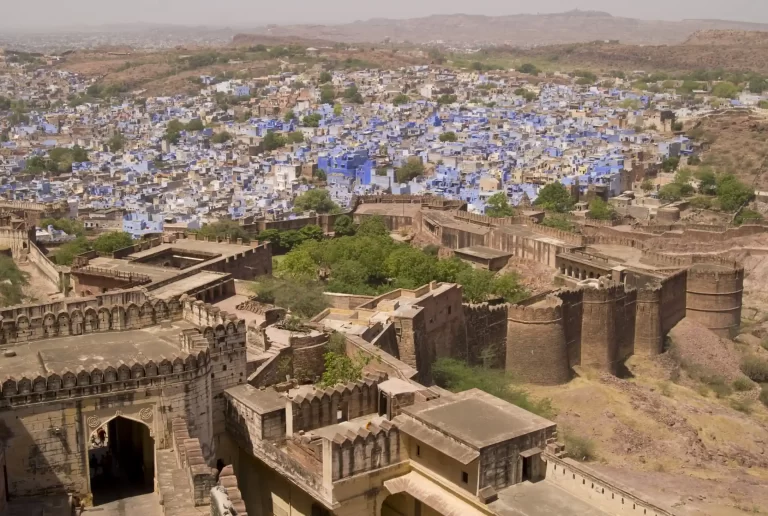
One of Jaswant Thada’s most valued features is its unobstructed view back toward Mehrangarh Fort, which rises dramatically on its rocky outcrop just across the valley. This vantage point offers a distinctly different perspective on the fort than the views available from within its own ramparts, and it’s a favourite spot among photographers for capturing the fort’s full scale against the sky. Visiting Jaswant Thada in the late afternoon, when the fort catches the warm light of the setting sun, is a particularly rewarding time for this specific view.
Royal Cenotaphs Beyond the Main Memorial
Several smaller cenotaphs surround the main Jaswant Thada structure, marking other members of the Rathore royal family, and exploring these secondary structures gives a fuller sense of the site as an active royal memorial complex rather than a single standalone monument.
A Working Cremation Ground
It’s worth noting that Jaswant Thada is not purely a historical monument frozen in time — it remains an active cremation ground for the Jodhpur royal family, and several of the smaller memorial structures on the grounds are dedicated to more recent family members. This ongoing use gives the site a slightly different character from a purely tourist-oriented monument, and visitors are generally asked to maintain a respectful demeanour throughout, particularly near the smaller, more recent memorials rather than only the main cenotaph.
Best Time to Visit
Jaswant Thada is typically visited either right after Mehrangarh Fort, given the short distance between the two, or as a standalone stop later in the day. Morning visits offer cooler temperatures and softer light for photography, while a late-afternoon visit, closer to the site’s closing time, rewards visitors with golden-hour views of the fort across the valley and tends to be quieter too. The site is considerably less crowded than the fort itself either way, making it a good option for travellers who want a quieter, more contemplative sightseeing experience within Jodhpur.
Practical Visiting Information
A separate entry ticket is required for Jaswant Thada, distinct from the Mehrangarh Fort ticket — currently around ₹30 for Indian nationals and ₹50 for foreign visitors, with the fort open daily from 9:00 AM to 5:00 PM and prices worth reconfirming at the counter since they’re revised periodically. Visitors typically spend thirty minutes to an hour here, enough time to see the main cenotaph, walk the gardens, and take in the fort views, without needing to rush. Comfortable footwear remains useful given the walking involved between the fort and Jaswant Thada if travelling on foot, though most visitors arrive by auto-rickshaw or taxi given the uphill terrain connecting the two sites.
Combining Jaswant Thada with Other Nearby Sights
Beyond Mehrangarh Fort, Jaswant Thada sits within a reasonable distance of several other worthwhile stops in Jodhpur, including the fort’s own Chokelao Bagh garden and the old city’s blue-washed lanes further downhill. Many travellers structure a half-day itinerary that begins at the fort in the morning, moves to Jaswant Thada shortly after, and finishes with a walk or rickshaw ride through the old city toward the Clock Tower and Sardar Market. This sequencing works well logistically since all three sites sit within a compact geographic cluster on the same side of the city, minimising transit time between stops.
Local Guides and Context
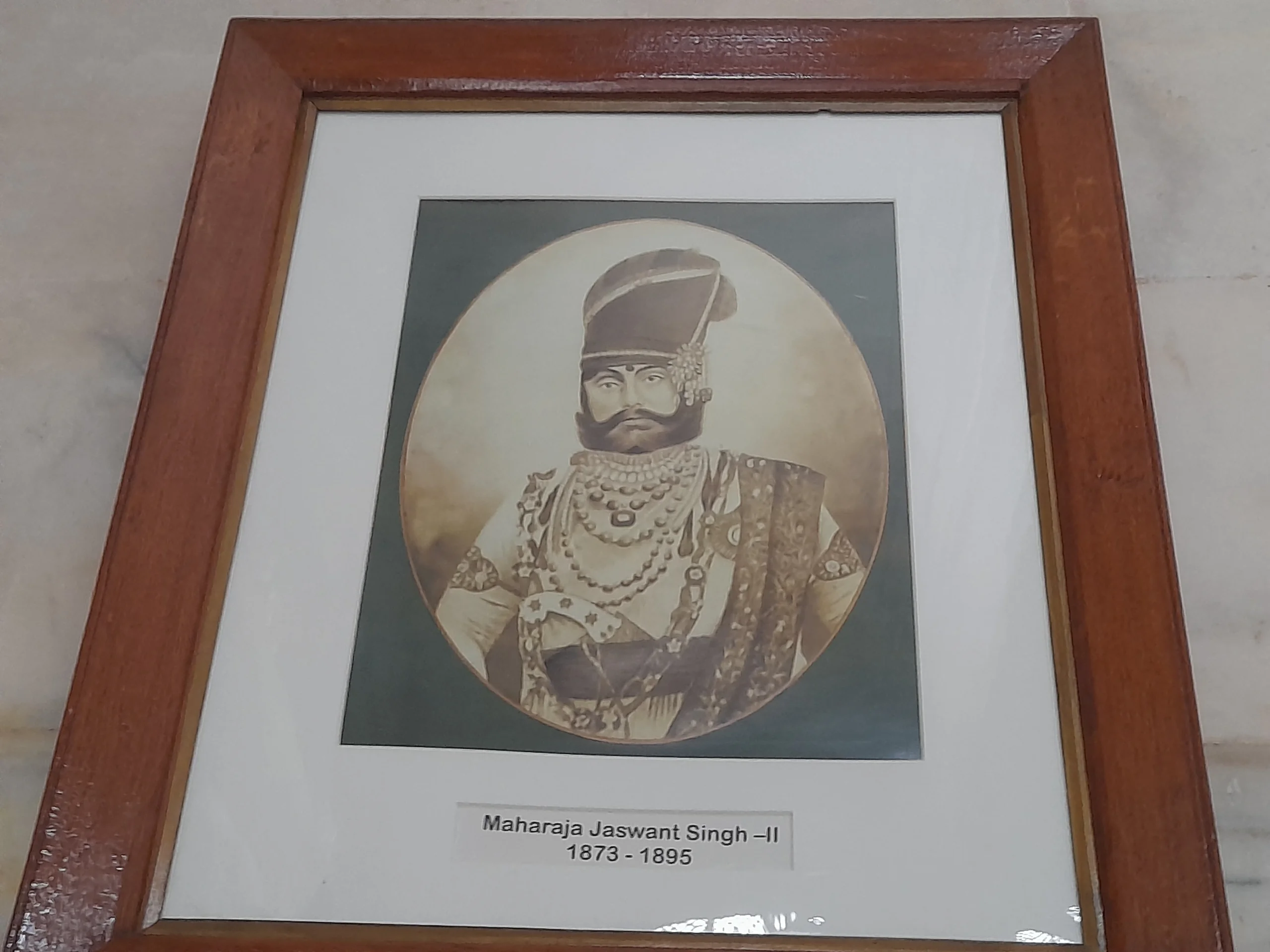
While Jaswant Thada can be appreciated without a guide, given its relatively compact size, a knowledgeable local guide can add useful context about the individual portraits inside the main hall and the broader Marwar dynastic history that connects the site to Mehrangarh Fort. Many visitors choose to hire a single guide for a combined fort-and-Jaswant Thada visit, which tends to be more cost-effective than arranging separate guides for each site and helps tie the two locations into a single coherent historical narrative.
FAQ
What is Jaswant Thada known for?
Its white marble architecture and role as the royal cenotaph of Maharaja Jaswant Singh II.
How far is Jaswant Thada from Mehrangarh Fort?
It’s a short walk or quick drive, making it easy to combine both in a single visit.
Is there an entry fee for Jaswant Thada?
Yes, a modest entry fee applies, separate from the Mehrangarh Fort ticket.
How much time is needed at Jaswant Thada?
Around 30 to 45 minutes covers the main structure and surrounding gardens comfortably.
Is Jaswant Thada worth visiting if short on time?
Yes, its proximity to the fort makes it an easy, worthwhile addition even on a tight schedule.