Mehrangarh Fort Jodhpur: Complete History & Visitor Guide
Mehrangarh Fort is Jodhpur’s defining landmark and the single most important stop on any visit to the city. This guide covers Mehrangarh Fort’s complete history and everything worth knowing before visiting — from its founding and architecture to current entry fees and the best time of day to go.
Founding and History
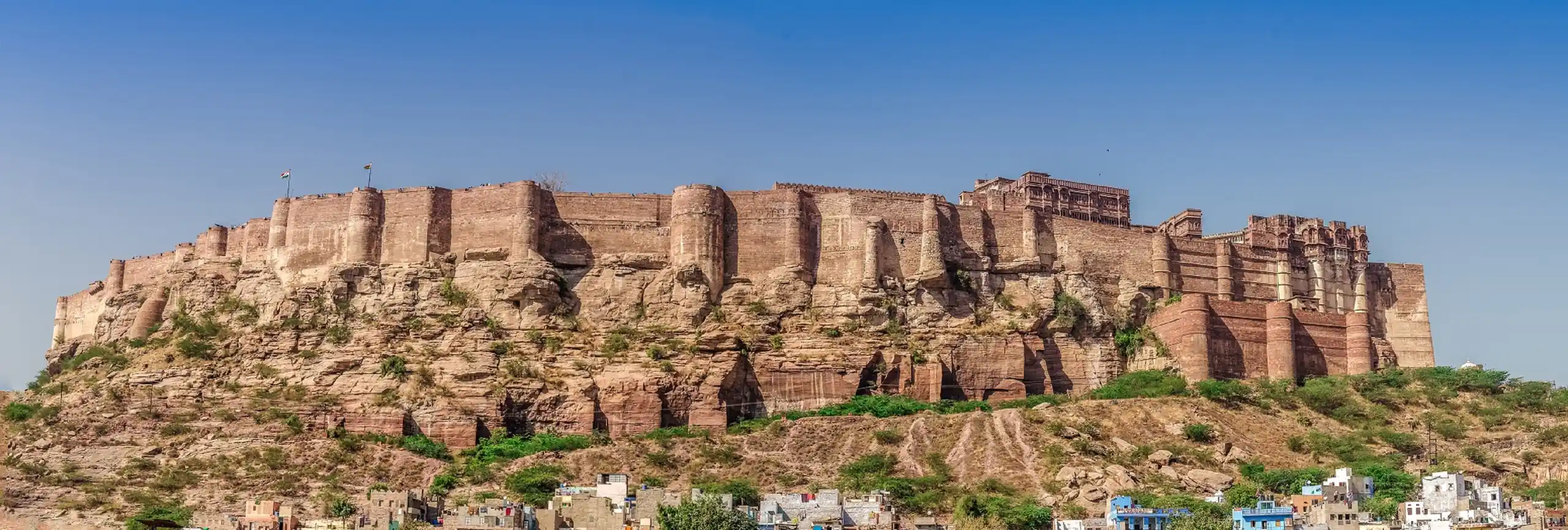
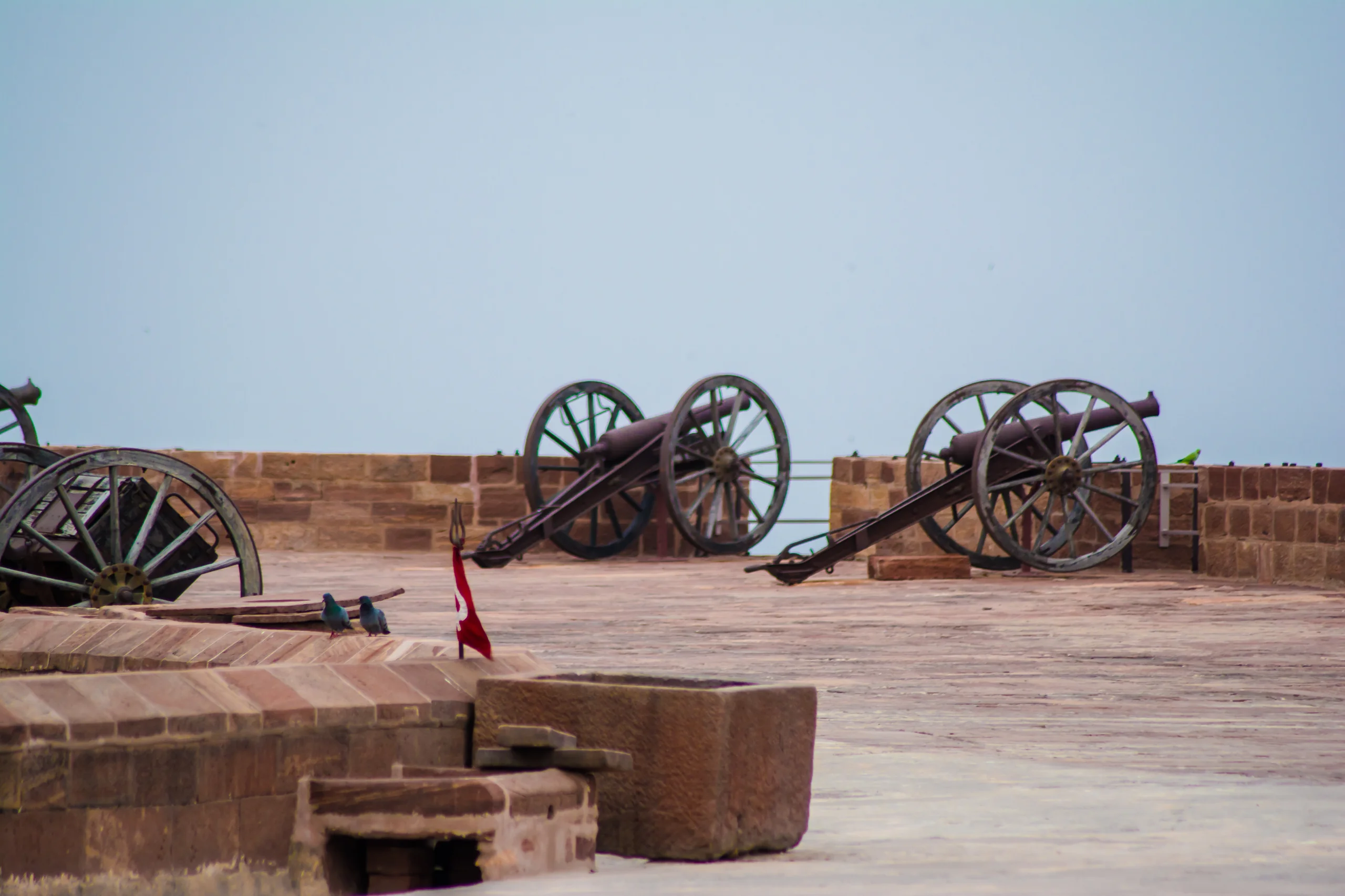
Mehrangarh Fort was founded in 1459 by Rao Jodha, the Rathore ruler who gave Jodhpur its name, who moved the Marwar kingdom’s capital here from nearby Mandore, choosing this rocky outcrop roughly 400 feet above the surrounding plain specifically for its defensive advantages. Successive Rathore rulers expanded the fort over the following five centuries, adding progressively more elaborate, ornately carved palace buildings onto the original, more austere defensive core — a pattern of expansion common across Rajasthan’s major hill forts. The fort has never been captured in battle throughout its history, a fact locals take real pride in and one that shapes how the fort is talked about in the city to this day.
Architecture and the Seven Gates
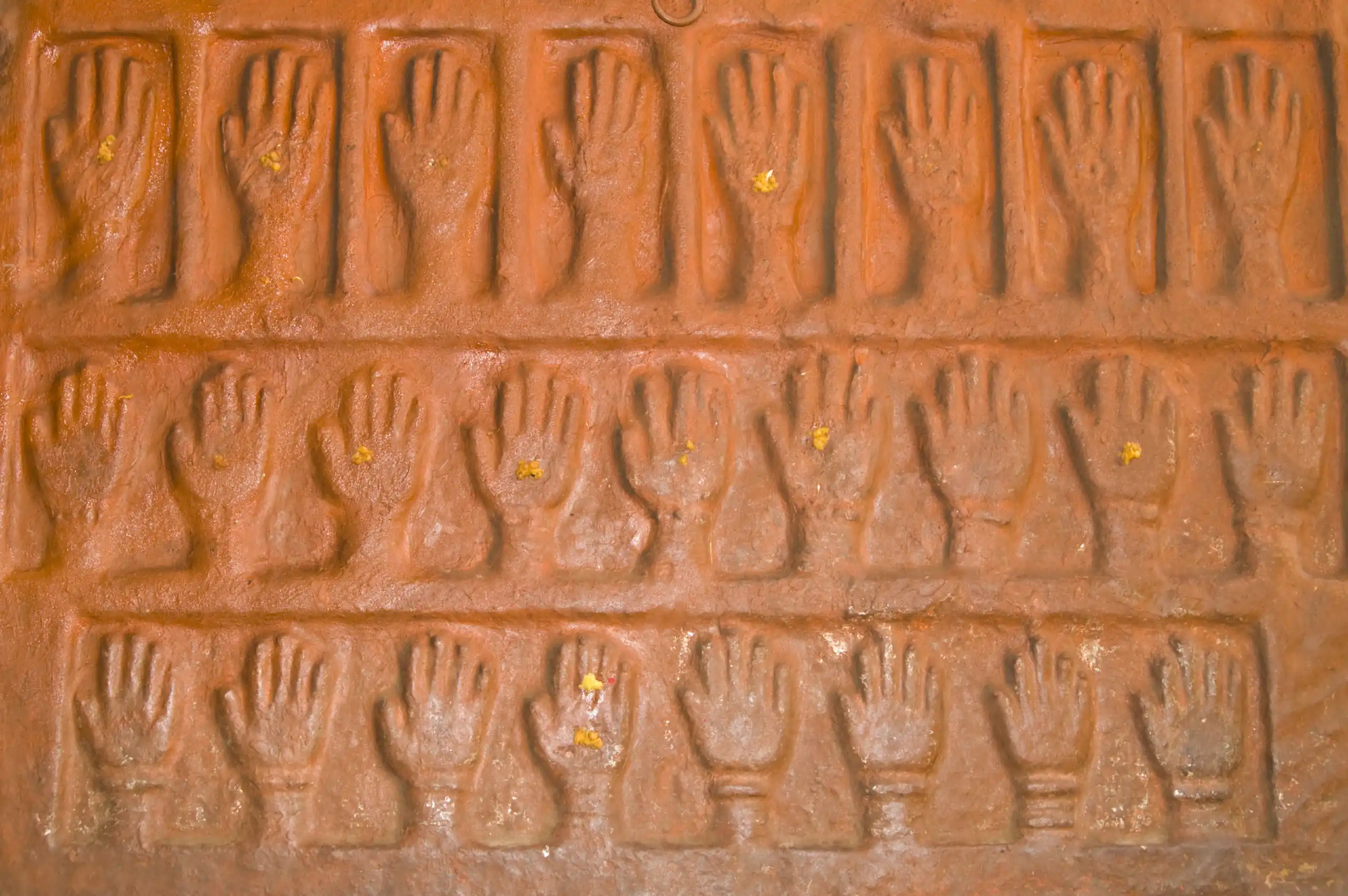
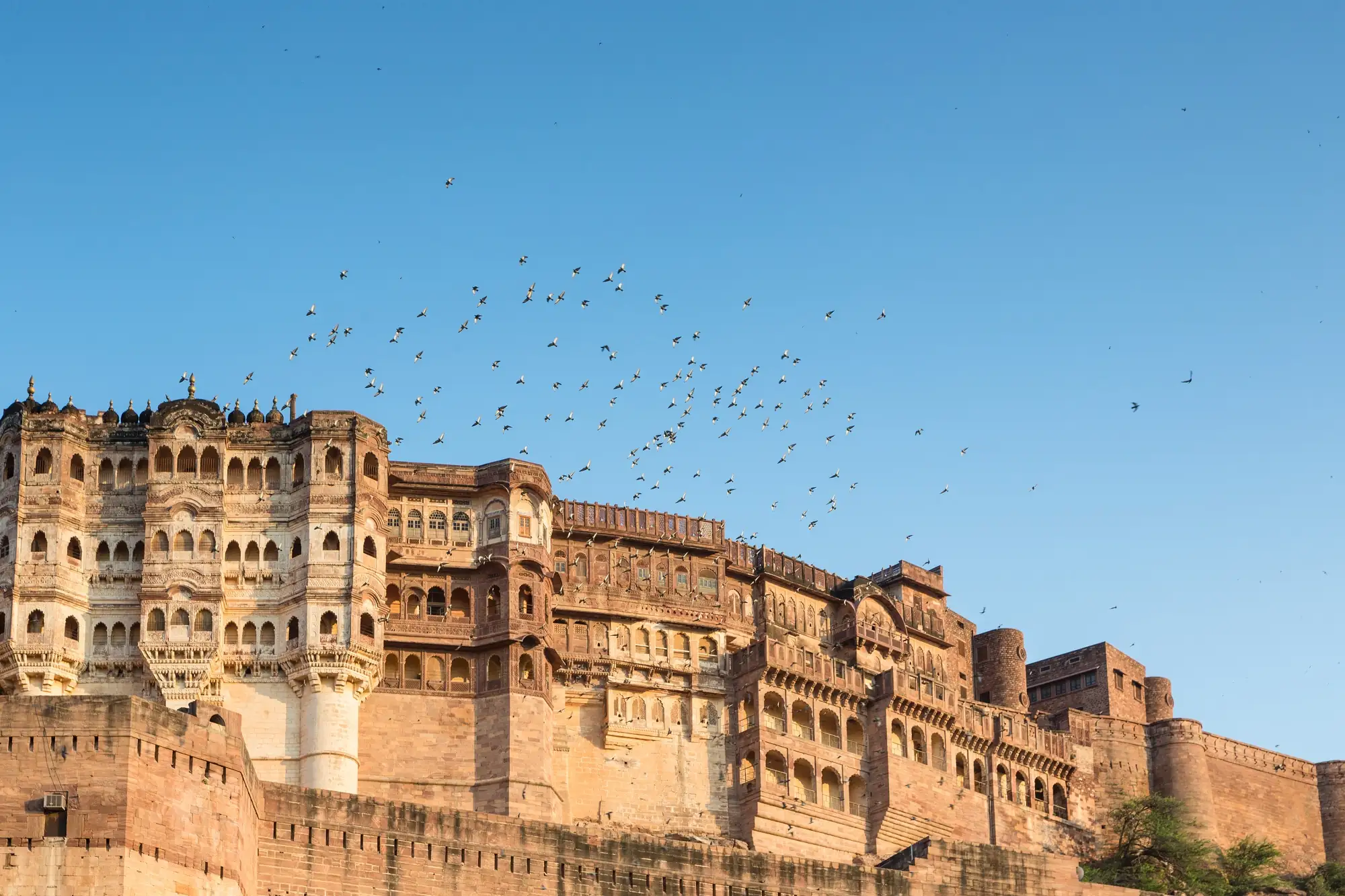
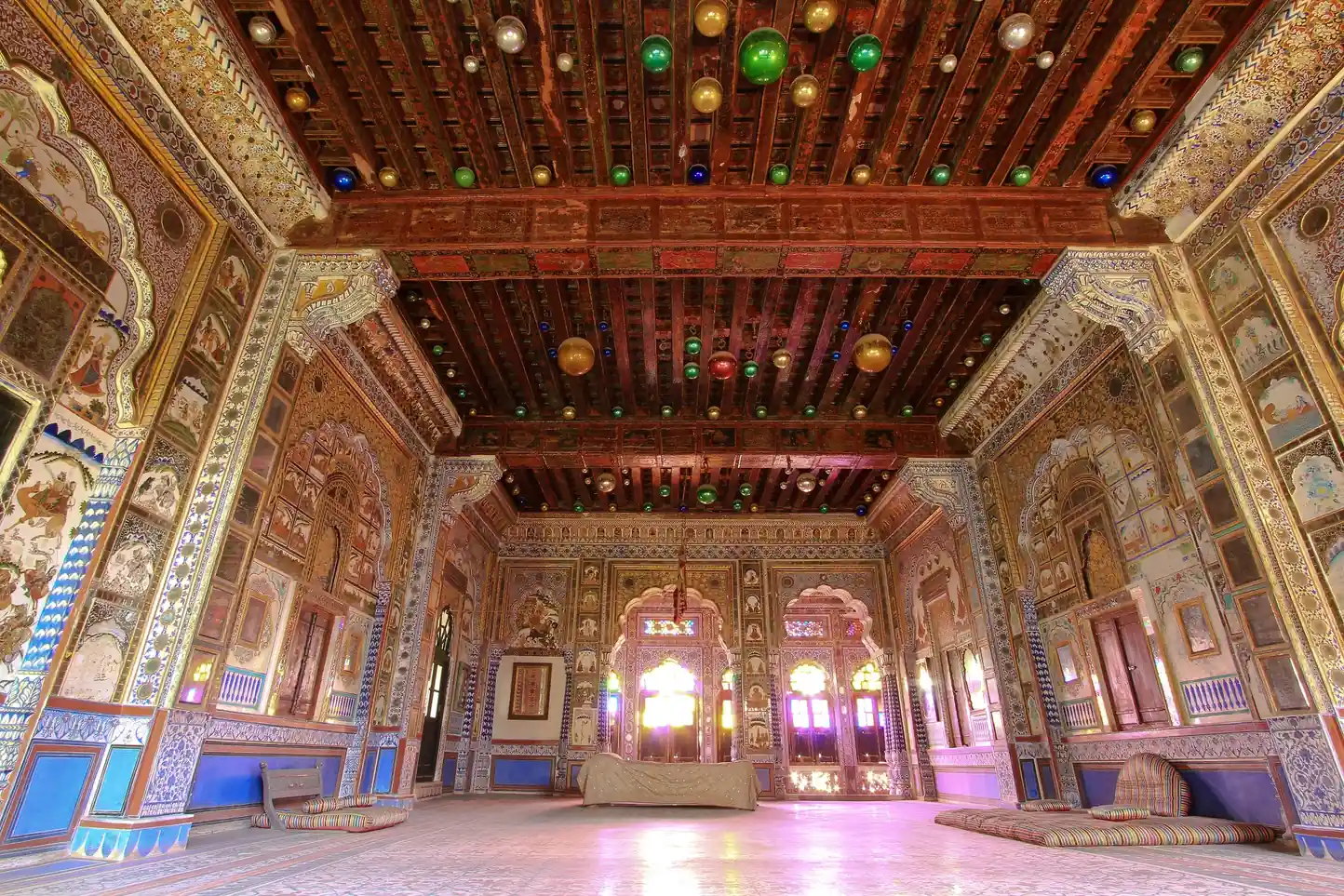
Mehrangarh Fort is entered through a sequence of seven gates, each historically defensible in its own right. Jai Pol commemorates a military victory, while Loha Pol — the final of the seven, opening onto the palace itself — still bears the sombre handprints of royal women who committed sati following a former ruler’s death, a marker still visible today. Beyond the gates, distinct palace halls reflect different periods and purposes within the fort’s long architectural evolution: the gilded Phool Mahal, the public Moti Mahal, and the latticed Zenana Mahal women’s quarters were each built and decorated in different phases of the fort’s roughly five-century expansion.
Notable Rooms and Palace Halls
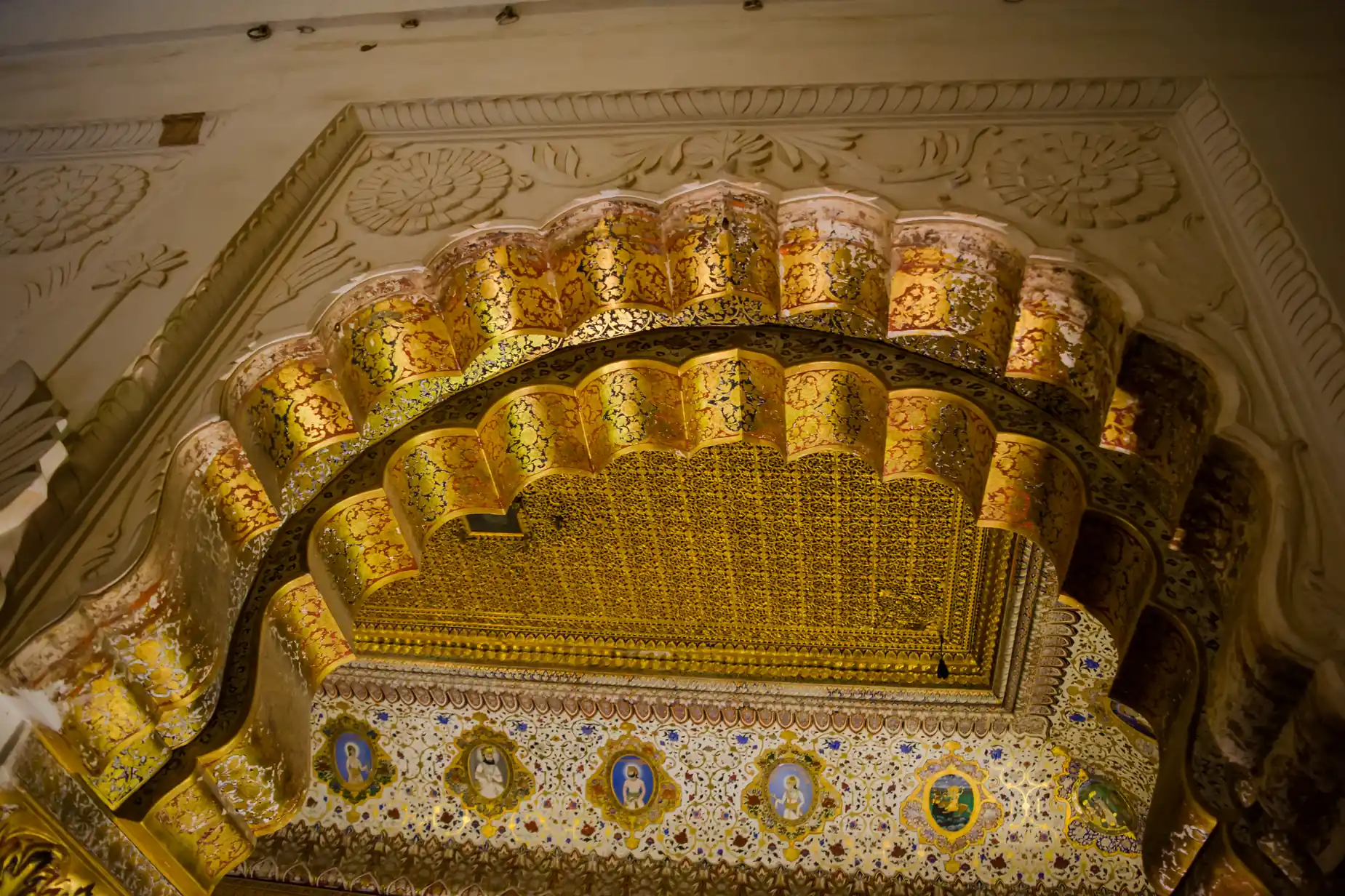
The Phool Mahal’s gold-leaf ceiling and the Zenana Mahal’s intricately carved sandstone jali screens are two of the fort’s standout interior subjects — the jali screens in particular reward a close look, both for their craftsmanship and for the insight they offer into how royal women historically observed courtyard life without being seen themselves. The Sheesh Mahal, or mirror palace, offers a smaller, more intimate decorated chamber used historically for private worship, its walls set with mirror work that took considerable time and specialised craft labour to complete. The fort’s armoury holds an extensive collection of swords, shields, and firearms spanning centuries of Marwar military history, and the Moti Mahal served as the fort’s more public hall for court business.
What’s Inside the Museum
The fort’s museum holds an extensive collection of royal palanquins, miniature paintings, armour, and a hall of ceremonial elephant howdahs, giving visitors a tangible connection to Mehrangarh Fort’s history beyond its architecture alone. The audio guide, included for many visitors or available for a small extra fee, is widely considered excellent and covers historical context that the printed signage skips entirely — worth using even for travellers who normally skip audio guides elsewhere.
Timings and Entry Fees
Mehrangarh Fort is open daily from 9:00 AM to 5:00 PM, with last entry roughly an hour before closing. Entry fees are tiered by nationality — roughly ₹100 for Indian nationals and ₹600 for international visitors, with the international ticket typically including the audio guide. Camera and video fees are charged separately, and prices are revised periodically, so confirming the current rate at the counter is worthwhile.
Getting to the Fort
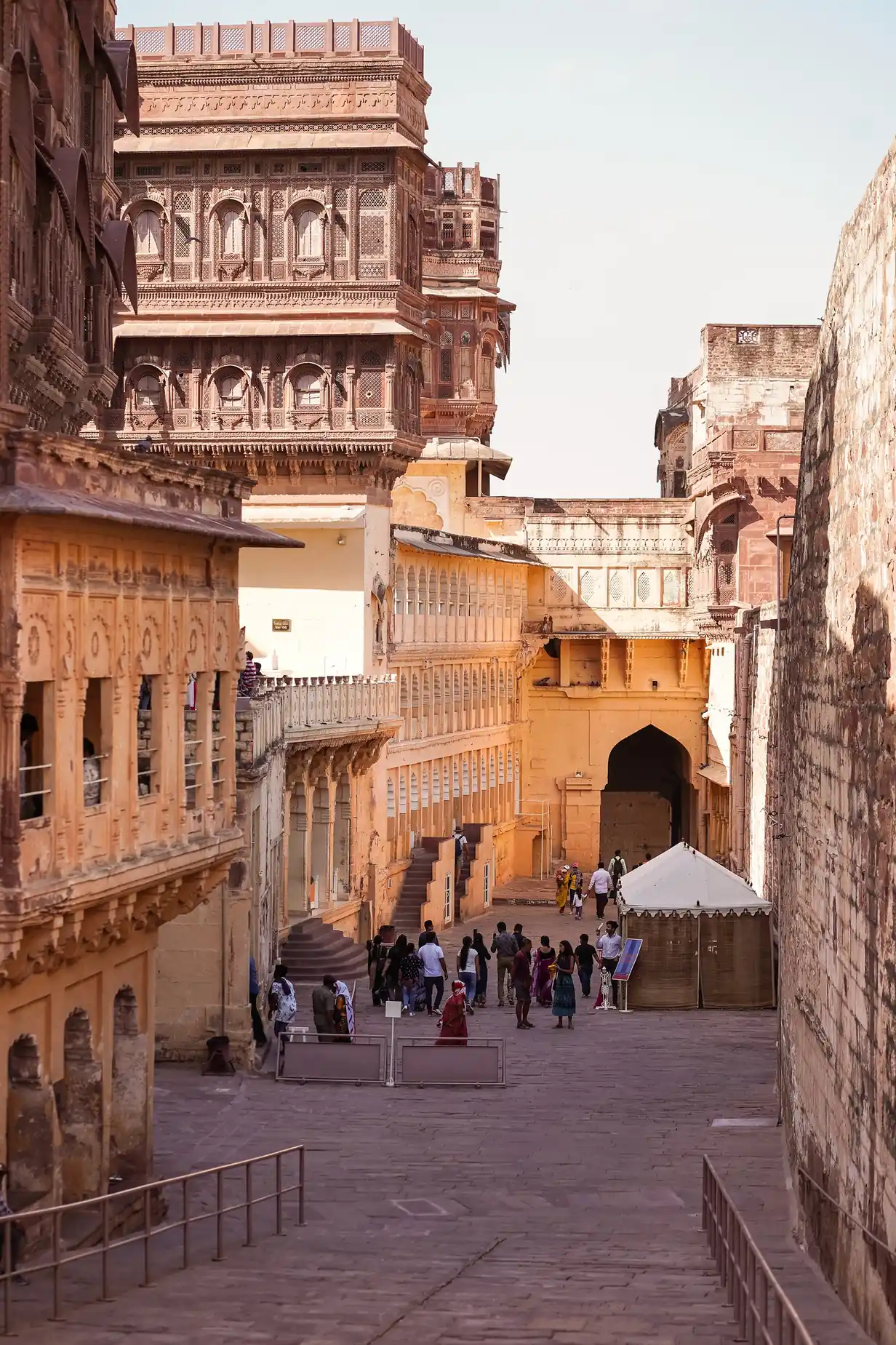
The fort sits atop a rocky hill overlooking the old city, and while it’s possible to walk up through the old city’s narrow lanes, most visitors arrive by auto-rickshaw or taxi, which can drop passengers close to the entrance gates. A lift is also available for visitors who prefer not to make the uphill walk, running for a small one-way fee. Whichever route is chosen, comfortable footwear is worth wearing given the amount of walking involved once inside the fort itself.
How Much Time to Allow
A thorough visit with the audio guide typically takes two to three hours, covering the main palace museum galleries, the ramparts, and the various courtyards. Visitors short on time can see the highlights in around ninety minutes by prioritising the Phool Mahal, Moti Mahal, the armoury, and the ramparts, though this pace means skipping some of the smaller galleries and craft displays. Combining Mehrangarh Fort with the adjacent Chokelao Bagh garden, or a visit to Jaswant Thada immediately afterward, is a common and efficient way to structure a half-day of sightseeing, since both are within easy walking or short driving distance of the fort’s main gate.
Best Time of Day to Visit
Arriving close to the fort’s opening time is the single best strategy for a comfortable visit, both because the temperature is at its most manageable and because the crowds that build through the late morning and early afternoon haven’t yet arrived. Photographers in particular benefit from an early visit, since the soft directional morning light on the fort’s sandstone walls and the near-empty ramparts overlooking the Blue City offer noticeably better conditions than the flatter, harsher light of midday. Late afternoon, closer to sunset, is the second-best window, offering golden light over the city views, though by this point the fort itself can feel more crowded with the day’s final wave of visitors.
Photography Inside the Fort
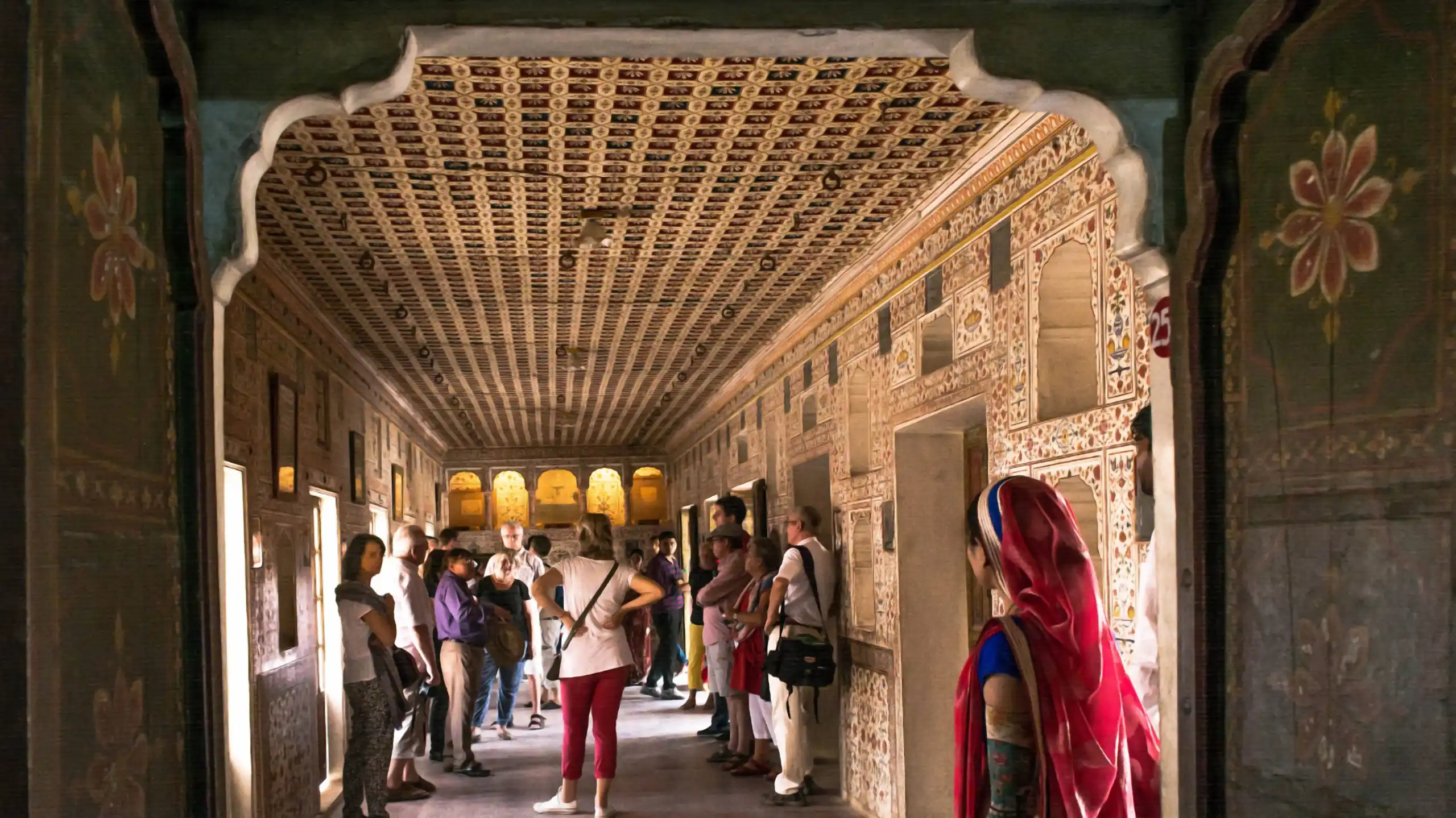
Standard still photography is generally permitted throughout most of Mehrangarh Fort, though flash and tripods are restricted in specific galleries to protect fragile textiles and artwork, and video cameras typically require an additional fee. The ramparts offer the best photography of the Blue City below, particularly in the soft morning light shortly after opening.
Tips for Visiting
Arrive by 9 AM to beat both the heat and the crowds, and budget at least two to three hours for the museum and ramparts — the fort is considerably larger than it appears from outside. For travellers looking for something more active, the Flying Fox zipline, launching from within the fort complex, is worth considering as an add-on for a different perspective on the fort’s scale.
The Fort’s Role in Jodhpur’s Identity
Mehrangarh Fort isn’t simply Jodhpur’s top attraction — it’s the reason the city exists in its current location and form. Every other major sight in Jodhpur, from Jaswant Thada to the old city’s blue-washed lanes, developed in the fort’s shadow, both literally and historically, and understanding the fort’s central role helps make sense of the rest of the city’s layout and character. The fort is managed today by the Mehrangarh Museum Trust, a charitable body connected to the former royal family, which has invested heavily in conservation and museum standards over several decades — widely cited as one of the better-run heritage sites in India as a direct result.
FAQ
How much time should I set aside for Mehrangarh Fort?
Two to three hours covers the main courtyards, museum, and ramparts at a comfortable pace.
Is there an entry fee for Mehrangarh Fort?
Yes, tickets are sold at the entrance, with separate rates for the audio guide and camera use.
Is Mehrangarh Fort wheelchair accessible?
An elevator connects the base to the upper courtyards, though some interior sections remain difficult to access.
What’s the best time of day to visit?
Late afternoon offers cooler temperatures and better light for photography of the sandstone walls.
Is a guide necessary at Mehrangarh Fort?
Not essential, since the audio guide covers most rooms in detail, though a human guide adds context.