Umaid Bhawan Palace Jodhpur: History, Heritage & What to See
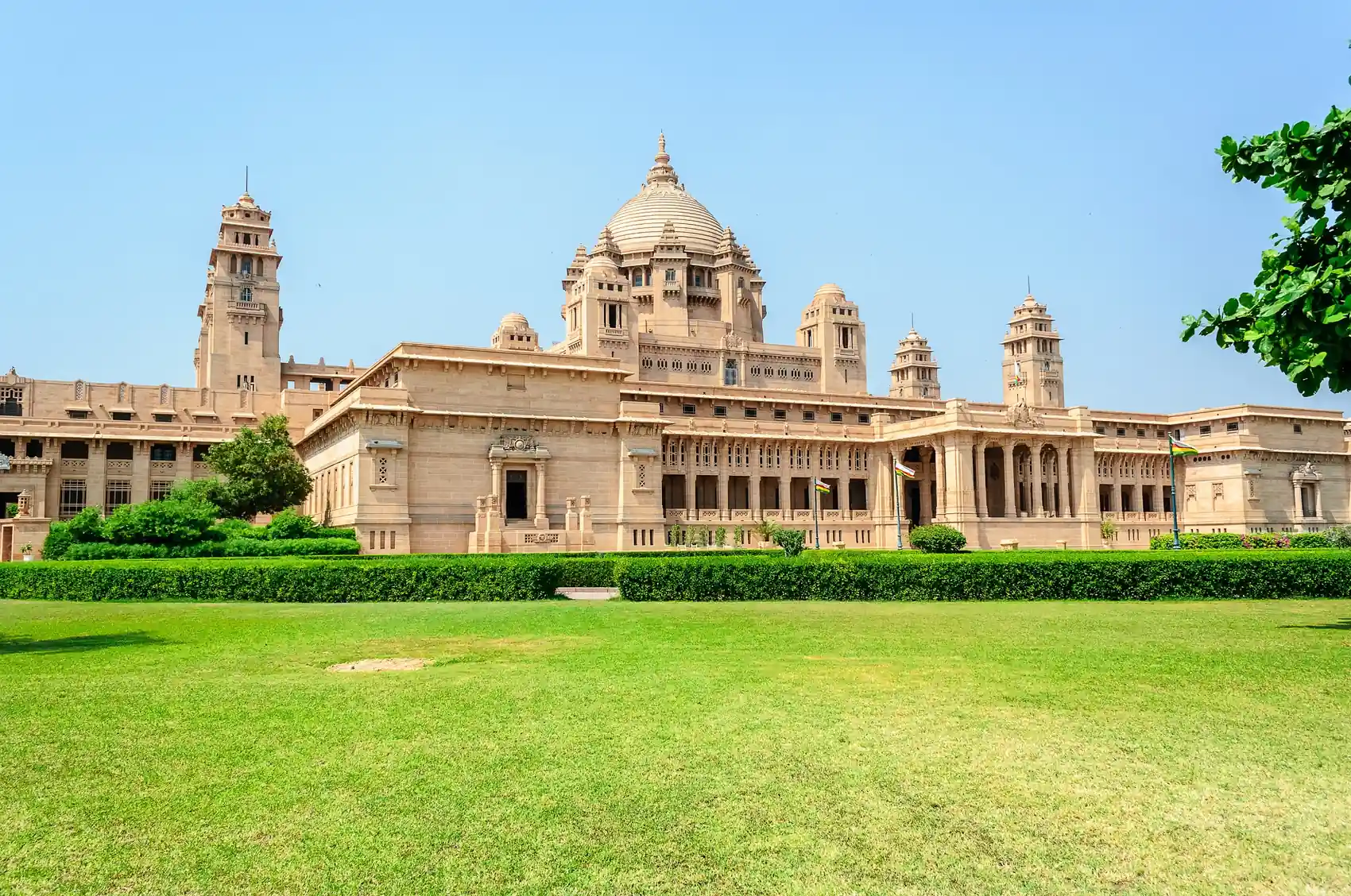
Umaid Bhawan Palace is one of the largest private residences in the world and remains a working royal residence, a luxury heritage hotel, and a small museum all at once, making it one of Jodhpur’s most distinctive attractions. Built between 1928 and 1943 primarily as a famine-relief employment project during a period of severe drought in the region, the palace blends Indo-Saracenic and Art Deco architectural styles in a way that sets it apart from Jodhpur’s older Rajput-era forts and havelis.
History and Origins
The palace was commissioned by Maharaja Umaid Singh, after whom it is named, largely as a public works project intended to provide employment to local labourers during a prolonged famine in the late 1920s. Construction took around fifteen years, from 1928 to 1943, and reportedly employed thousands of workers, using sandstone quarried locally and marble and materials sourced from across India and abroad. The building was designed by British architect Henry Vaughan Lanchester, whose Indo-Saracenic and Art Deco influences give the palace a notably different visual character from Jodhpur’s older Rajput monuments, reflecting the changing tastes and international connections of the early twentieth-century Marwar royal family.
Three Functions Under One Roof
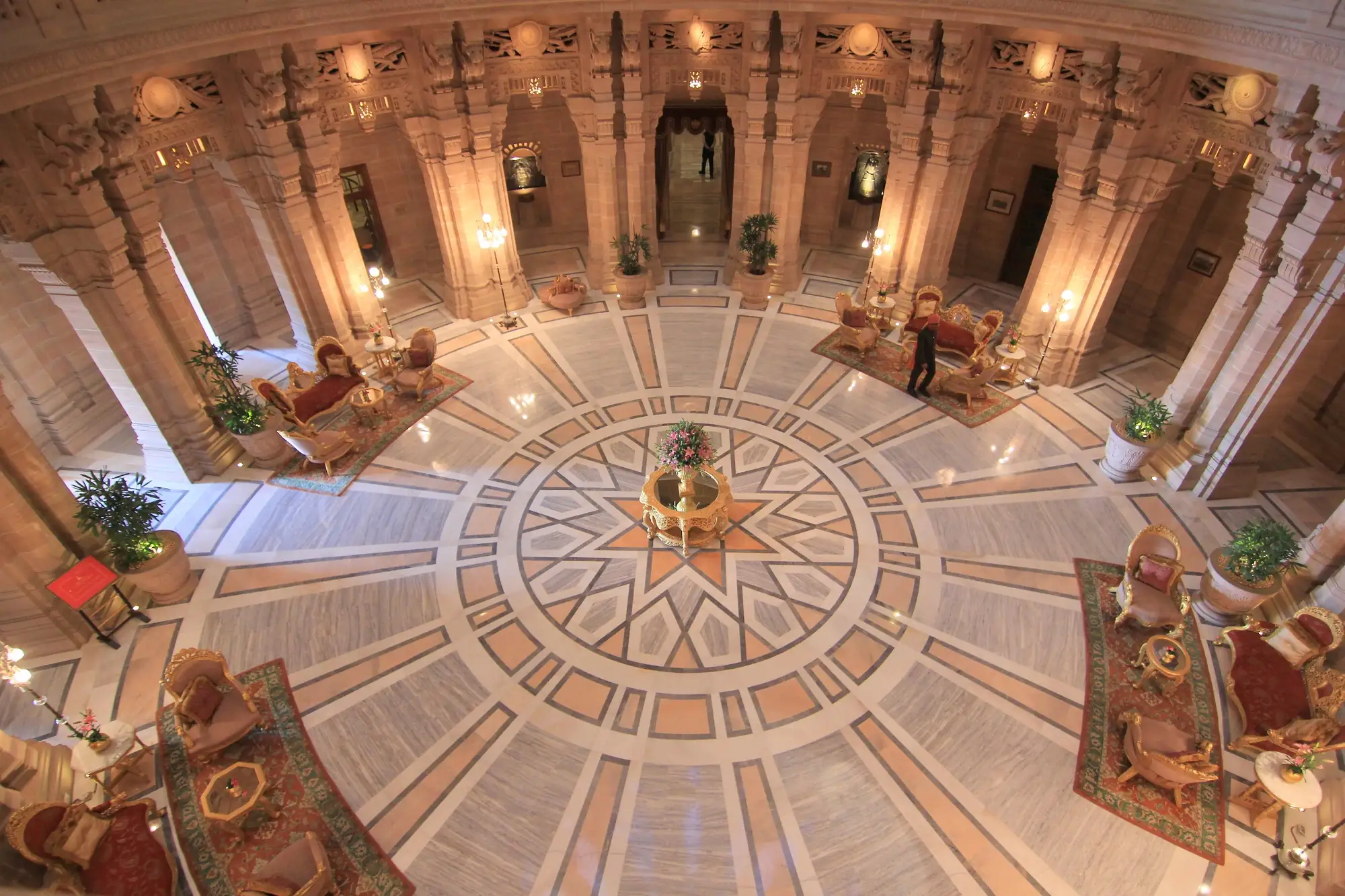
The palace today serves three distinct functions simultaneously: a portion remains the private residence of the Jodhpur royal family, another operates as a luxury Taj hotel, and a third houses a public museum open to all visitors — a division that allows public access while preserving the family’s ongoing connection to the building.
Architecture and Design
Umaid Bhawan Palace is built almost entirely from locally quarried sandstone, dressed on site into large interlocking blocks and assembled without the use of mortar — a traditional technique that gives the structure notable durability. The building’s scale is vast, with hundreds of rooms spread across the complex. The interiors combine Rajput decorative elements with striking Art Deco detailing, including murals by the Polish artist Stefan Norblin, whose work throughout the palace is considered a significant example of Art Deco art in India. The palace’s central dome rises to a considerable height and dominates Jodhpur’s skyline from certain vantage points, offering a very different silhouette from the fort’s more rugged profile.
The Palace Museum
The museum wing, open to the public, houses a collection including royal memorabilia, vintage cars from the royal garage, clocks, china, and photographs documenting the palace’s construction and the royal family’s history. Exhibits provide useful context on both the building process itself, including original architectural drawings and construction photographs, and the broader history of the Jodhpur royal family through the twentieth century. The museum is considerably smaller in scope than Mehrangarh Fort’s museum but offers a distinctly different angle on Marwar’s royal history, focused on the more recent, modern era rather than the medieval and early-modern periods covered at the fort.
The Palace Gardens and Grounds
Umaid Bhawan Palace sits within extensive landscaped grounds covering a substantial area, including manicured lawns, gardens, and sporting facilities such as tennis and squash courts maintained as part of the hotel’s grounds today. The scale of the surrounding estate is considerably larger than what most visitors expect, reflecting the palace’s original conception as a self-contained royal complex rather than a single standalone building. Museum visitors typically see only a small portion of these grounds near the entrance, with the more extensive gardens reserved for hotel guests.
Staying at the Palace Hotel
For travellers with the budget and interest, staying at the Umaid Bhawan Palace hotel offers an entirely different Jodhpur experience, with access to the palace’s grounds, restaurants, and facilities well beyond what museum visitors see. Room rates sit firmly at the luxury end of the spectrum, reflecting both the palace’s heritage status and the Taj group’s positioning of the property as one of its flagship hotels globally. Even travellers not staying overnight sometimes visit the hotel’s public areas for a meal or drink, subject to the hotel’s own access policies, as a way of experiencing more of the property than the museum ticket alone provides.
Visiting as a Non-Guest
Visitors who are not staying at the hotel can access the museum wing with a standard entry ticket, though the luxury hotel wing and the residential wing remain off-limits to non-guests, as would be expected given their private and commercial functions. The museum entrance and visitor parking are separate from the main hotel entrance, and security procedures are notably more thorough here than at Jodhpur’s other heritage sites, reflecting the palace’s continued use as both a royal residence and a high-end hotel. Staying overnight as a hotel guest offers considerably fuller access to the palace’s grounds and interior spaces than a museum ticket alone — a meaningful difference worth weighing for travellers deciding how deeply to engage with this particular site.
Can Visitors Tour the Entire Umaid Bhawan Palace?
No — only the museum wing is open to the public. The residential wing remains the private home of the royal family, and the hotel wing is accessible only to registered guests of the Taj property.
Comparing Umaid Bhawan to Mehrangarh Fort
Travellers often ask whether Umaid Bhawan Palace or Mehrangarh Fort is more worth prioritising if time is limited, and the honest answer is that the two offer distinctly different experiences rather than a straightforward substitute for one another. Mehrangarh Fort offers a deeper, more extensive museum experience covering centuries of Marwar history within a dramatic hilltop setting, while Umaid Bhawan offers a narrower but visually striking glimpse into the twentieth-century royal era and a distinctive architectural style found nowhere else in the city. Most travellers with more than a single day in Jodhpur choose to visit both rather than picking one over the other.
Is Umaid Bhawan Palace Worth Visiting Alongside Mehrangarh Fort?
Yes — most travellers find the two complementary rather than redundant, since Umaid Bhawan offers a very different architectural style and a more recent slice of royal history compared to the fort’s medieval and early-modern focus.
Photography and Filming
Umaid Bhawan Palace’s scale and striking architecture have made it a sought-after venue for high-profile private events — most famously, actress Priyanka Chopra and singer Nick Jonas held their 2018 wedding celebrations here, drawing international attention to the property. For everyday visitors, however, photography within the museum is more tightly controlled than at Jodhpur’s other heritage sites, and permissions for any professional or commercial photography need to be arranged well in advance directly with the palace’s management.
Practical Visiting Information
The museum is generally open daily with standard visiting hours, and a separate ticket is required from Mehrangarh Fort and Jaswant Thada, since the palace is managed independently by the royal family’s trust rather than jointly with the fort. Photography policies inside the museum are typically more restrictive than at the fort, with certain galleries prohibiting cameras altogether, so checking current rules at the entrance is worthwhile. The palace is located at some distance from the old city and Mehrangarh Fort, generally requiring a taxi or auto-rickshaw rather than being walkable from the main heritage cluster.
How Do I Get to Umaid Bhawan Palace From the Old City?
The palace is a short taxi or auto-rickshaw ride from the old city and Mehrangarh Fort, generally taking around fifteen to twenty minutes depending on traffic, since it sits on the opposite side of the city from the fort.
What Is the Best Time of Day to Visit the Umaid Bhawan Palace Museum?
Morning visits tend to be quieter and cooler, and since the museum’s indoor galleries are less dependent on natural light than an outdoor site, the time of day matters somewhat less here than at Mehrangarh Fort or Jaswant Thada.
Is Umaid Bhawan Palace Family-Friendly for Visitors With Young Children?
Yes — the museum is a manageable size for a family visit, and the vintage car collection in particular tends to be popular with younger visitors, making it an easier stop than the more extensive Mehrangarh Fort for families travelling with small children.
FAQ
Can visitors stay at Umaid Bhawan Palace?
Part of the palace operates as a luxury hotel, while another section houses a public museum.
What can visitors see at Umaid Bhawan Palace museum?
Vintage cars, royal artifacts, and Art Deco interiors documenting the palace’s construction and history.
Is Umaid Bhawan Palace still home to the royal family?
Yes, a portion remains a private residence for the Jodhpur royal family.
How much time should I plan for the museum visit?
About an hour covers the museum sections comfortably without feeling rushed.
Is Umaid Bhawan Palace far from the old city?
It sits a short drive from the old city, making it easy to combine with other sightseeing.