Toorji Ka Jhalra: Jodhpur’s Historic Stepwell Guide
Toorji Ka Jhalra, commonly known as the Stepwell, is one of Jodhpur’s most striking and Instagram-famous heritage sites, tucked into the old city’s narrow lanes not far from the Clock Tower and Sardar Market. Built in the 1740s under the patronage of Maharani Toorji, one of the royal wives, this red sandstone stepwell descends in symmetrical tiers to a pool of water far below street level, creating a dramatic geometric pattern that draws photographers, architecture enthusiasts, and casual visitors alike. Unlike many of Rajasthan’s stepwells, which have fallen into disrepair or been fenced off entirely, Toorji Ka Jhalra has been restored and now sits at the centre of a small but lively cluster of cafes and boutique shops, giving it a distinctly different atmosphere from a purely historical monument.
History and Purpose
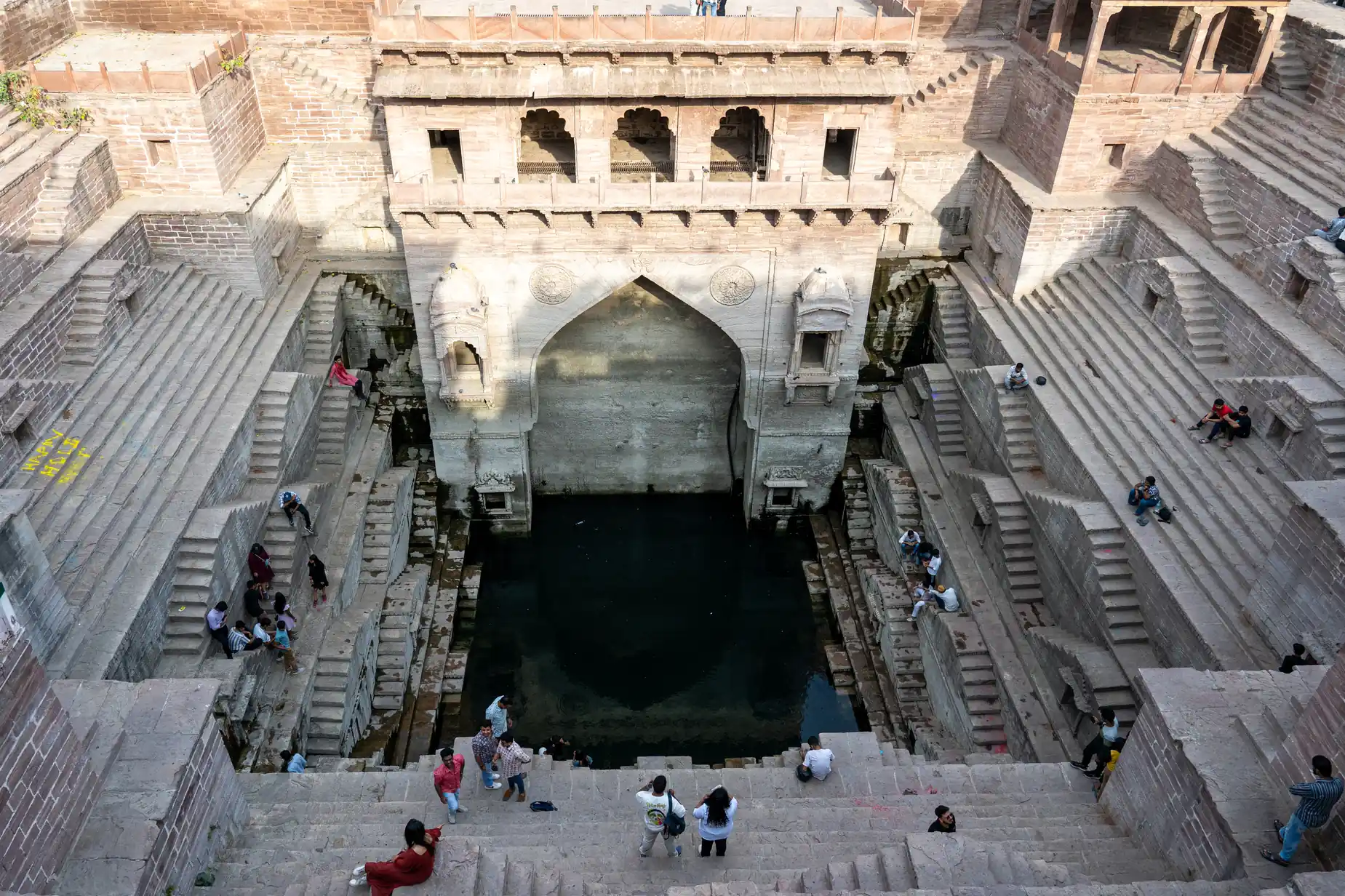
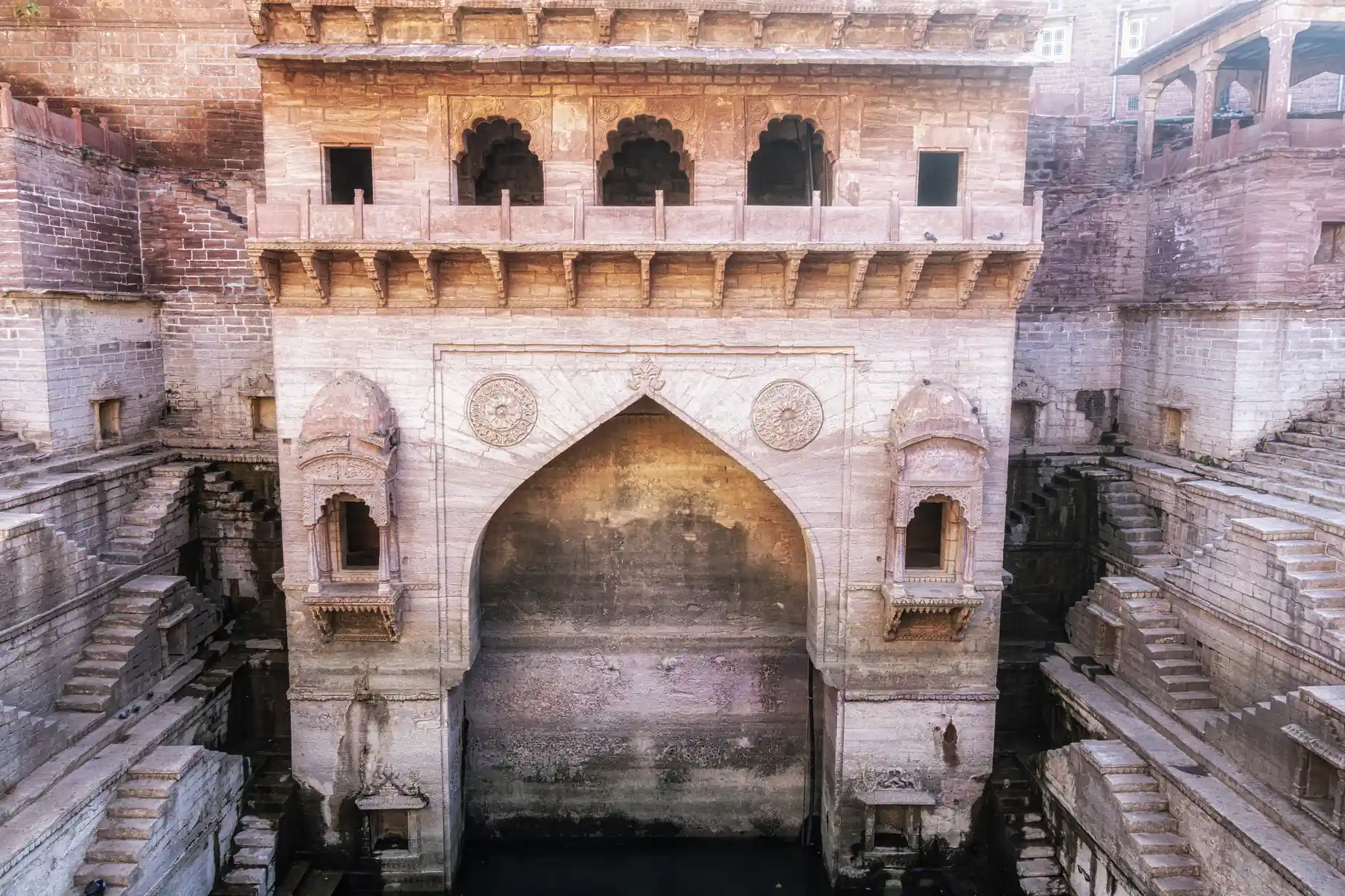
Stepwells like Toorji Ka Jhalra were built across Rajasthan as a practical response to the region’s arid climate and unreliable rainfall, providing a reliable water source that remained accessible even as groundwater levels fluctuated seasonally. Beyond their functional role, stepwells also served as social and communal spaces, particularly for women, who would gather at the wells to collect water and socialise away from the more public spaces of the city. Toorji Ka Jhalra was commissioned in the 1740s during the reign of Maharaja Abhay Singh by his queen consort, Maharani Toorji, specifically to provide the surrounding neighbourhood with reliable water access during Rajasthan’s frequent dry periods — a practical civic purpose that predates its current popularity as a photography destination by centuries. The stepwell’s design channels rainwater and groundwater into a deep rectangular tank accessed by symmetrical carved steps descending several stories, an engineering approach common across historic Rajasthan but rarely as visually striking as this particular example.
Architecture and Design
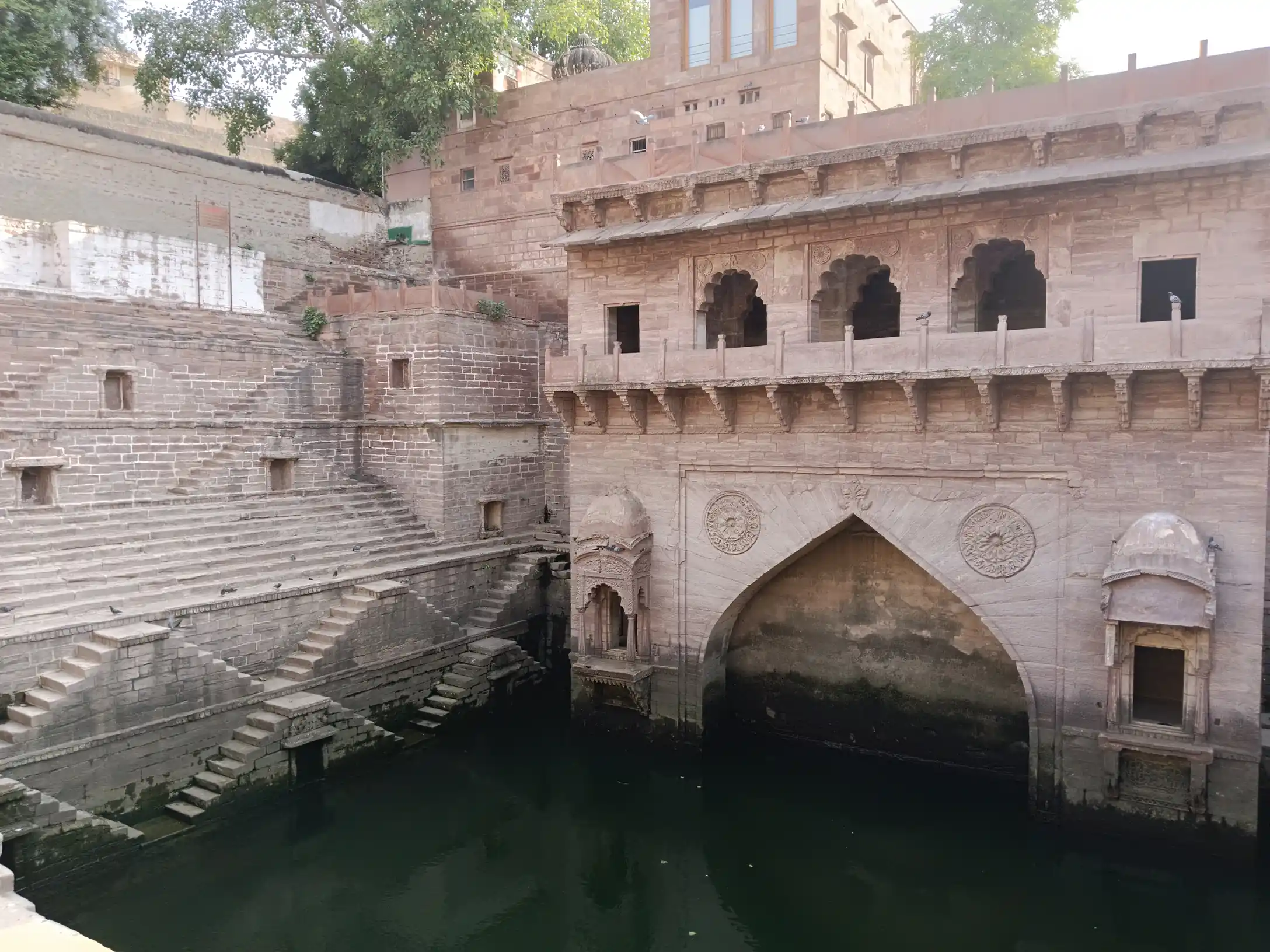
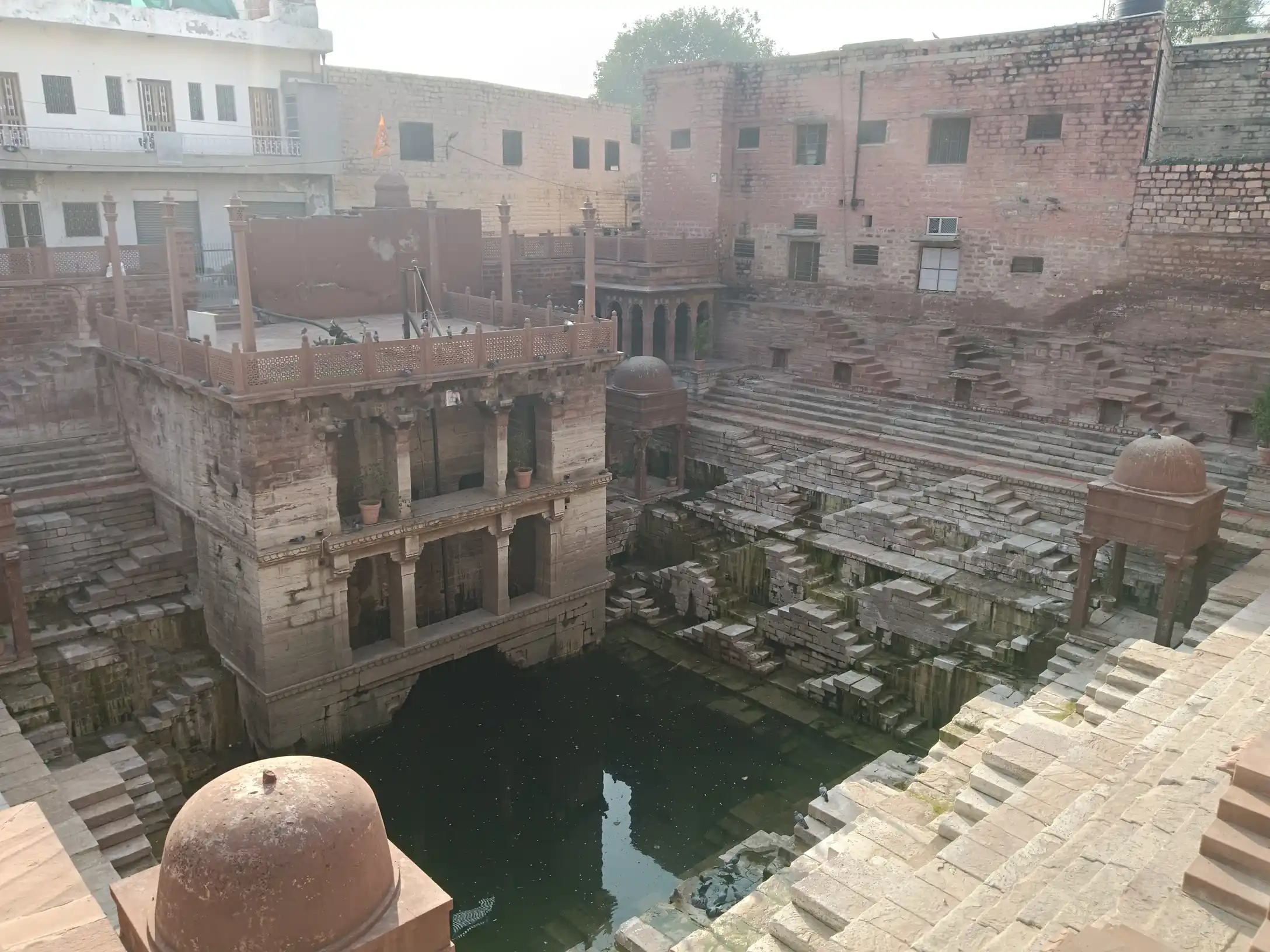
The stepwell descends in a series of symmetrical stone tiers carved from local red sandstone, creating a striking geometric effect when viewed from above, with the carved steps forming repeating diagonal patterns down to the water. Small carved niches and decorative elements are set into the surrounding walls, and the well’s proportions and craftsmanship reflect the same architectural traditions found in Jodhpur’s larger monuments, scaled down into a more intimate, functional structure.
Restoration and Modern Revival
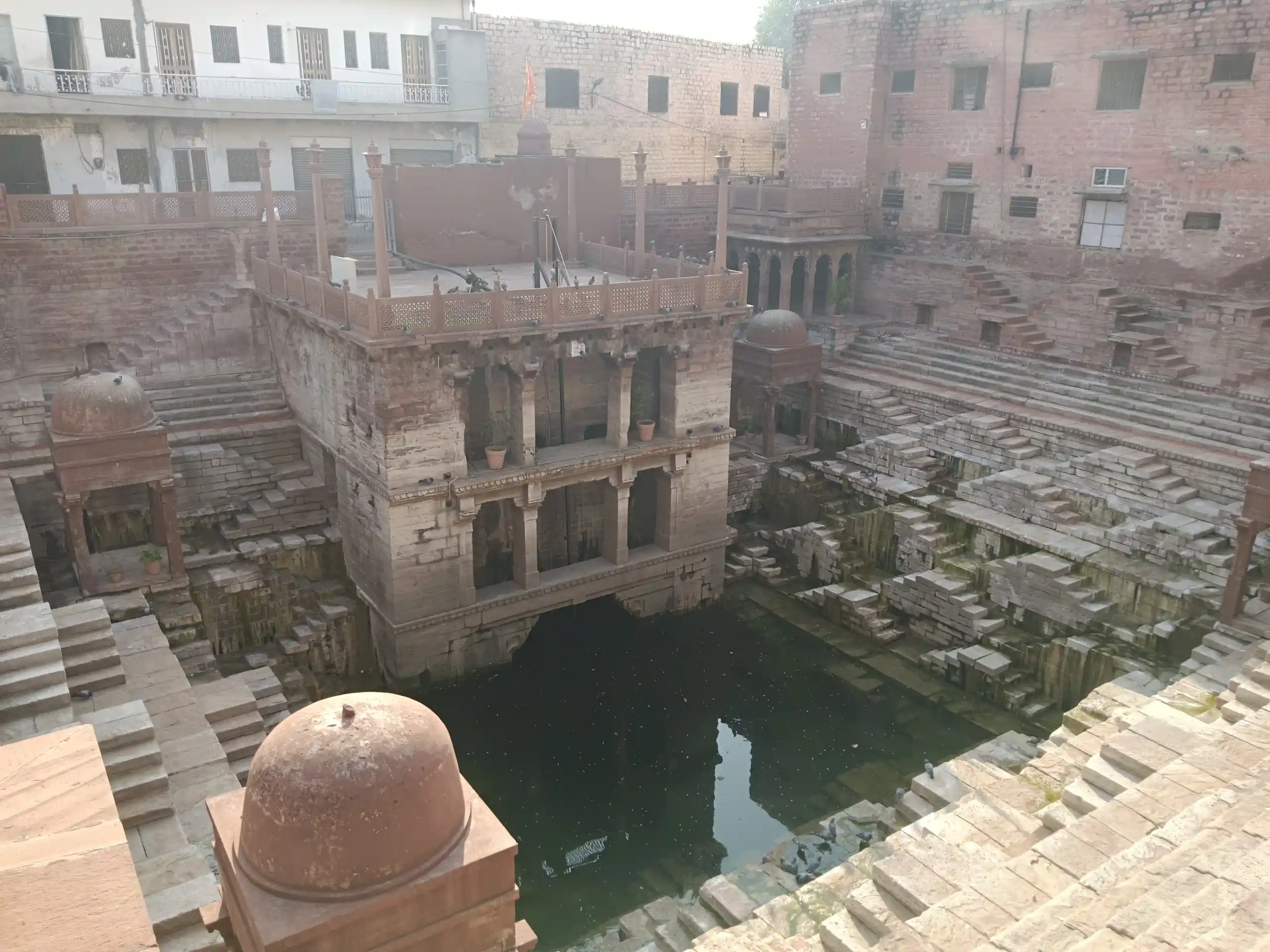
After decades of neglect and disuse, as municipal water systems replaced traditional stepwells across the city, Toorji Ka Jhalra underwent significant restoration in recent years — cleaning and stabilising the structure while the surrounding lanes developed into a small but lively cluster of cafes and boutique shops. The restoration work has preserved the well’s original character while making it safe for visitors to walk around the upper tiers and view the full depth of the well.
The Surrounding Neighbourhood
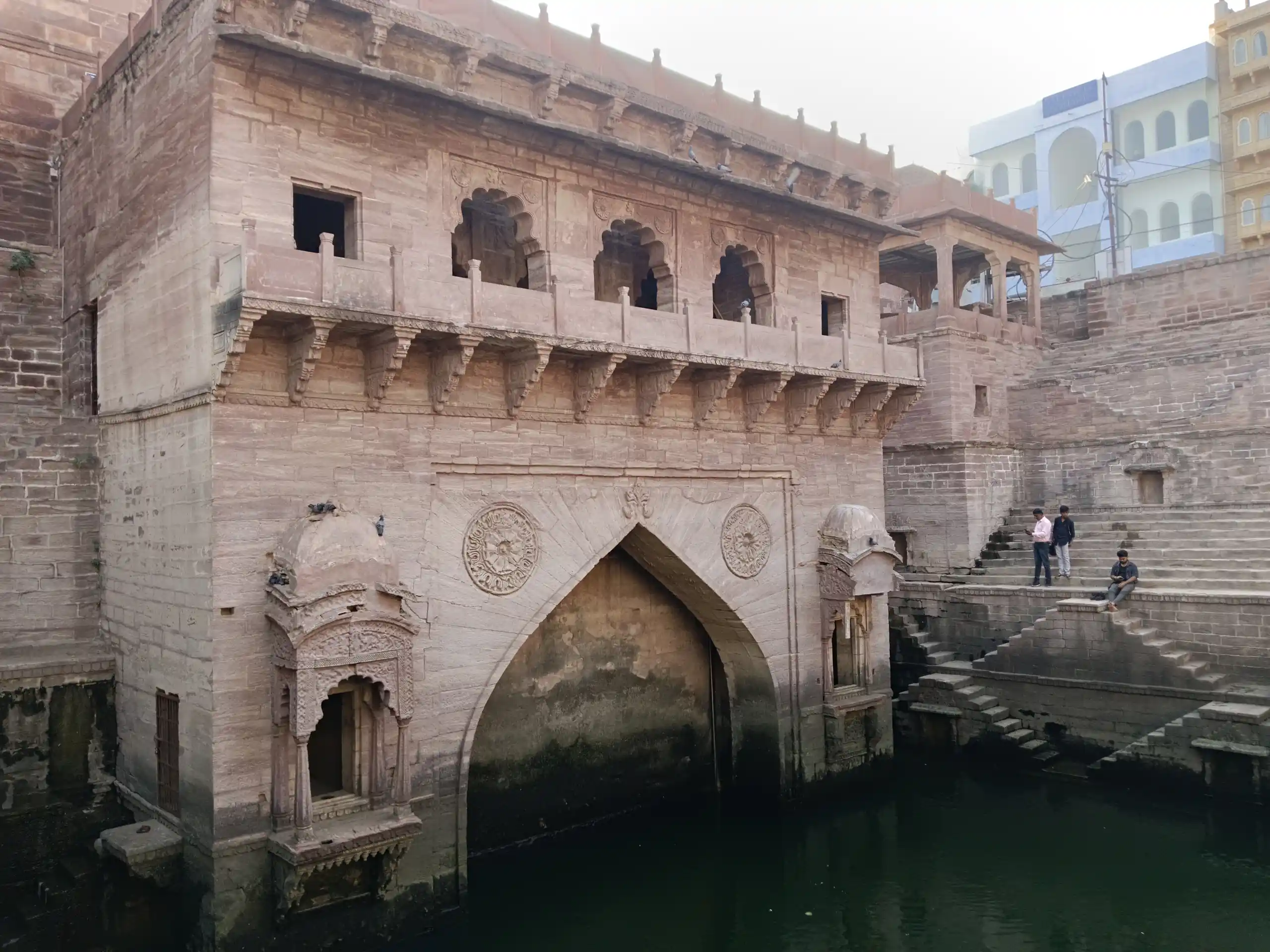
What sets Toorji Ka Jhalra apart from many other historical stepwells in India is the neighbourhood that has grown up around it — sometimes called Stepwell Square — with several well-regarded cafes, restaurants, and boutique shops occupying restored havelis overlooking the stepwell itself. This makes it a natural stop not just for the monument but for a relaxed meal or coffee with a view over the historic structure, and the area has become one of Jodhpur’s more popular, fashionable small districts for travellers looking for a break from temple and fort sightseeing. The blend of heritage architecture and contemporary cafe culture here is fairly unique within Jodhpur’s old city.
Best Time to Visit
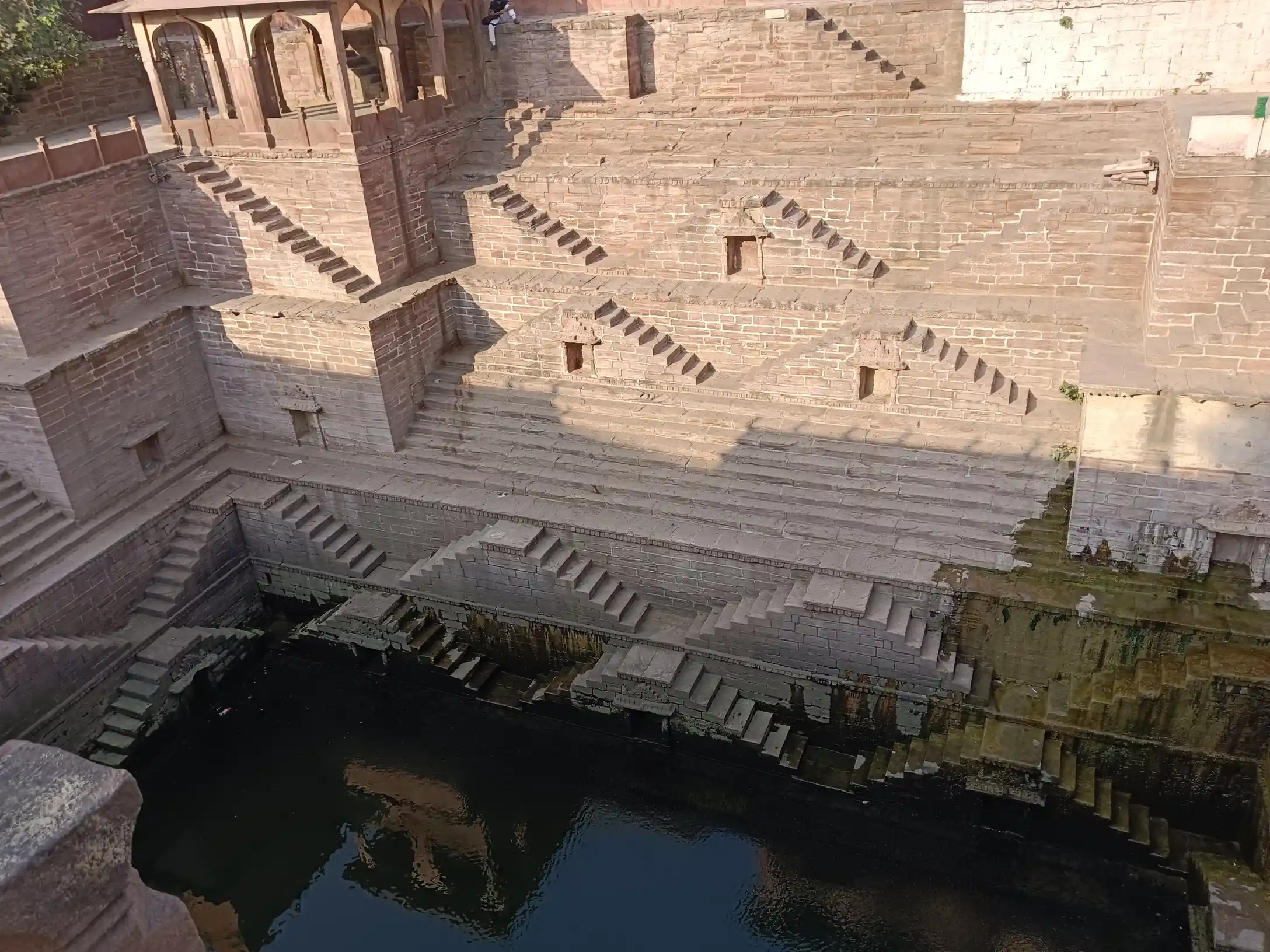
Toorji Ka Jhalra is particularly striking in the soft light of early morning or late afternoon, when the sandstone tiers catch warm directional light and the crowds are thinner than at midday. Early morning visits, before the surrounding cafes are fully open and crowds build, offer the calmest encounter with the stepwell itself. Evening visits are also popular, particularly for travellers combining a stepwell visit with dinner at one of the surrounding rooftop cafes, several of which offer views directly over the well once it’s lit in the evening — adding a different, livelier dimension to experiencing the same site. The site is compact enough to visit at almost any point during a day of old city sightseeing without requiring significant time investment.
Getting There
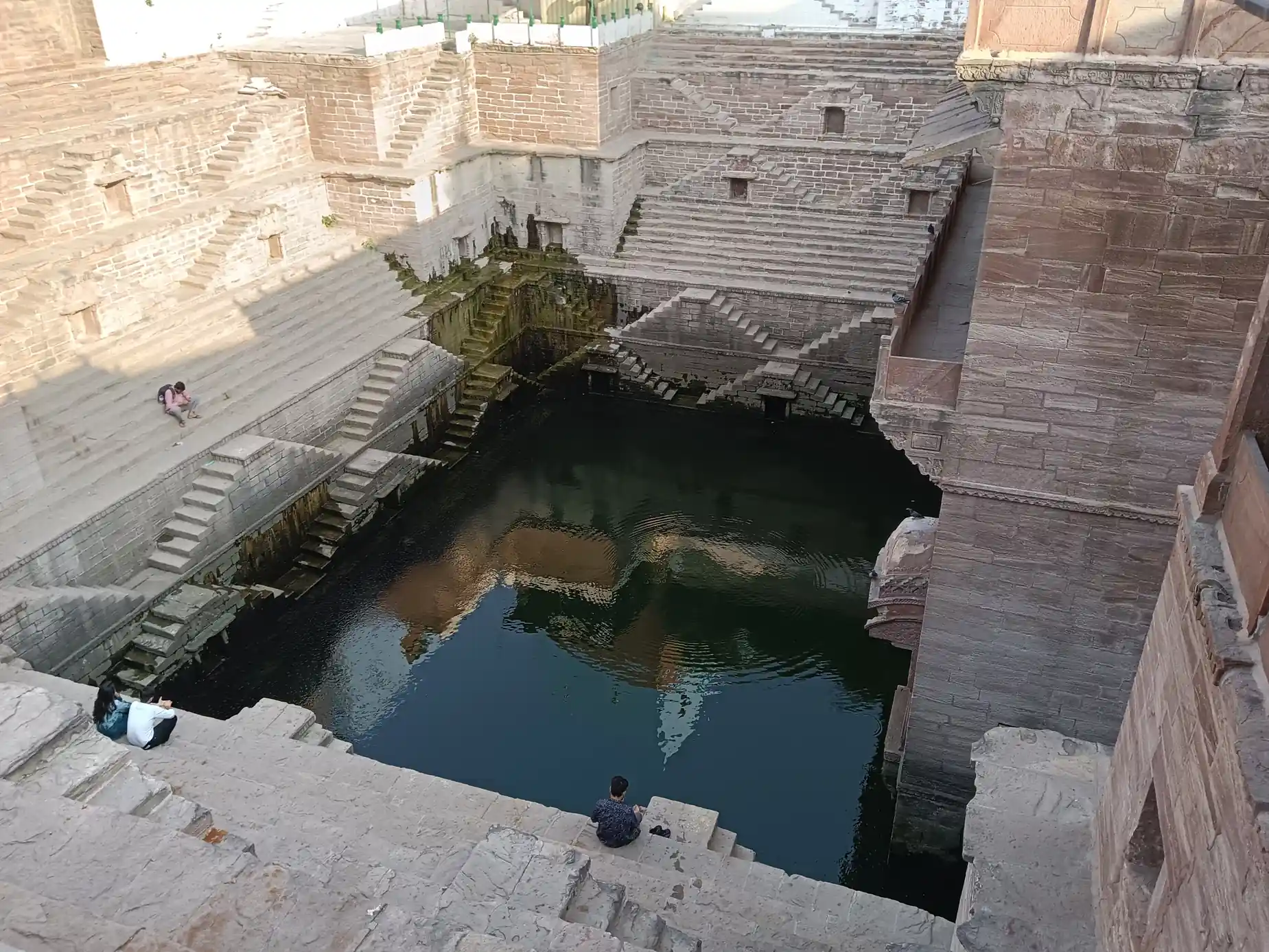
Toorji Ka Jhalra sits within Jodhpur’s old city, close to the Clock Tower and Sardar Market, making it easy to combine with a broader walking tour of the old city’s markets and lanes. The stepwell itself is free to visit, and its central location within the old city means most visitors reach it on foot as part of a longer walking route rather than needing a dedicated taxi or rickshaw trip.
Combining with Other Old City Sights
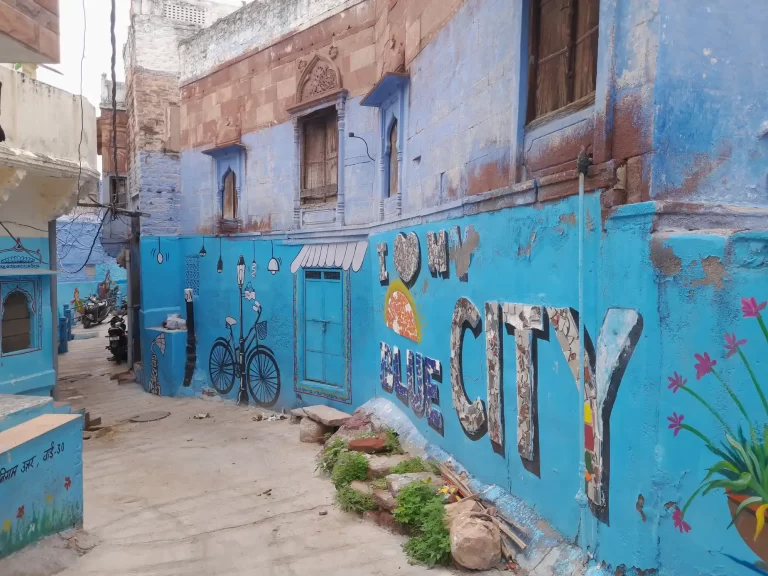
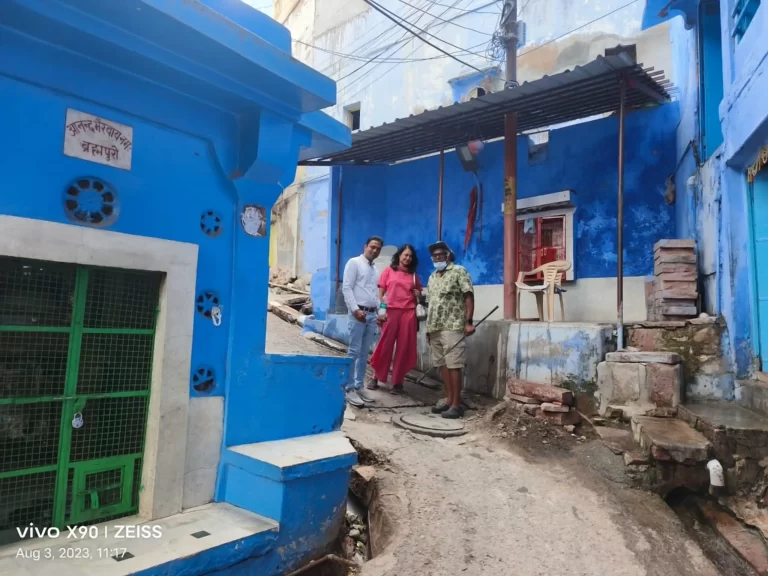
Toorji Ka Jhalra pairs naturally with a broader walking exploration of Jodhpur’s old city, including the Clock Tower, Sardar Market, and the blue-painted lanes of the Brahmpuri neighbourhood, all within comfortable walking distance of one another. Many visitors build a loose half-day itinerary around these old city sights, using the stepwell’s cafes as a natural lunch or coffee break partway through.
Photography Tips at the Stepwell
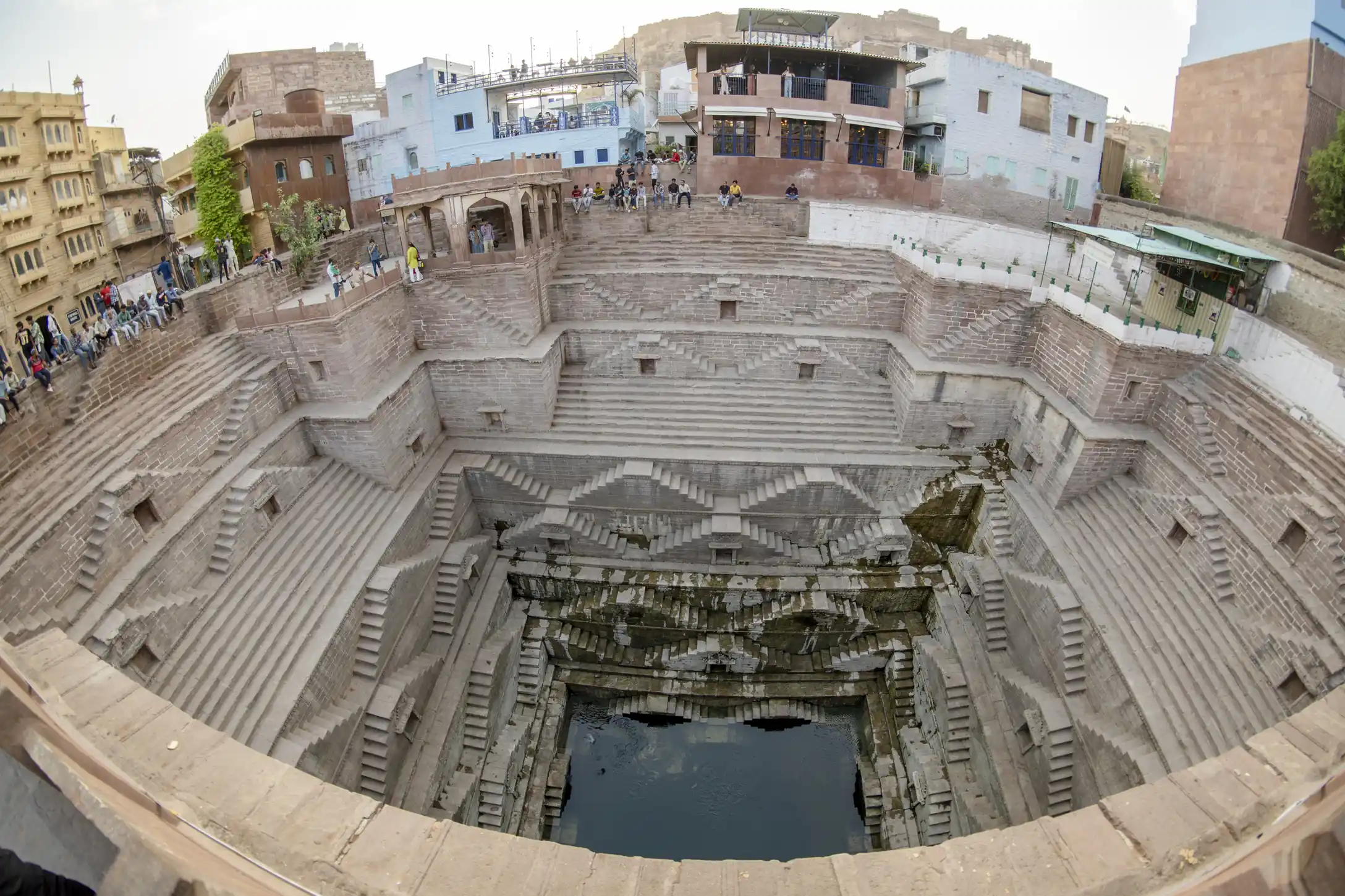
The stepwell’s tiered geometry photographs best from the upper platform looking directly down into the well, where the repeating diagonal lines of the steps create the strongest visual effect, particularly with even, diffused light rather than harsh midday sun. Many of the surrounding cafes have rooftop or balcony seating that offers an elevated view over the stepwell, providing an alternative angle that captures both the structure and its lively cafe surroundings in a single frame. Early morning light tends to produce the most flattering results, before the sandstone tiers are fully lit by direct overhead sun.
Shopping Near Toorji Ka Jhalra
The lanes surrounding the stepwell have developed into a small hub of boutique shops selling textiles, jewellery, and handicrafts, generally at a slightly higher price point than the older Sardar Market nearby but with a more curated, tourist-friendly shopping experience. This makes the area a convenient combined stop for travellers who want to see a heritage site, enjoy a meal, and browse for souvenirs without needing to travel between multiple separate parts of the old city.
Visiting with Children
Toorji Ka Jhalra’s compact scale and the surrounding cafes make it a fairly easy, low-effort stop for families travelling with children, without the extensive walking and climbing required at Mehrangarh Fort. That said, supervision near the stepwell’s edges is important given the drop to the water below, and it’s worth keeping younger children close while exploring the upper platforms.
FAQ
What makes Toorji Ka Jhalra worth visiting?
Its restored stepwell architecture and the cafes surrounding it make for a relaxed, photogenic stop.
Is there an entry fee for Toorji Ka Jhalra?
No, the stepwell is freely accessible to visitors at any time.
How old is Toorji Ka Jhalra?
It dates back to the 18th century, built during the reign of Maharaja Abhay Singh.
Is Toorji Ka Jhalra easy to reach on foot?
Yes, it sits within the old city and is easily reached on foot from the fort area.
What’s the best time to visit Toorji Ka Jhalra?
Evening offers a calmer atmosphere and pleasant lighting around the surrounding cafes.