Why Is Jodhpur Called the Blue City? History & Meaning
Understanding why Jodhpur is known worldwide as the Blue City requires looking closely at the old city neighborhoods clustered directly below Mehrangarh Fort, where hundreds of houses are washed in varying shades of blue, creating one of Rajasthan’s most photographed urban views when seen from the fort’s ramparts above. The tradition has deep roots stretching back centuries, and while its exact origins remain debated among historians and locals alike, the cumulative visual effect today is undeniable, drawing photographers and curious travelers into the narrow lanes of Brahmpuri and surrounding neighborhoods specifically to see the phenomenon up close.
The Brahmin Caste Theory
The most commonly cited explanation for Jodhpur’s blue houses connects the color to the Brahmin caste, whose homes were traditionally painted blue to visually distinguish them from other residences in the old city. Over generations, what reportedly began as a caste marker spread well beyond the original Brahmin neighborhoods and into much of the broader old city, as the color became fashionable and eventually took on a broader civic identity of its own.
The Heat-Reflecting and Termite-Repelling Theory
A second widely cited explanation focuses on practicality rather than caste identity. The specific copper sulfate compound traditionally mixed into the whitewash is said to reflect heat more effectively than plain white, helping keep interiors cooler during Jodhpur’s intensely hot summers, while also acting as a natural insect repellent that discouraged termites and other pests from damaging the timber elements of traditional homes — a useful property in Jodhpur’s harsh desert climate regardless of whether it was the original motivation.
Which Theory Is Correct?
Most historians and local guides suggest both explanations likely played a role simultaneously: a caste-marking tradition that also happened to carry real practical benefits, reinforcing its adoption and eventual spread across the city regardless of any single resident’s original motivation for painting their home. Rather than treating the two theories as competing, it’s more accurate to see them as reinforcing each other over centuries of continued use.
Where to See the Best Blue City Views
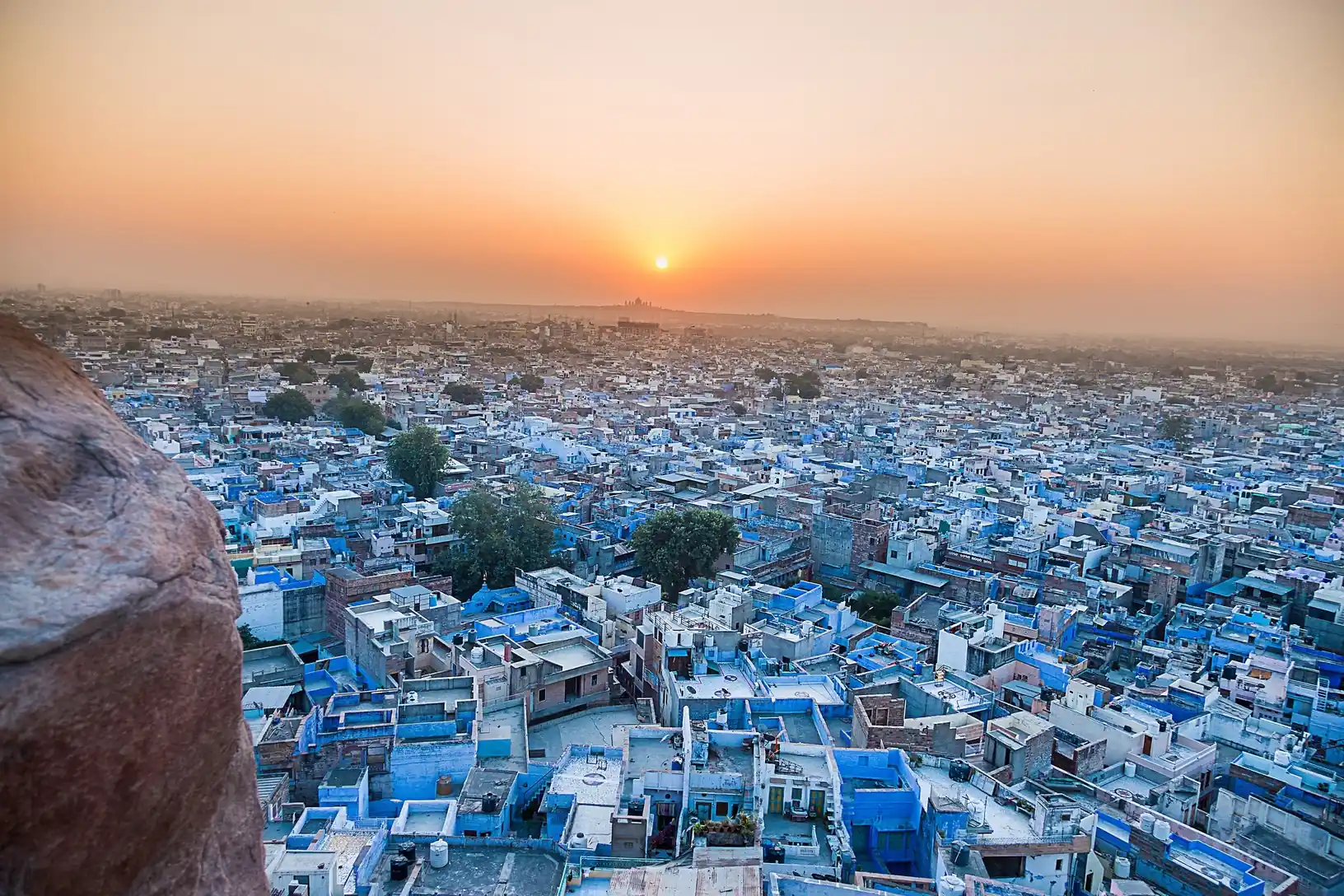
Mehrangarh Fort’s ramparts offer by far the most comprehensive and famous view over the Blue City, with the dense cluster of blue-washed houses spreading out directly below the fort’s walls in a way that’s difficult to fully appreciate from ground level within the neighborhoods themselves. Several rooftop cafes and restaurants in the old city also offer excellent, slightly lower-angle views without requiring the fort’s entry ticket, often combined with a meal, making them a popular alternative for travelers who want to linger over the view rather than photographing it briefly from the fort.
Walking Through the Blue Lanes
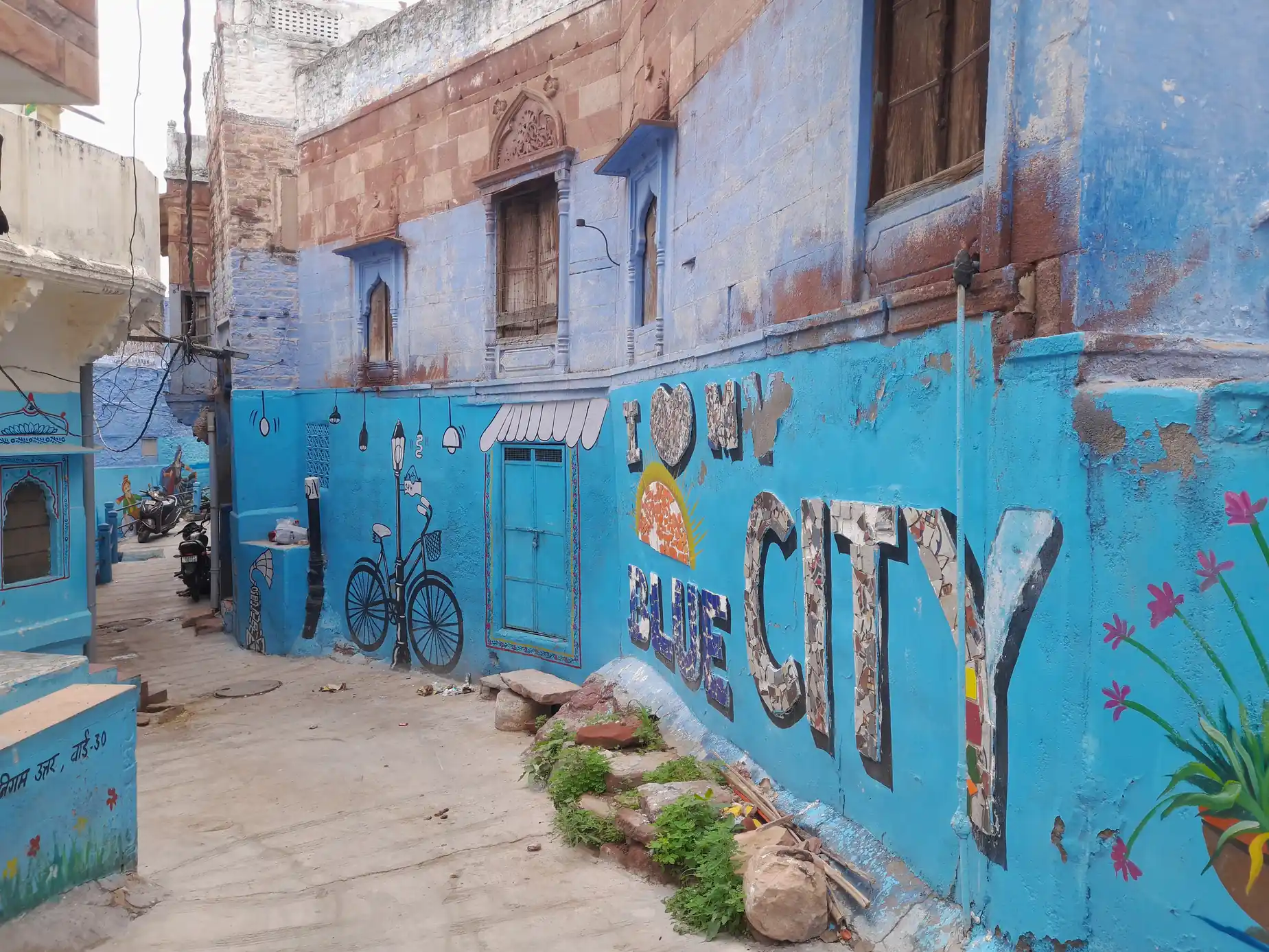
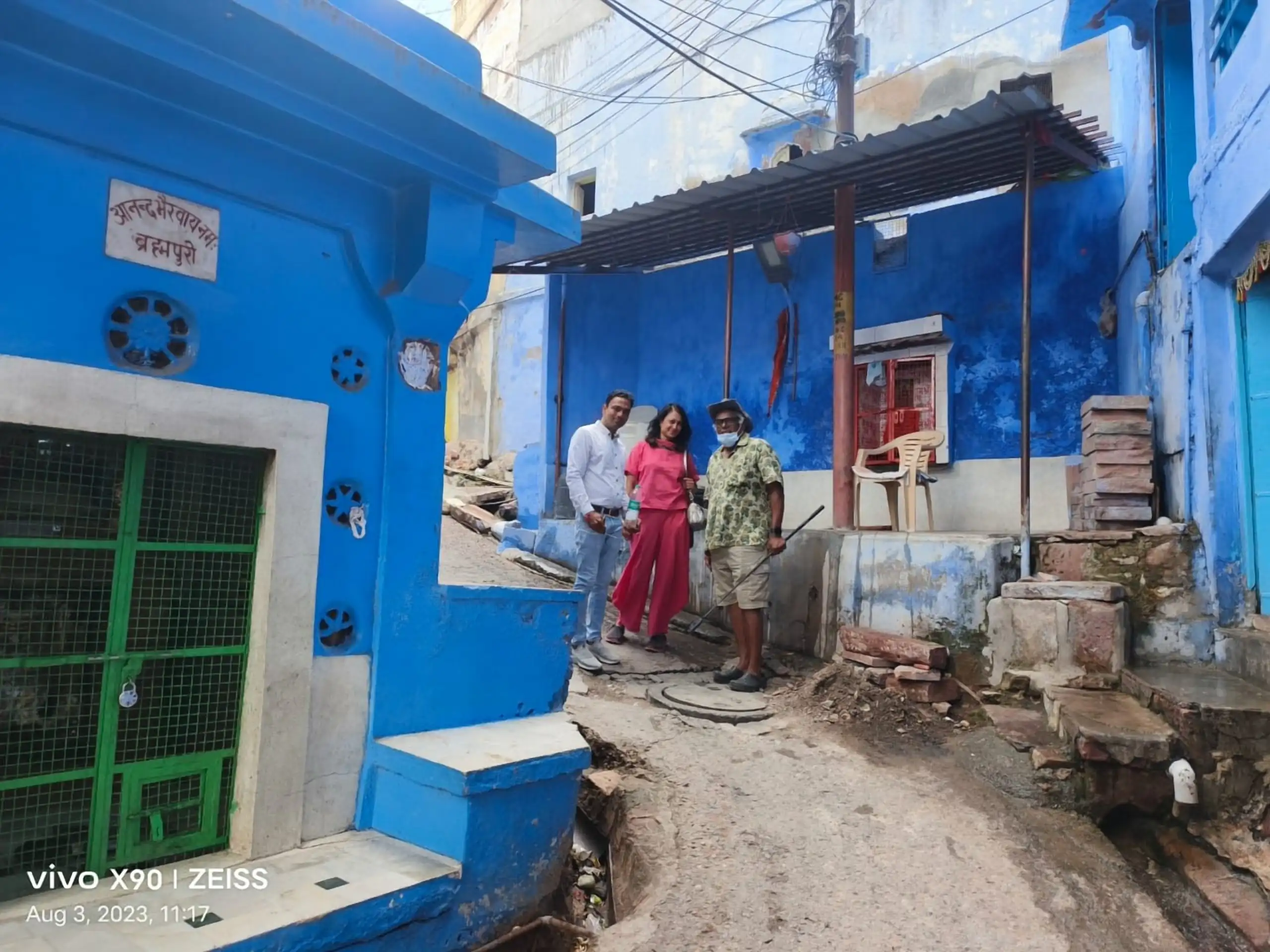
Beyond viewing the Blue City from above, walking directly through the narrow lanes of Brahmpuri offers a more intimate perspective, revealing the texture and variation in blue shades between individual houses, from deep indigo to pale sky blue depending on the specific paint mixture used and how recently a house was repainted, along with the everyday life continuing inside these historic residential lanes largely unrelated to the tourism the neighborhood now attracts.
Is the Entire Old City Blue?
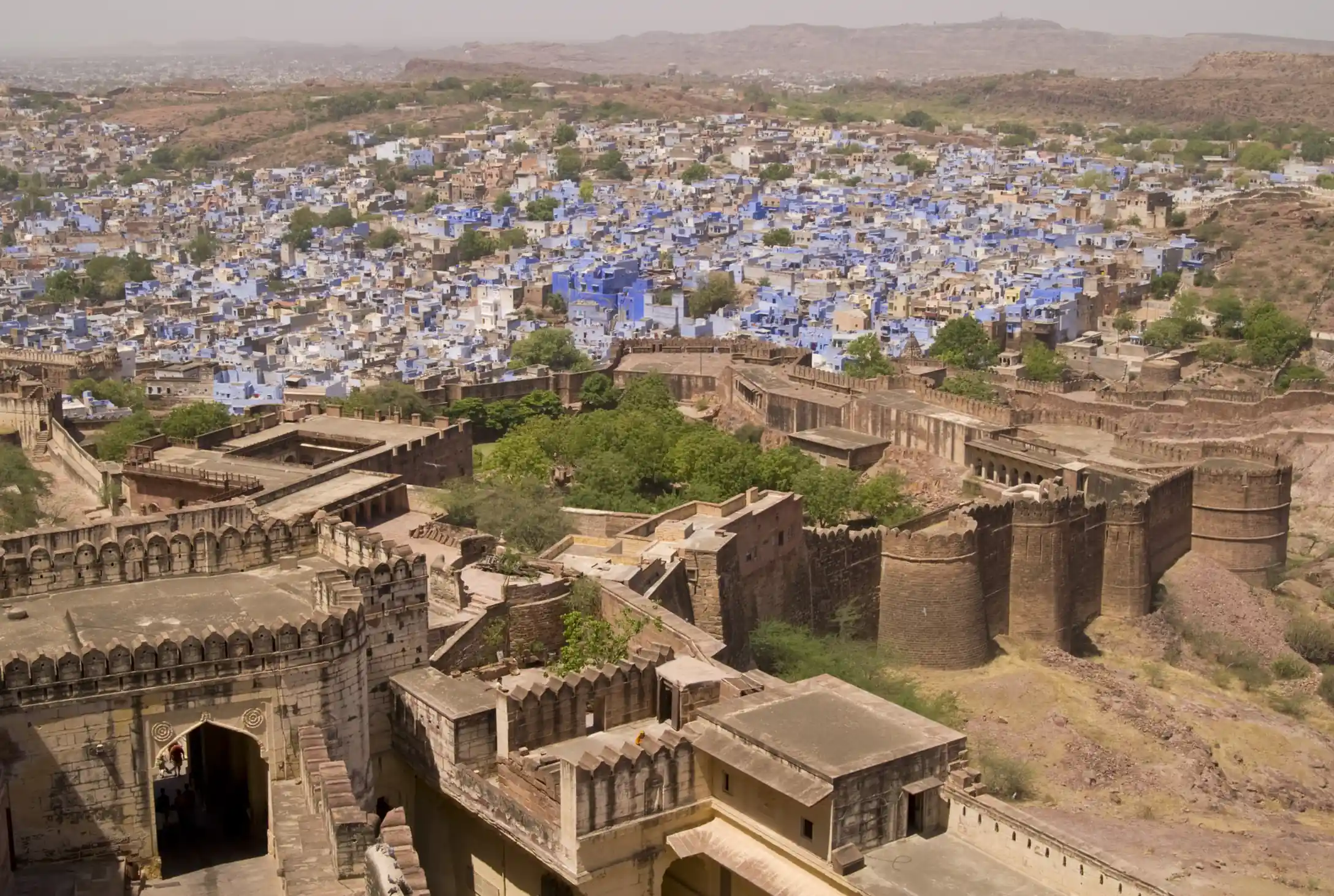
Not entirely. The blue coloring is concentrated most densely in specific neighborhoods near the fort, particularly Brahmpuri, rather than being spread evenly across the entire city, while other parts of the old city retain a more varied mix of colors and unpainted sandstone. Travelers specifically seeking the classic Blue City views should head toward the base of the fort rather than assuming the effect extends uniformly across the entire old city.
Best Time of Day for Blue City Photography
Early morning offers the softest, most even light for photographing the Blue City from the fort’s ramparts, before the sun climbs high enough to create harsh shadows and blown-out highlights across the pale walls. Late afternoon offers a warmer golden tone that many photographers also find appealing, though with slightly harsher contrast than the morning light.
Respecting Local Residents While Photographing
Because the Blue City neighborhoods remain lived-in residential areas rather than a preserved open-air museum, visitors walking through the lanes should be mindful of photographing private homes and residents directly, ideally asking permission before taking close-up photographs of people or their doorways, a simple courtesy that’s generally well received by the friendly local community. Whether to paint a house blue is a decision for individual property owners and residents, and the tradition continues today largely through personal and community choice rather than any formal regulation requiring the color.
Guided Walks Through the Blue City
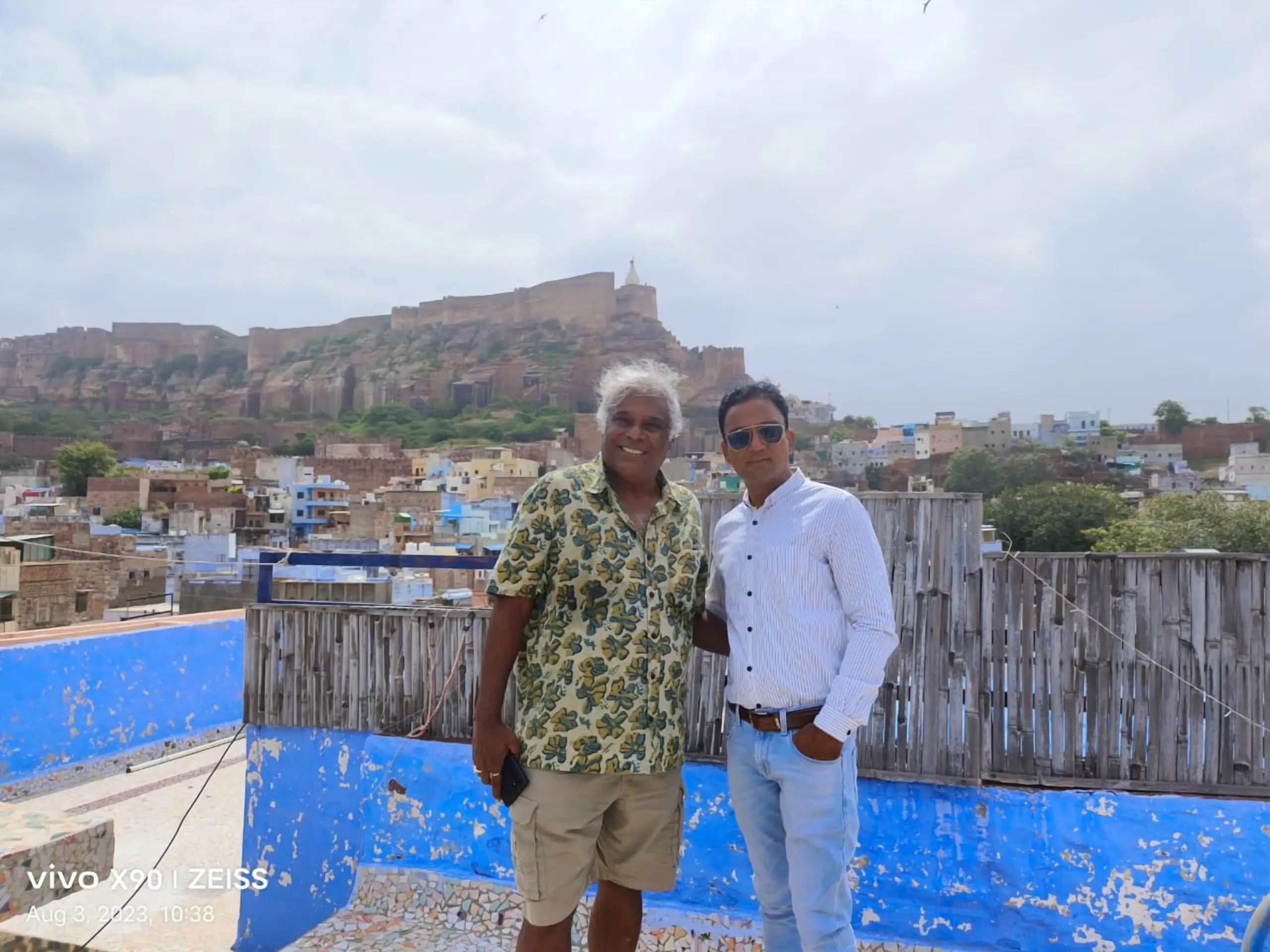
Several local guides and walking tour operators offer dedicated Blue City walking tours, weaving through the narrow residential lanes while explaining the neighborhood’s history and pointing out notable havelis, small temples, and traditional craft workshops tucked away from the main tourist routes, often providing considerably more context and access than independent exploration alone. Most guided walks run for one and a half to two hours, covering a loop through the main lanes of Brahmpuri along with stops at notable havelis, small temples, and local shops.
Is It Safe to Walk Through the Blue City Lanes Independently?
Yes, the neighborhood is generally safe for independent walking during daylight hours, though the lanes can be narrow and maze-like, so keeping a general sense of direction back toward the fort or a marked landmark is worthwhile.
The Blue City in Different Seasons
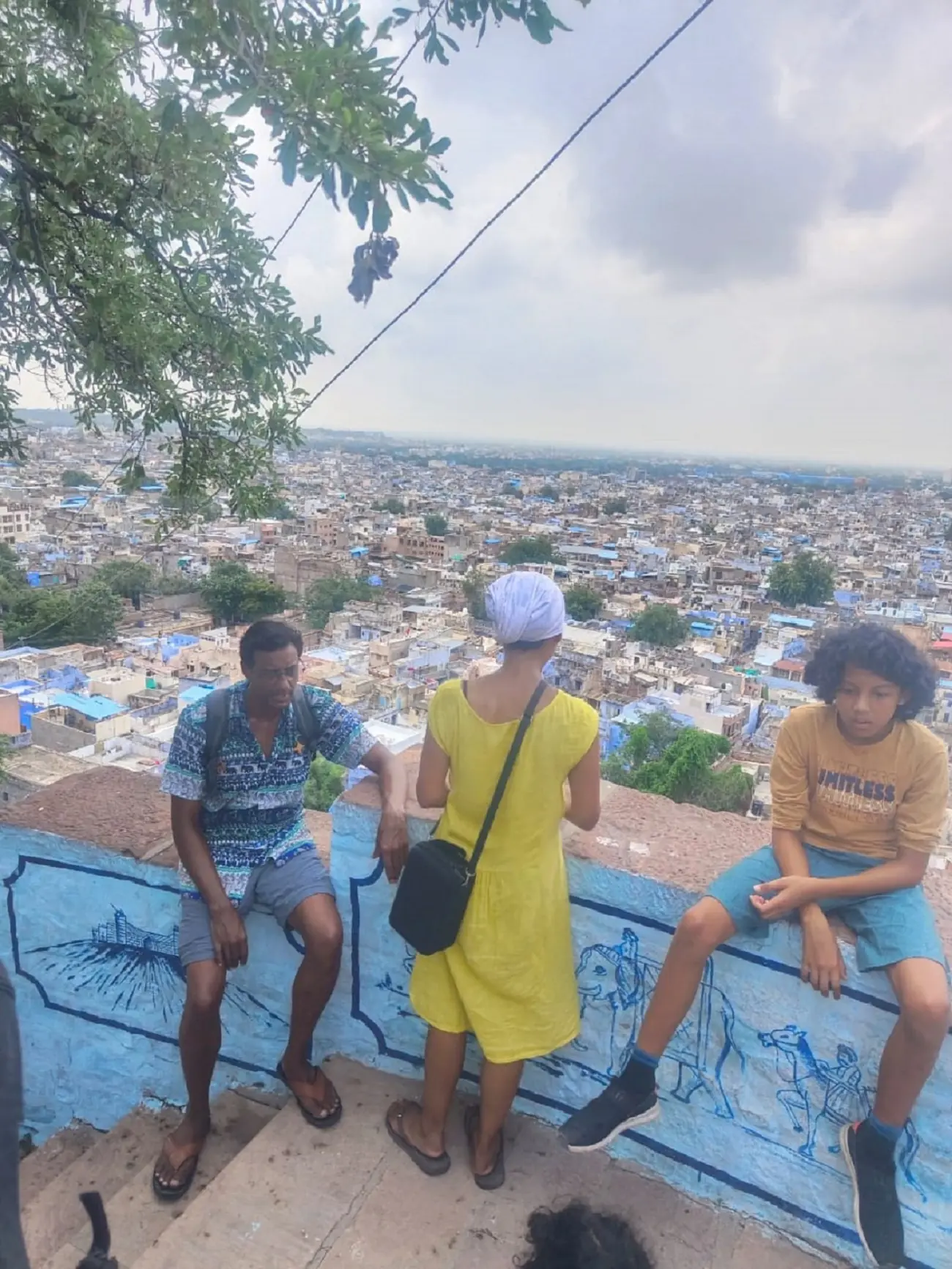
The Blue City looks noticeably different across Jodhpur’s seasons. Winter months bring clearer skies and sharper contrast between the blue walls and the surrounding sandstone and sky, while the brief monsoon season, though short, can leave the freshly rain-washed walls looking particularly vivid for a short period afterward. Summer’s intense heat and haze tends to soften the contrast somewhat, though the colors remain visible and photogenic throughout the year regardless of season.
Blue City Souvenirs and Miniature Art
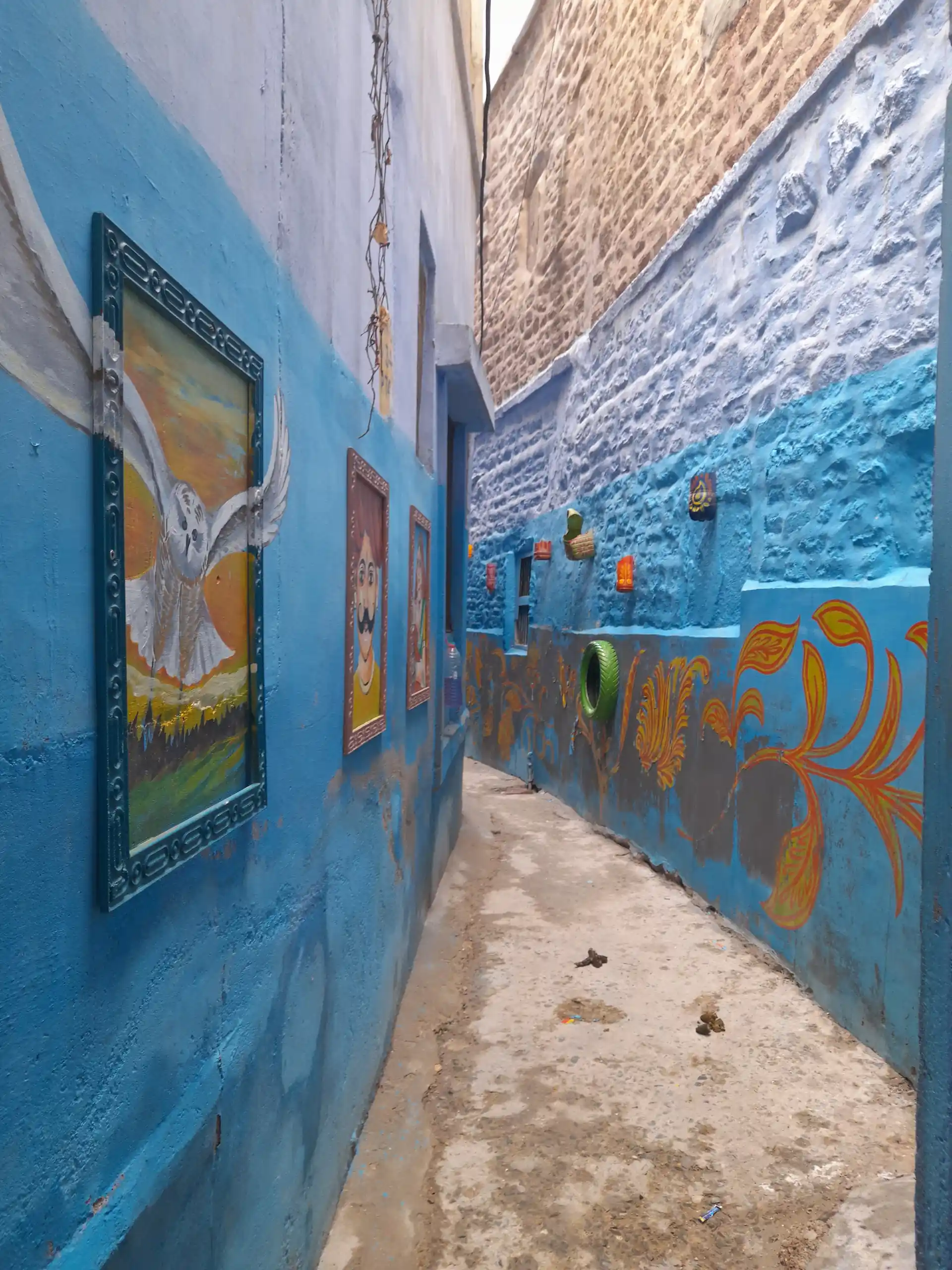
Jodhpur’s miniature painting tradition frequently depicts the Blue City as a subject, and several art shops throughout the old city sell paintings, postcards, and prints capturing the view, offering a lasting memento for travelers who want to take a piece of the iconic view home with them beyond a photograph. These works are often created by local artists trained in traditional Rajasthani miniature painting techniques, adding real craft value beyond a simple tourist souvenir.
Comparing Jodhpur’s Blue City to Chefchaouen
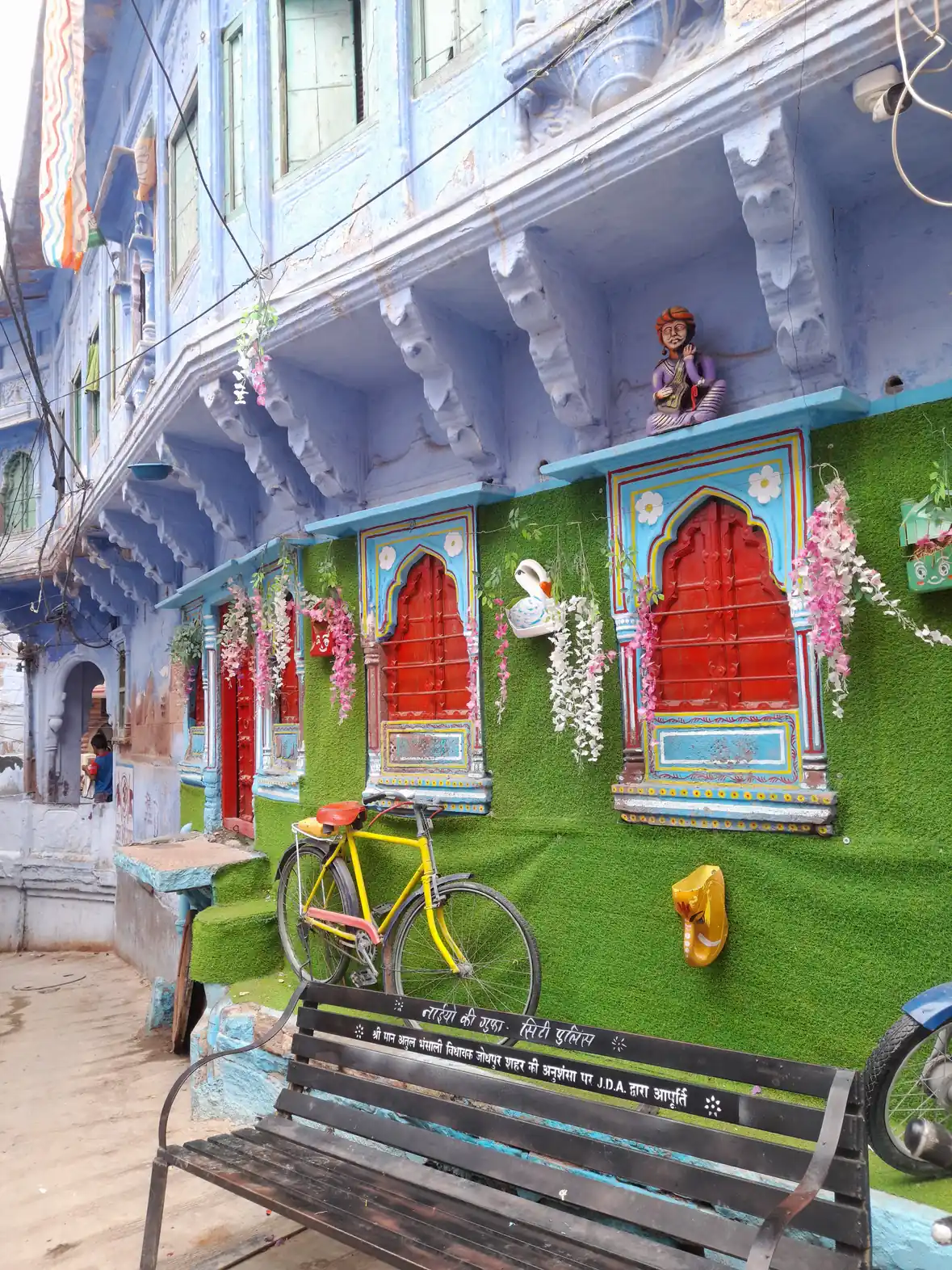
Travelers familiar with Morocco’s Chefchaouen, another famous blue-painted town, sometimes draw comparisons between the two, though Jodhpur’s Blue City developed independently and for different historical reasons, with its own distinct architectural character shaped by Rajput and Marwar building traditions rather than the North African influences visible in Chefchaouen. Both destinations share a striking visual impact, but the historical and cultural context behind each is entirely its own. The shade itself varies noticeably from house to house in Jodhpur, ranging from deep indigo to pale sky blue, contributing to the varied, textured look visible from the fort’s ramparts, unlike Chefchaouen’s more uniformly toned lanes.
Is the Blue City More Impressive in Person or in Photographs?
Most visitors find the view impressive in person, particularly the scale of the blue-washed neighborhood spreading below the fort, though photographs with a slight zoom lens can compress the view in a way that emphasizes the density of blue rooftops even more dramatically than the naked eye perceives it. Either way, seeing it in person first is worth prioritizing over relying on photographs alone.
The Color’s Modern Tourism Identity
Regardless of its origins, the blue color has become inseparable from Jodhpur’s modern tourism identity, actively maintained and in some cases expanded by residents and local authorities aware of its value as a visual draw, turning what began as a caste and practical tradition into a defining civic brand.
FAQ
Why is Jodhpur called the Blue City?
The dense cluster of blue-painted houses in the old city gave rise to this widely used nickname.
Where is the best place to see the Blue City view?
Mehrangarh Fort’s ramparts offer the most complete panoramic view of the blue-washed old city.
Is every house in Jodhpur painted blue?
No, the blue houses are concentrated mainly in the old city near the fort, not citywide.
What color of blue is traditionally used?
A distinctive indigo-tinted blue, historically linked to lime wash mixed with copper sulphate.
Is the blue color still maintained today?
Many residents continue repainting their homes blue, preserving the tradition and the city’s visual identity.