Things to Do in Jodhpur: Best Places & Experiences
Jodhpur rewards visitors who slow down. Most first-timers arrive with a single photo in mind — the blue houses tumbling beneath a sandstone fort — and leave having found a city that is far larger and stranger than that one image suggests. Rajasthan’s second-largest city is a working desert capital: a maze of a 500-year-old walled old town wrapped around a fort, ringed by newer neighbourhoods, markets, and lakes. This guide covers the best things to do in Jodhpur, from the unmissable landmarks every itinerary should include to the quieter corners that reward a second or third visit, along with practical timing and cost details to help you plan.
Mehrangarh Fort: Start Here
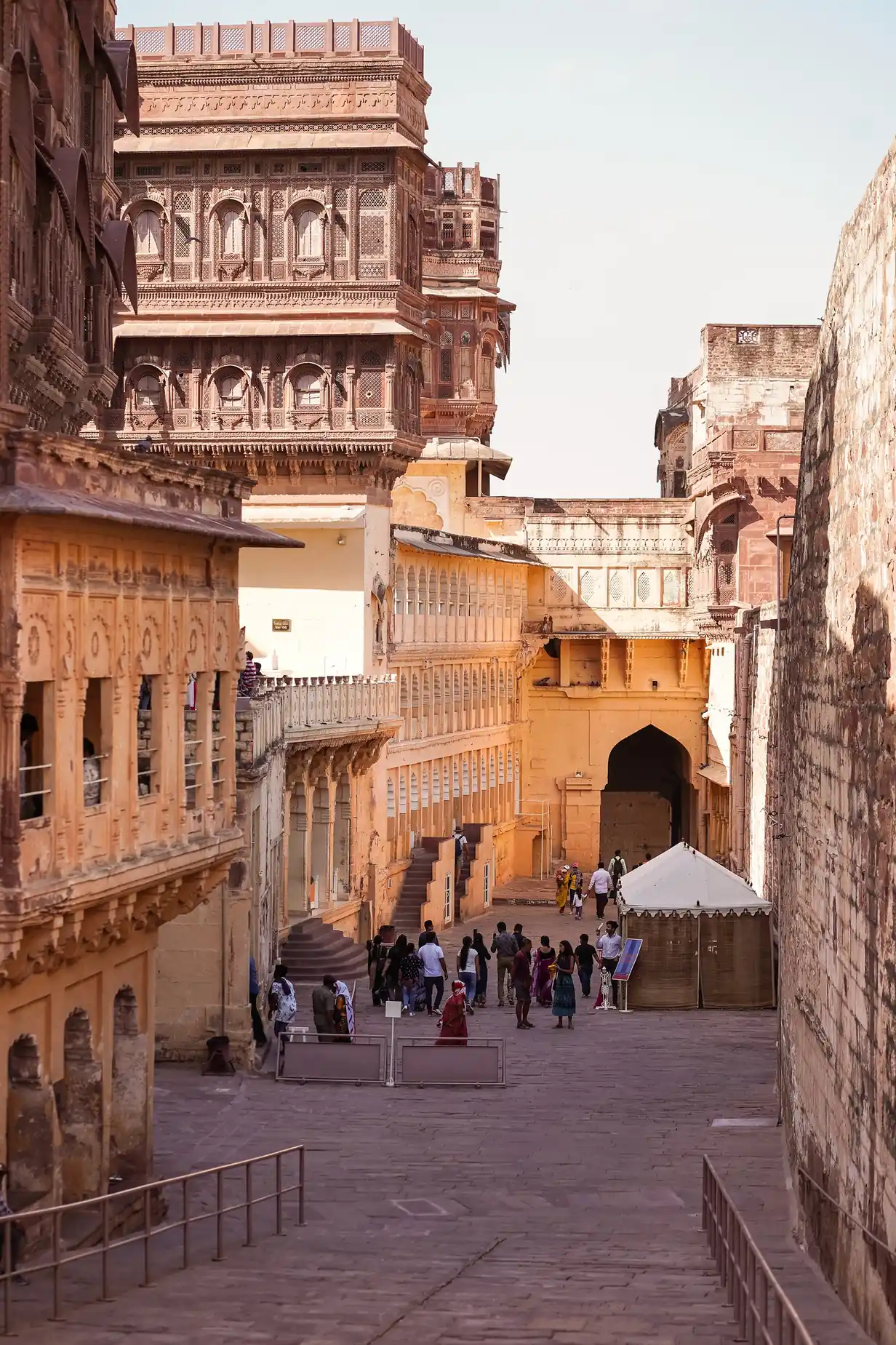
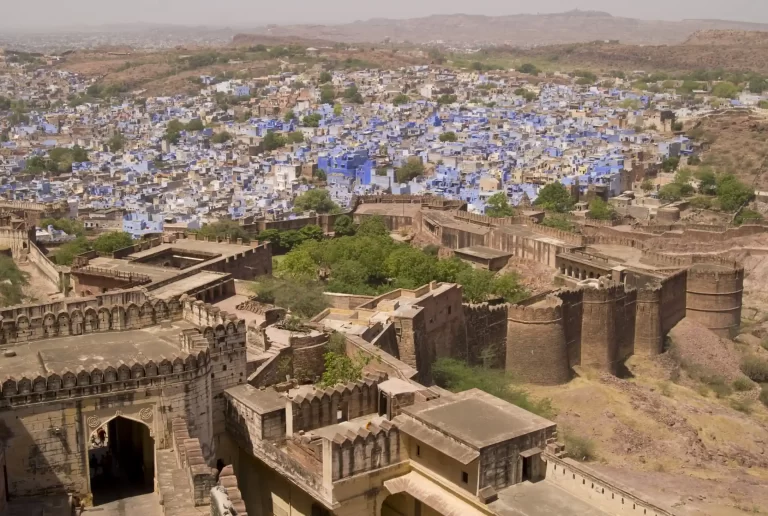
Almost every visit to Jodhpur begins at Mehrangarh Fort, and for good reason. Built by Rao Jodha in 1459 on a rocky outcrop 400 feet above the city, it remains one of the largest and best-preserved forts in India, and has never been captured in battle. The ramparts alone are worth the visit — cannons still face out over the Blue City, and the views stretch across rooftops painted every shade of indigo, all the way to the desert haze on the horizon.
Inside, the museum’s collection of royal palanquins, miniature paintings, armour, and ceremonial howdahs is worth two to three hours alone, and the gilded Phool Mahal and Moti Mahal reception halls are highlights. Arrive by 9 AM if you can — the galleries get warm and crowded by midday, and the early light on the sandstone walls is dramatically better for photographs. For full opening hours, current entry fees, and everything inside the museum worth seeking out, see our complete Mehrangarh Fort guide.
Jaswant Thada: The Marble Cenotaph
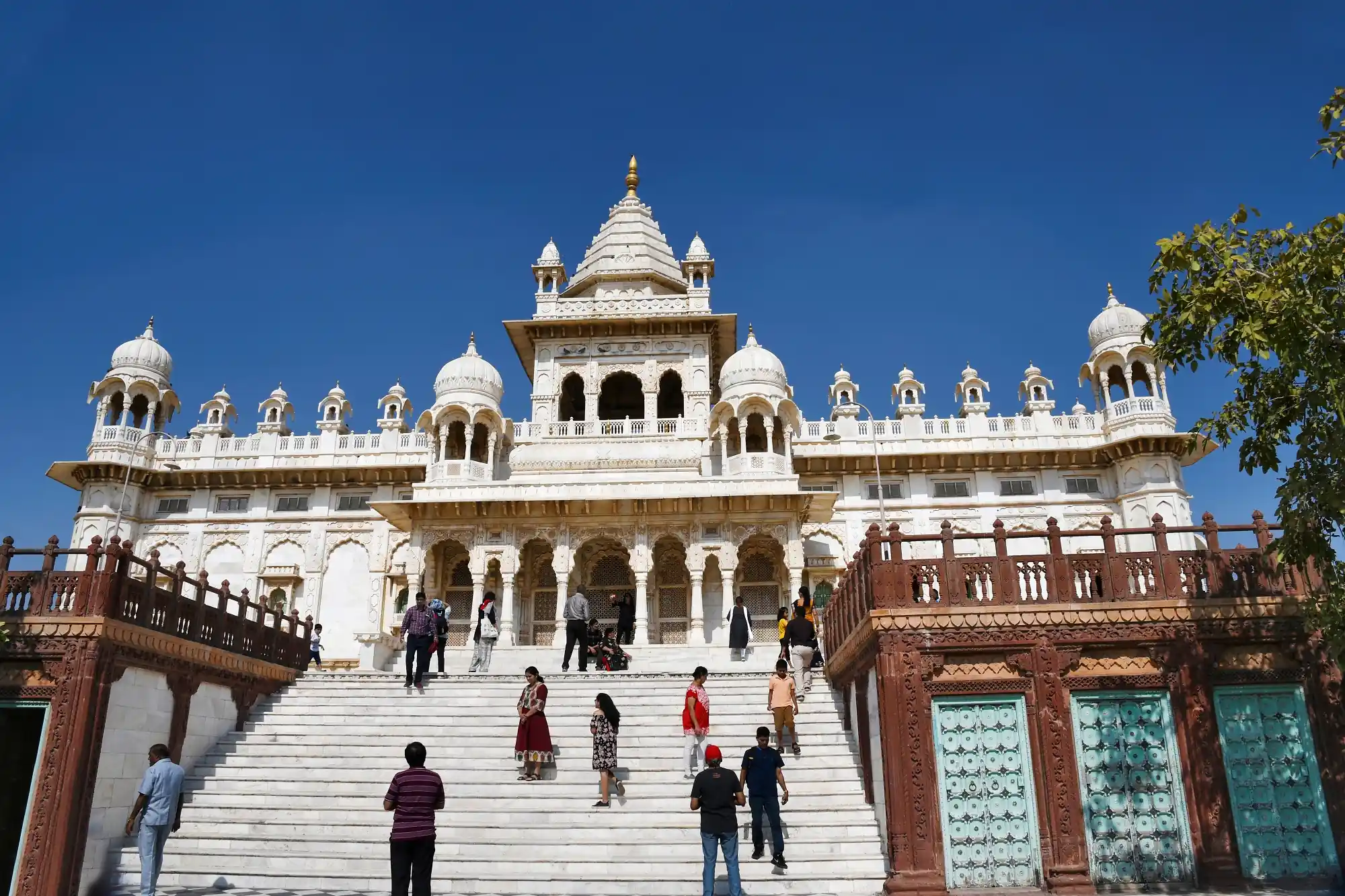
A short walk or drive from the fort, Jaswant Thada is often nicknamed the “Taj Mahal of Marwar” — a cluster of white marble cenotaphs built in 1899 in memory of Maharaja Jaswant Singh II, so finely carved from Makrana marble that sunlight filters through the thin panels with a faint amber glow. It remains a working cremation ground for the royal family. Our full Jaswant Thada guide covers its history and architecture in more depth.
The gardens around it are peaceful, dotted with a small artificial lake, and the views back toward Mehrangarh Fort from this angle are some of the best in the city — the fort looks distinctly monumental from here in a way it doesn’t from closer up. Most visitors pair it with the fort as a single morning outing; the two sights together take about half a day at a comfortable pace.
Umaid Bhawan Palace
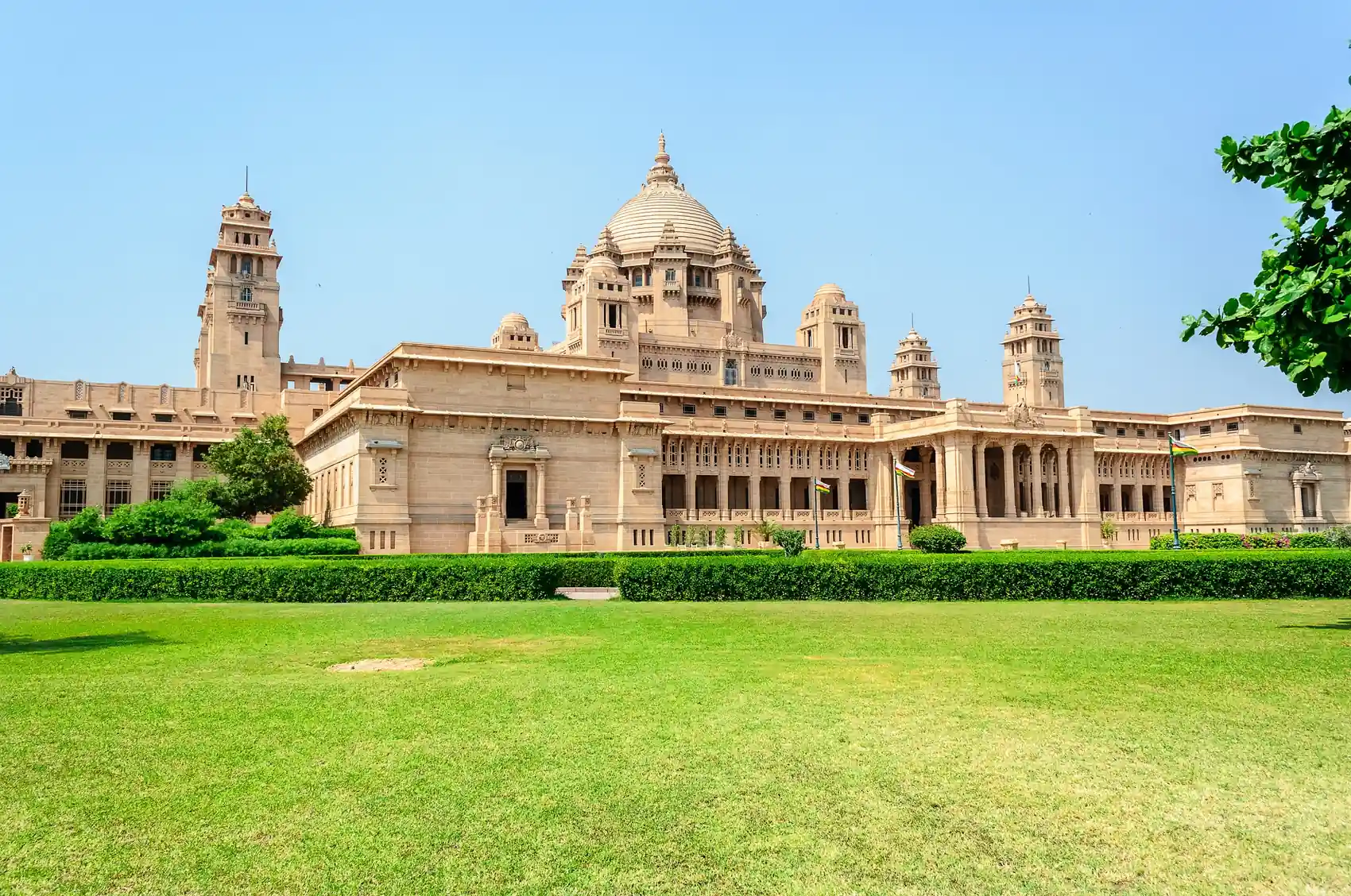
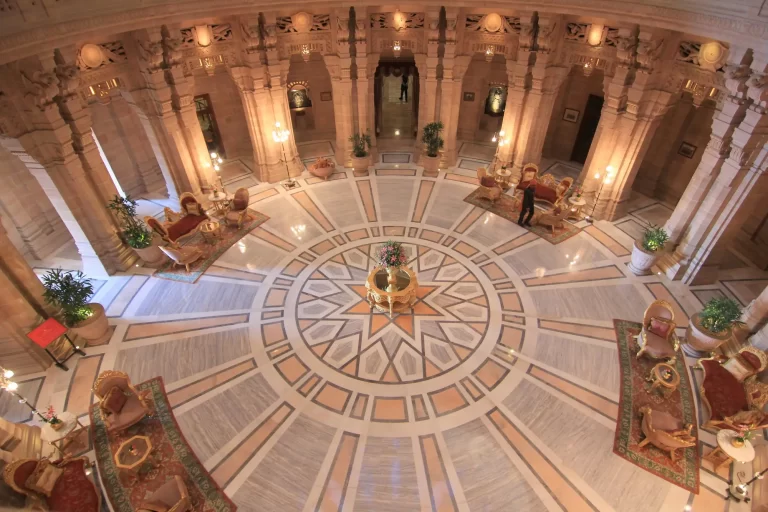
Umaid Bhawan Palace is one of the world’s largest private residences — 347 rooms, part royal residence, part heritage hotel, part museum. It was commissioned in 1928 partly as a famine-relief employment project, took 3,000 workers 15 years to complete, and is built almost entirely from sandstone blocks fitted without mortar, using an interlocking technique. The current royal family still lives in a wing of the palace, and a section is open to the public as a museum displaying vintage cars, ceremonial weapons, clocks, and royal memorabilia dating back generations.
Even if you skip the museum, the palace grounds and the Art Deco architecture — unusual for Rajasthan, and worth seeing for that alone — make it a worthwhile stop. For a splurge, the palace’s heritage hotel wing is one of the most striking places to have a drink in the city, with peacocks wandering the lawns and Mehrangarh Fort visible on the skyline at sunset. See our full Umaid Bhawan Palace guide for its complete history and what’s inside the museum.
Toorji Ka Jhalra: The Stepwell in the Old City
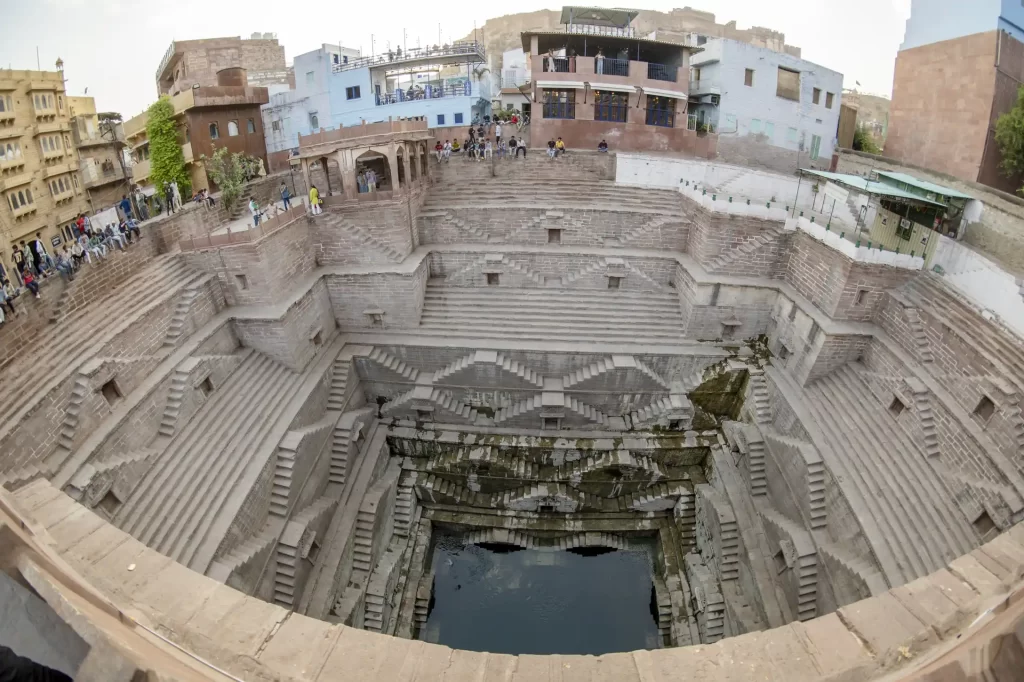
Tucked into the narrow lanes of the old city, Toorji Ka Jhalra is an 18th-century stepwell commissioned by Maharani Toorji as a public water source for the city. Like many of Rajasthan’s stepwells, it fell into disuse and disrepair for decades before being restored and reopened to the public. It’s now surrounded by cafés, boutique shops, and design studios, making it an easy, atmospheric stop between the fort and the markets — come for the geometric stonework of the well itself, stay for a coffee on one of the terraces overlooking it. Our dedicated Toorji Ka Jhalra guide has the full history and visiting details.
Clock Tower and Sardar Market
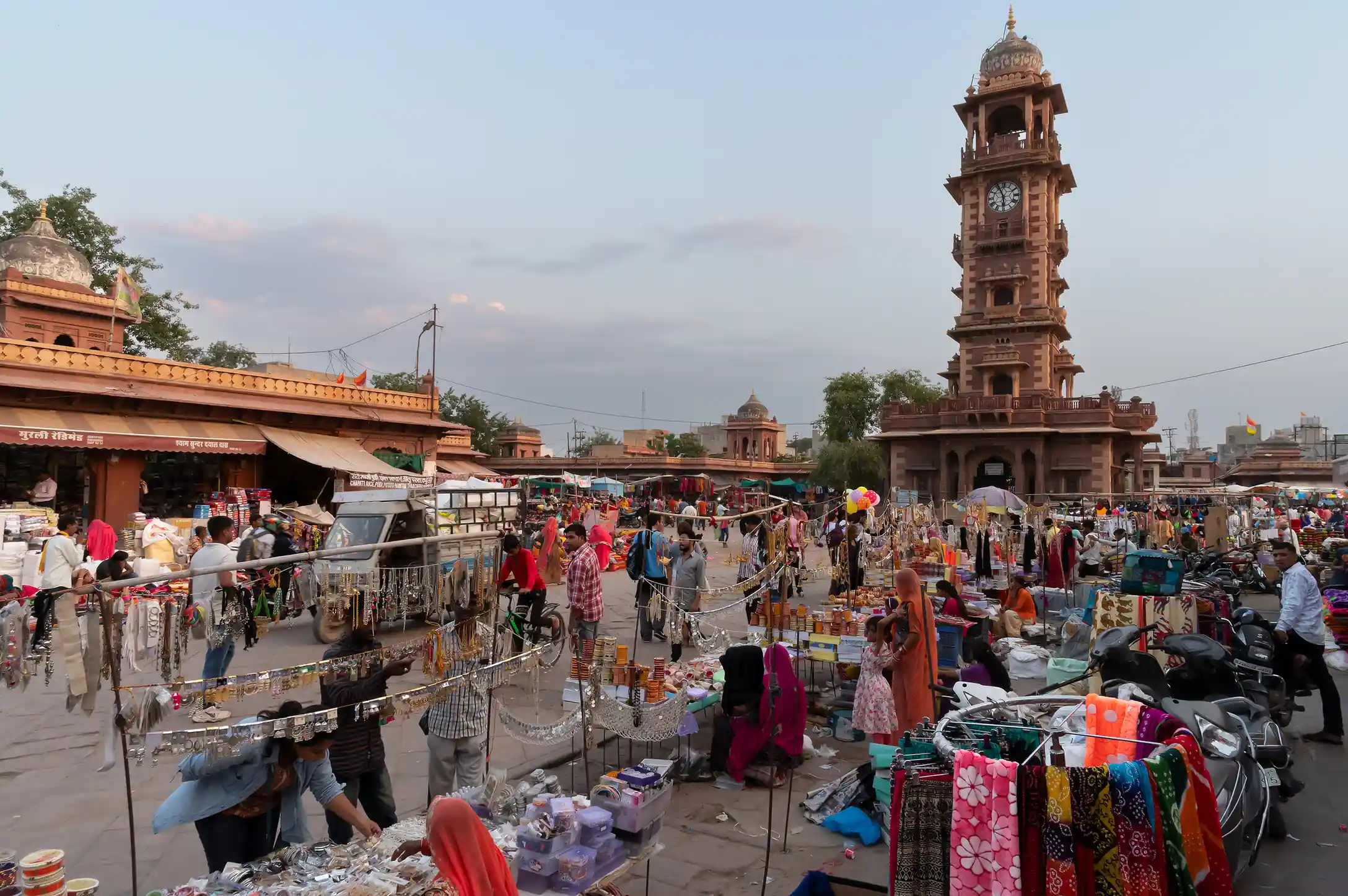
The Ghanta Ghar (Clock Tower), built in the early 1900s, marks the entrance to Sardar Market, the beating commercial heart of the old city. This is where Jodhpur’s daily life plays out — spice stalls stacked with red Mathania chillies, silver and lac bangle shops, textile stores, and vendors selling everything from vegetables to leather mojari shoes. It’s dense, loud, and distinctly local, best explored on foot in the late afternoon when the light softens and the market comes alive for the evening.
Bargaining is expected here, though good-natured rather than aggressive — a starting offer at roughly half the quoted price is a reasonable opener for handicrafts and textiles. Keep valuables close; the alleys around the market are among the most crowded in the city.
Flying Fox: Zipline Over the Fort
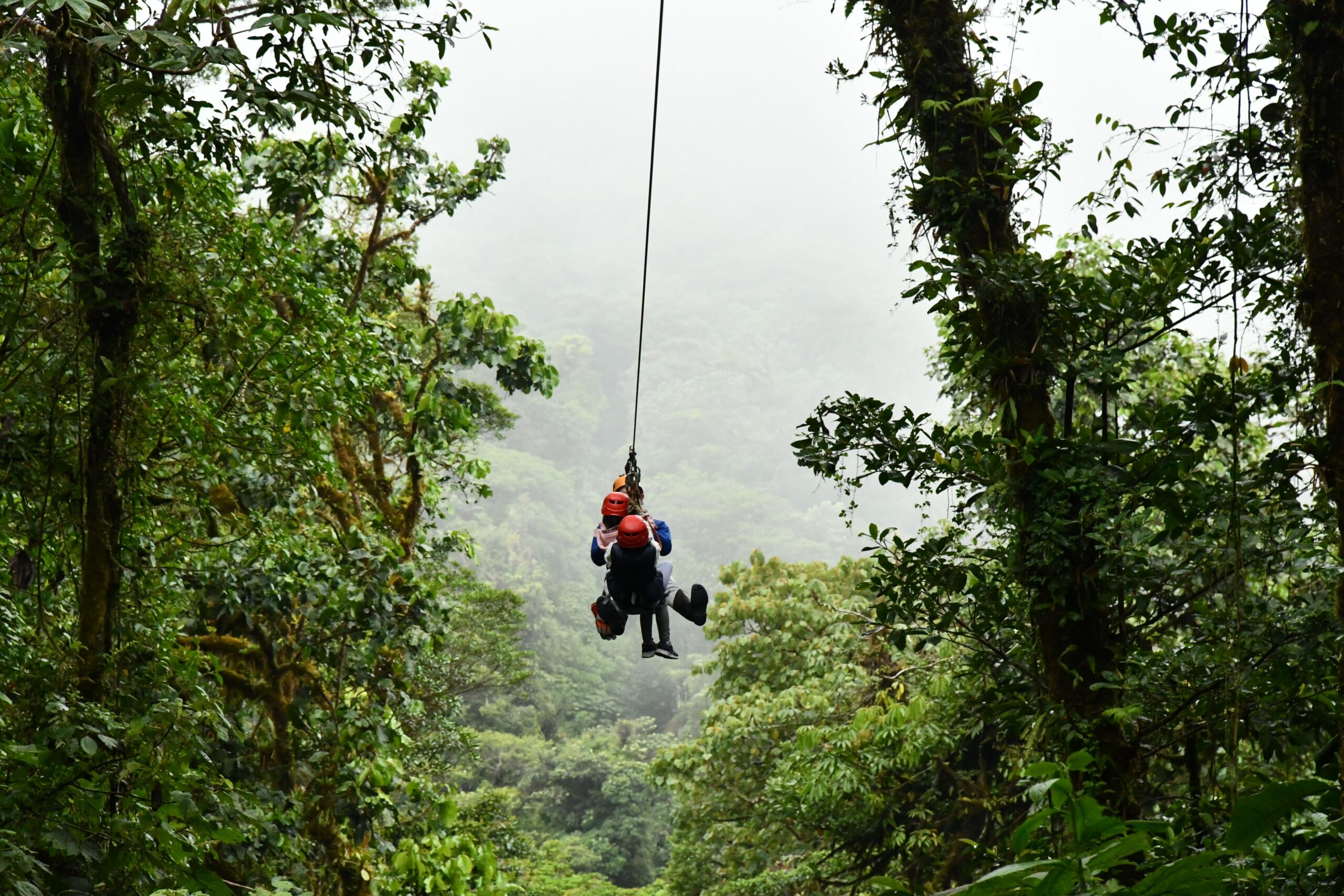
For a different perspective on Mehrangarh, the Flying Fox zipline course runs six lines across roughly 1.2 km of the fort’s outer ramparts and ravines, launching and finishing inside the fort complex. It runs through the day (broadly 9:30 AM–5:00 PM) and takes about 90 minutes start to finish, including safety briefing and gear-up. It isn’t cheap — expect to pay close to ₹2,000 per person — but it’s consistently one of the highest-rated activities in the city on review platforms, and it’s the only way to see the fort’s scale and the surrounding Rao Jodha Park from the outside. There are minimum age and weight restrictions, so check current requirements before booking if travelling with children. See our guide to Jodhpur’s best adventure activities for more ways to get an adrenaline fix around the city.
Rao Jodha Desert Rock Park
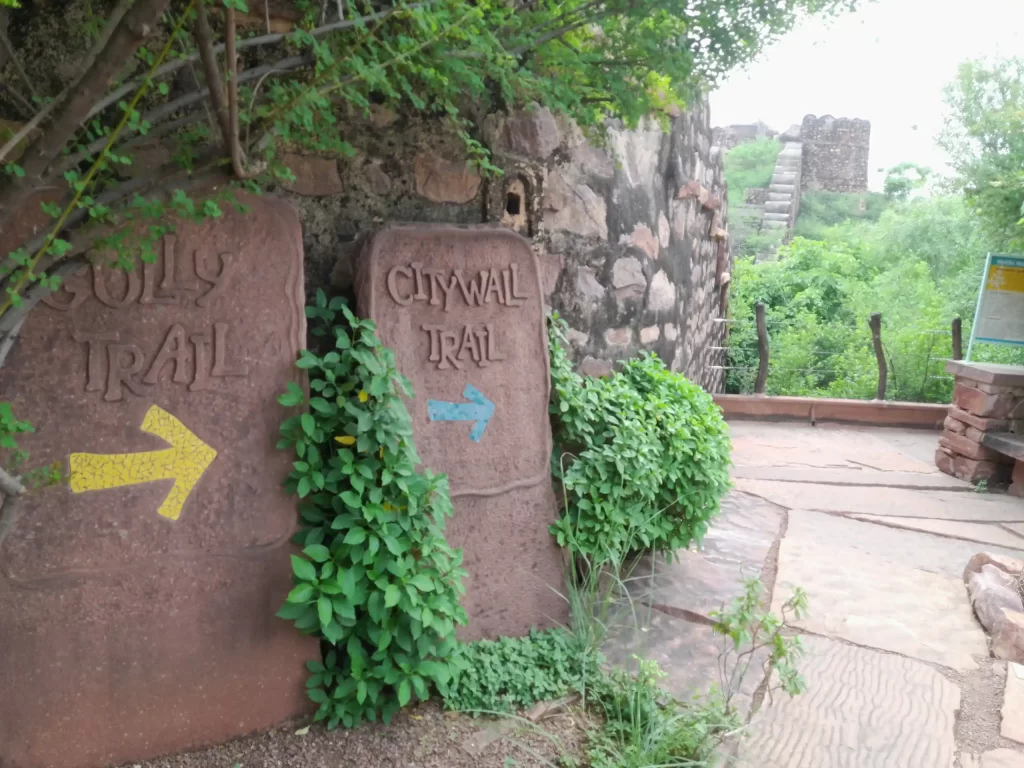
Most visitors walk straight past the entrance to this one, which is a shame. Spread across roughly 72 hectares at the base of Mehrangarh Fort, the Rao Jodha Desert Rock Park is a restored native scrub ecosystem — the terrain the fort actually looked like before centuries of quarrying and grazing stripped it bare. Marked walking trails of varying lengths wind between volcanic rhyolite rock formations and reintroduced native plants like the rare Maru orchid, and it’s one of the few distinctly quiet places in central Jodhpur. Go for an early walk before the fort opens, or a sunset stroll after — either way, it’s a strong counterpoint to the crowds inside the fort itself. It’s exactly the kind of spot our Jodhpur hidden gems guide is built around.
Mandore Gardens
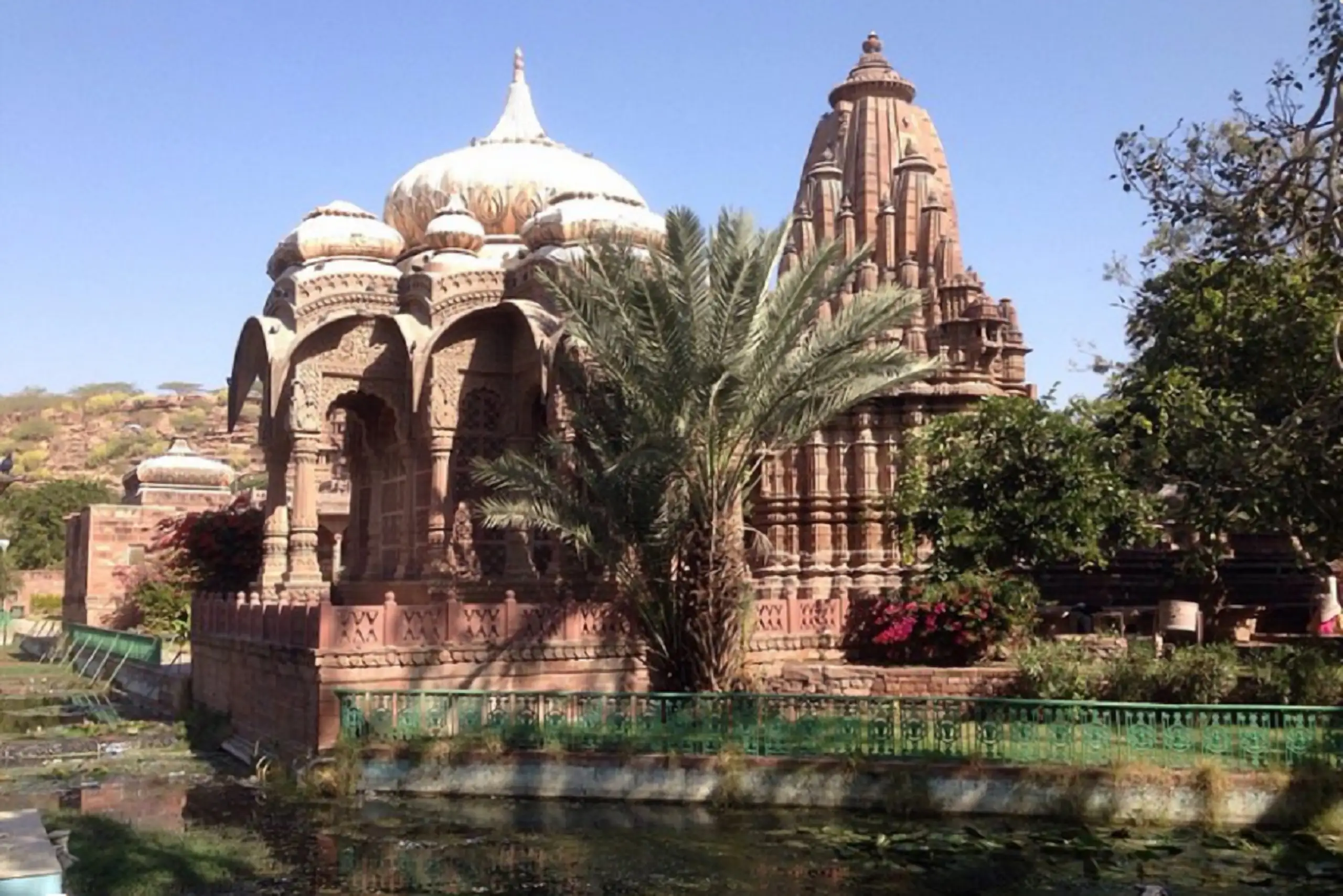
A short drive north of the city, Mandore was the old capital of Marwar before Jodhpur was founded in 1459, and its gardens hold the cenotaphs of the Rathore rulers — older, more weathered, and far less crowded than Jaswant Thada. The grounds also include the Hall of Heroes, a rock-cut gallery of painted deity and warrior figures, and the Shrine of 33 Crore Gods. The grounds are shaded and pleasant to walk, with troops of langurs adding some life to the ruins. It works well as a half-day outing combined with other sights on Jodhpur’s northern edge.
Kaylana Lake
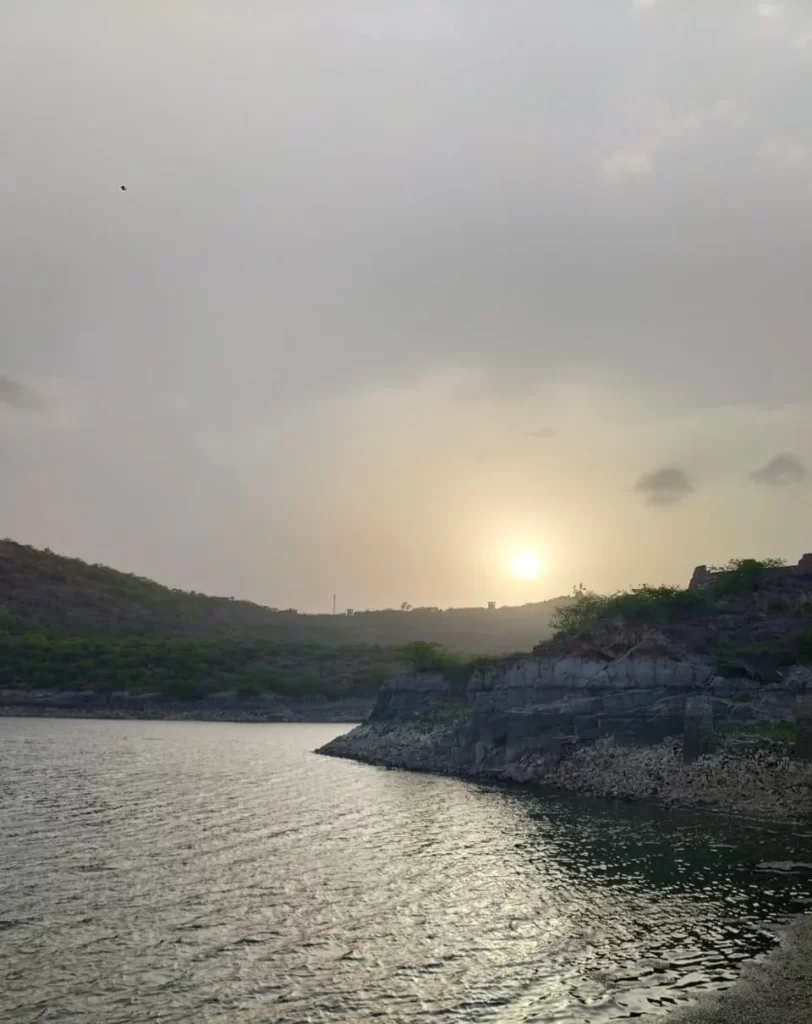
About 8 km west of the city on the Jaisalmer road, Kaylana Lake is a large artificial reservoir that supplies much of Jodhpur’s drinking water and doubles as the city’s favourite sunset spot. It’s a simple, low-key outing — a walk along the water, boating on weekends, migratory birds in winter, and a quiet contrast to the density of the old city. Few tour itineraries include it, which is exactly its appeal if you’ve had enough of crowds.
Walk the Blue City
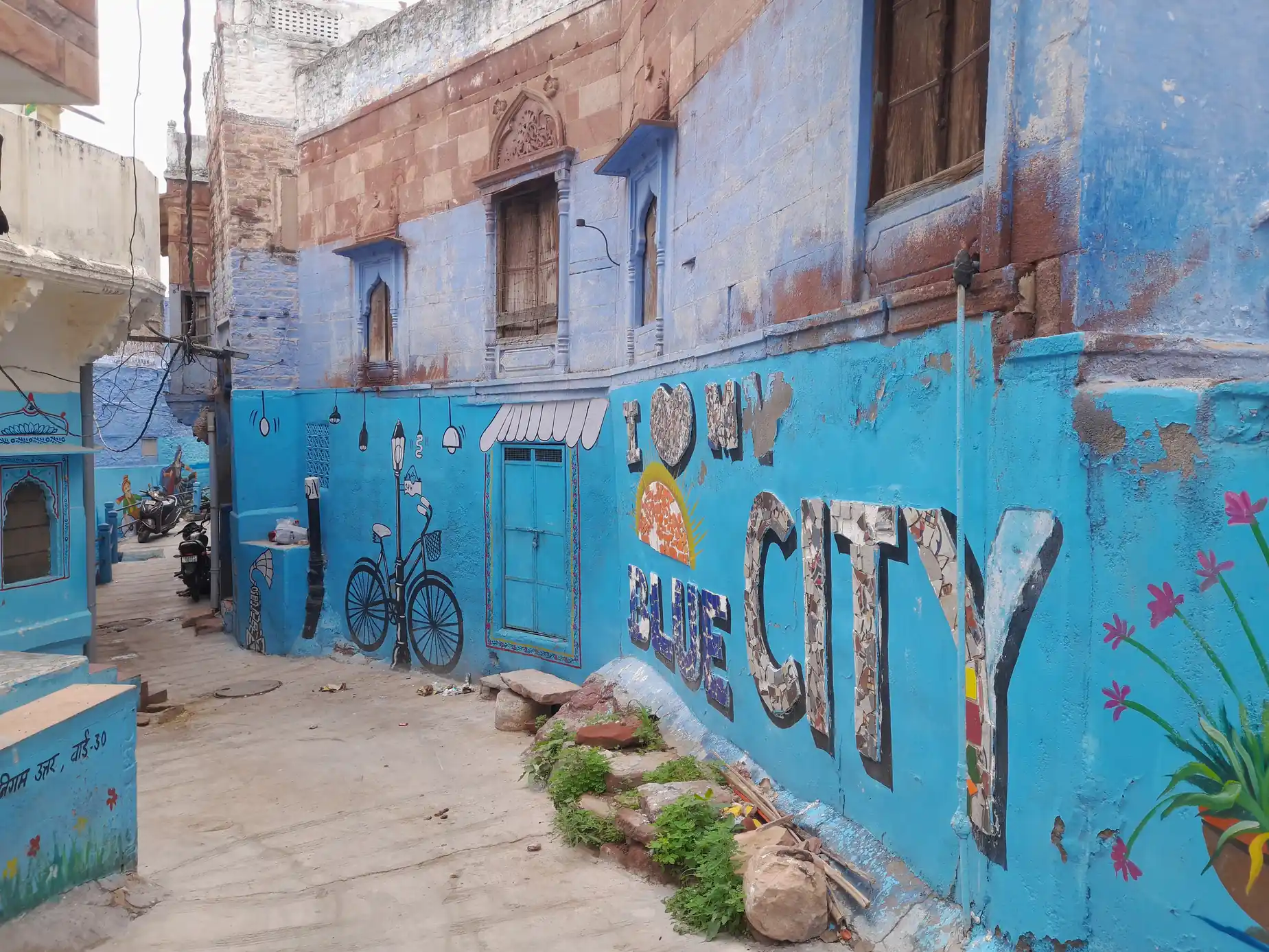
None of the individual sights fully explain why Jodhpur is called the Blue City — that only makes sense once you’ve walked the lanes beneath the fort, where house after house is washed in shades of indigo, some faded to near-grey, others freshly painted within the year. There’s no single best route; the pleasure is in getting slightly lost, following the lanes uphill toward the fort walls, and letting the walk take an hour longer than planned. Early morning and late afternoon are best, both for the light and for avoiding the midday heat in lanes with little shade. Our Jodhpur photography guide has more on timing the light for this walk.
A Brief History, in Context
Jodhpur was founded in 1459 by Rao Jodha, a Rathore chief, as the new capital of the Marwar kingdom, replacing nearby Mandore. For over 500 years it grew as a fortified desert capital and a key stop on the old trade routes connecting Delhi, Gujarat, and the ports of the west coast — a history that still shows in its markets and merchant havelis. The full story, including how the city earned its blue colour and its place within the wider Marwar region, is covered in more depth in our dedicated Jodhpur history and heritage guide.
Getting Between the Sights
The old city sights — Mehrangarh Fort, Jaswant Thada, Toorji Ka Jhalra, and Sardar Market — are close enough to combine on foot or with short auto-rickshaw hops, though the lanes are steep and can be confusing on a first visit. Umaid Bhawan Palace, Mandore Gardens, and Kaylana Lake are further out and are best reached by taxi or auto-rickshaw, and are easy to combine into a single half-day loop with a pre-booked driver. Ride-hailing apps have patchy coverage in Jodhpur compared to larger Indian cities, so agreeing a fare with an auto-rickshaw driver upfront, or arranging a car through your hotel, tends to be more reliable.
Common Mistakes First-Time Visitors Make
- Rushing the fort. Mehrangarh’s museum is larger and denser than it looks — allow at least two hours, ideally three.
- Skipping Rao Jodha Desert Rock Park. It shares an entrance area with the fort but is easy to miss, and offers a distinctly different, quieter experience.
- Visiting the old city markets at midday. The lanes have little shade and the heat can be intense outside winter months — late afternoon is far more comfortable.
- Not confirming current ticket prices. Entry fees at Rajasthan’s monuments are revised periodically; always check the current rate rather than relying on an old blog post. For more first-visit planning notes like these, see our guide for first-time visitors to Jodhpur.
When to Visit Each Attraction
- Mornings (9–11 AM): Mehrangarh Fort and Jaswant Thada, before the heat and the crowds build.
- Midday: Umaid Bhawan Palace (indoor museum, air-conditioned) or a café break near Toorji Ka Jhalra.
- Late afternoon: Clock Tower and Sardar Market, as the market comes alive and the light softens.
- Sunset: Kaylana Lake, or the rooftop cafés overlooking the Blue City near the fort.
Best Time of Year to Visit
October through March is by far the most comfortable window, with daytime temperatures typically in the low-to-mid 20s°C and cool evenings — ideal for the long walks that Jodhpur’s sights demand. December and January can turn properly cold after dark, so pack a layer even in the desert. April through June brings serious heat, often well above 40°C by midday, which makes outdoor sights like Rao Jodha Desert Rock Park and the Blue City walk far less comfortable, though the forts and museums remain doable with an early start and air-conditioned breaks. The monsoon months of July to September are quieter and greener than most visitors expect, with dramatically lower hotel prices, at the cost of occasional heavy showers.
Practical Tips Before You Go
- Dress code: Shoulders and knees covered are appreciated at temples and palace interiors; comfortable closed shoes matter more than formal wear given the amount of walking.
- Camera fees: Several sights charge a separate fee for cameras (especially video cameras and tripods) on top of the entry ticket — factor this in if you’re travelling with serious photography gear.
- Cash and cards: Major sights accept cards, but small vendors in Sardar Market and auto-rickshaw drivers often prefer cash — carry some smaller notes.
- Water and shade: Carry water on any old-city walking route; shade is limited in the narrow lanes and at Mehrangarh’s outer ramparts.
FAQ
What is the single best thing to do in Jodhpur?
Visiting Mehrangarh Fort tops most lists, thanks to its scale, history, and sweeping views over the Blue City below.
How many days should I plan for sightseeing in Jodhpur?
Two to three days covers the major attractions comfortably, including the fort, old city, food, and shopping.
Is Jodhpur good for a first-time visit to Rajasthan?
Yes, its manageable size and strong connectivity make it an easy, rewarding starting point for a Rajasthan trip.
What can I do in Jodhpur besides visiting forts?
Explore the blue-washed old city, sample local food, shop for handicrafts, and take a day trip to nearby villages.
Is Jodhpur walkable for tourists?
The old city and fort area are largely walkable, though rickshaws or cabs help for longer distances.