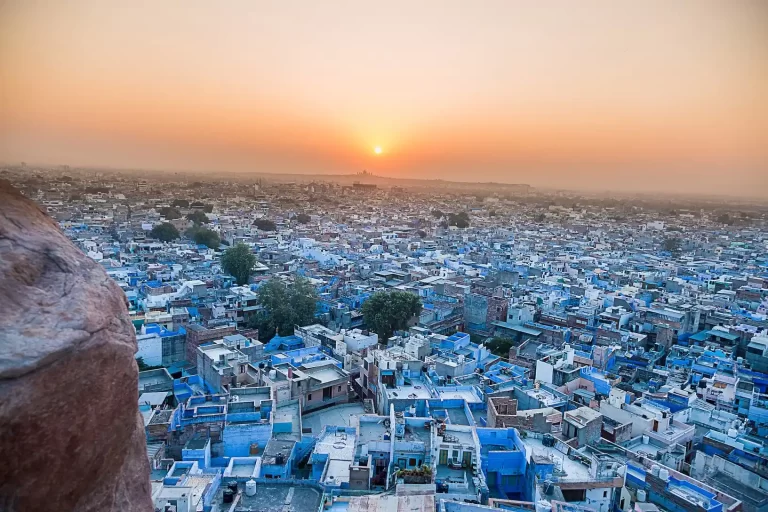
Best Spiritual and Religious Places Near Jodhpur
The Marwar region around Jodhpur holds several spiritual and religious destinations of real historical depth, from ancient temple complexes to sites tied to centuries of local worship. This guide to the best religious places near Jodhpur covers where to go, alongside the practical details — distance, etiquette, timing — that make visiting them worthwhile.
Osian’s Sachiya Mata Temple
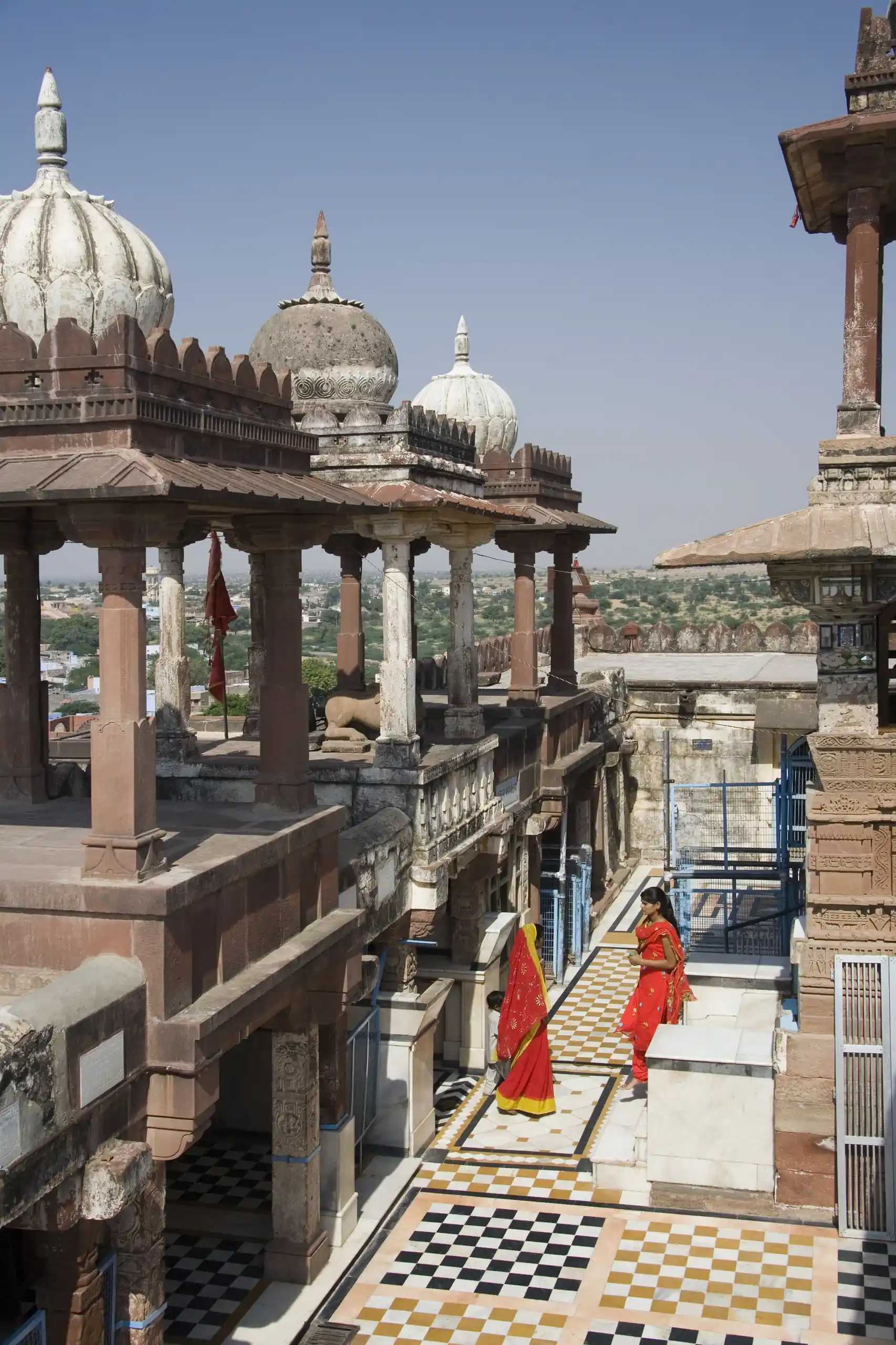
Osian, roughly 65 kilometres from Jodhpur, is home to some of Rajasthan’s oldest surviving Hindu and Jain temples, and the Sachiya Mata temple sits at the centre of that legacy. Dedicated to the local guardian goddess, it remains an active pilgrimage site rather than a purely historical one — its earliest elements date to the eighth-to-tenth-century Pratihara era, expanded over the centuries since, and it continues to host regular rituals and seasonal festivals that visitors are welcome to observe respectfully from the temple courtyard. Among the region’s options, Osian offers the strongest combination of manageable travel distance and real historical and religious significance, which is why it typically tops the list of religious places near Jodhpur for travellers with only a single day to spare.
Osian’s Jain Temples
Alongside the Hindu temples, Osian preserves several Jain temples, most notably the Mahavira temple, known for its finely carved pillars and a quieter, more contemplative atmosphere than the main Sachiya Mata complex. These Jain sites reflect a long history of Hindu and Jain worship coexisting in this part of Marwar, funded in large part by the trading wealth of Jain merchant communities — a pattern that shows up not just at Osian but in smaller Jain temples scattered across Marwar’s towns and villages.
Do You Need Special Permission to Visit Jain Temples?
Standard entry is generally sufficient at Jain temples like those at Osian, though restrictions around leather items and modest dress tend to be enforced more strictly than at some Hindu temples, so it’s worth checking a specific site’s requirements before arriving.
Mandore’s Temples and Religious Sites
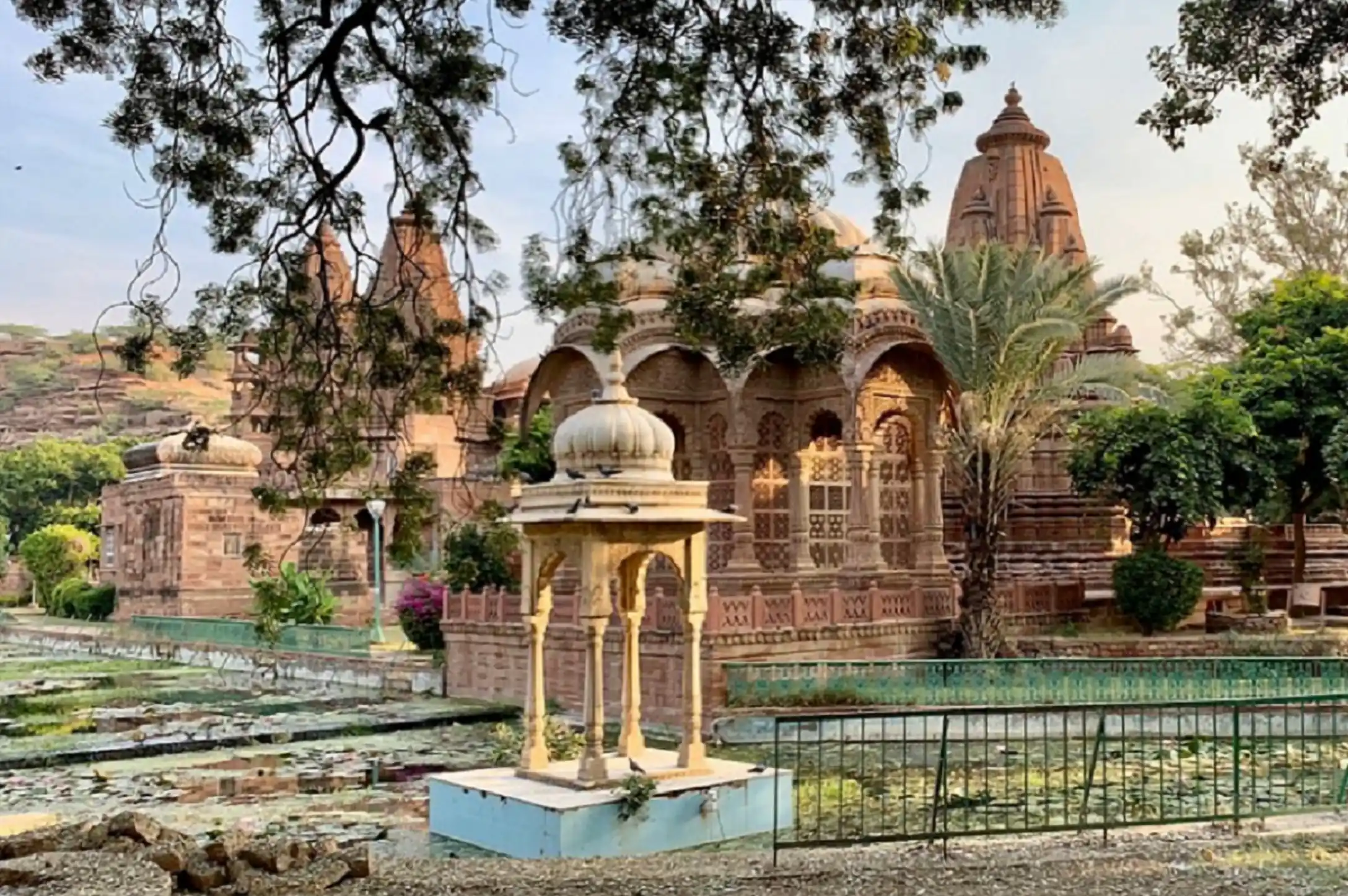
Mandore, about 9 kilometres from Jodhpur, is usually approached as a historical site for its royal cenotaphs, but it carries a spiritual dimension too. Within the gardens, a rock-cut temple complex carved directly into the hillside offers a different atmosphere from the built temples elsewhere — cool stone interiors that make for a quieter space for reflection, away from the more visited cenotaphs nearby. Local tradition also connects parts of Mandore to various folk deities and, in some tellings, episodes from Hindu mythology, adding a spiritual layer to what’s often treated as a purely historical stop.
Local Temples Within Jodhpur’s Old City
Numerous smaller temples are woven through Jodhpur’s old city itself, offering an accessible look at everyday local worship practices without requiring travel beyond the city — useful for visitors with limited time who still want a sense of the region’s living religious life alongside the fort and market sightseeing.
Bishnoi Temples and Religious Sites
The Bishnoi community’s religious practices, built around the principles laid down by Guru Jambheshwar, include specific temples and religious sites within their villages, adding context beyond the wildlife and conservation themes that usually dominate a standard Bishnoi safari visit.
Local Shrines and Village Deities
Beyond the major temple sites, small roadside shrines dedicated to local folk deities and protector spirits are common throughout the villages surrounding Jodhpur — often no more than a stone platform, a red flag, or a painted image rather than elaborate architecture. They reflect a layer of everyday rural religious practice that runs alongside the region’s grander pilgrimage sites, and are worth noticing on any drive through the countryside.
Ranakpur Jain Temple: Worth the Longer Trip?
Ranakpur’s marble Jain temple sits roughly 160 kilometres from Jodhpur — around three to three-and-a-half hours by road — which puts it well outside a standard half-day temple circuit and closer to a dedicated excursion or a stop en route to Udaipur. Its intricately carved marble pillars rank it among India’s most significant Jain pilgrimage and architectural sites, and travellers continuing on to Udaipur commonly pair it with nearby Kumbhalgarh Fort. Rajasthan.Guide’s dedicated Jodhpur to Udaipur itinerary covers Ranakpur’s practical visiting details — entry, photography rules, dress code — in full; the short version here is that it’s worth the detour when your route already runs that direction, less so as a standalone day trip from Jodhpur alone.
Is Ranakpur Too Far for a Standard Day Trip?
For most travellers based in Jodhpur, yes — the round trip alone takes six to seven hours before accounting for time at the temple itself, which makes Ranakpur a better fit for travellers continuing toward Udaipur than for a dedicated day trip from Jodhpur.
Visiting Etiquette at Religious Sites
Modest dress — shoulders and knees covered — is expected at active temples throughout the region, and footwear comes off before entering interiors; a light scarf or shawl is a practical way to cover the head at the rare site that asks for it, useful for women travellers in particular. Photography policies vary by site: some actively worshipped temples restrict photography inside inner sanctums even where it’s permitted elsewhere on the grounds, so watching for posted signs, or simply asking a temple attendant, is good practice — and always ask before photographing worshippers directly. Visitors of any faith, or none, are welcome at these sites, provided the same respectful behaviour and dress code is observed.
Best Time to Visit for Religious Observances
Timing a visit around specific festival dates or daily worship — morning or evening aarti at active temples — gives a more vivid sense of religious practice than sightseeing outside those windows, though checking timings locally helps ensure a respectful, well-timed visit. Most of these religious places near Jodhpur stay open year-round, though the cooler months from October through March remain the more comfortable window, since peak summer heat makes midday visits considerably less pleasant.
Planning a Spiritual Circuit Near Jodhpur
Most of these sites pair naturally with broader sightseeing — Osian’s temples alongside its desert dunes, or Mandore’s rock-cut temple folded into a wider visit to the gardens and cenotaphs, rather than requiring a dedicated trip apart from other plans. Osian, given its mix of Hindu and Jain sites, works well as a half-day or full-day trip focused specifically on temples, particularly on a quiet weekday morning rather than a busy weekend. Specialised operators also run heritage tours focused specifically on religious architecture and history, for travellers wanting more context than a standard sightseeing tour offers.
A car with driver hired for the day is the easiest way to combine two or more of these religious places near Jodhpur into a single outing, since public transport between the smaller temple towns and the city can be infrequent and considerably slower than a direct drive. If a festival date happens to coincide with your visit, temples like Sachiya Mata become noticeably busier and more vibrant, with additional rituals worth experiencing if a lively visit — rather than a quiet one — is what you’re after.
FAQ
What spiritual sites are near Jodhpur?
Osian’s ancient temples rank among the most significant spiritual and religious sites nearby.
Are these sites active places of worship?
Yes, many temples near Jodhpur remain active religious sites, not just historical monuments.
Is appropriate dress required at religious sites?
Yes, modest clothing covering shoulders and knees is expected at most temples.
Can non-Hindu visitors enter these temples?
Most welcome respectful visitors of all backgrounds, though some restrictions may apply at specific shrines.
How far are these spiritual sites from Jodhpur?
Most sit within an hour or two, suited to a half or full-day excursion.