Jodhpur History, Marwar Heritage & Local Culture
To understand Jodhpur, it helps to understand Marwar — the kingdom the city was built to rule. Jodhpur isn’t simply an old city with a fort attached; it was, for five centuries, the capital of one of Rajasthan’s most powerful princely states, and its architecture, festivals, cuisine, and even its famous blue colour all trace back to decisions made by that ruling dynasty and the communities who lived under it. This guide covers Jodhpur’s history, heritage, and living culture in more depth than a typical sightseeing list.
From Marwar Kingdom to the Blue City: A Brief History
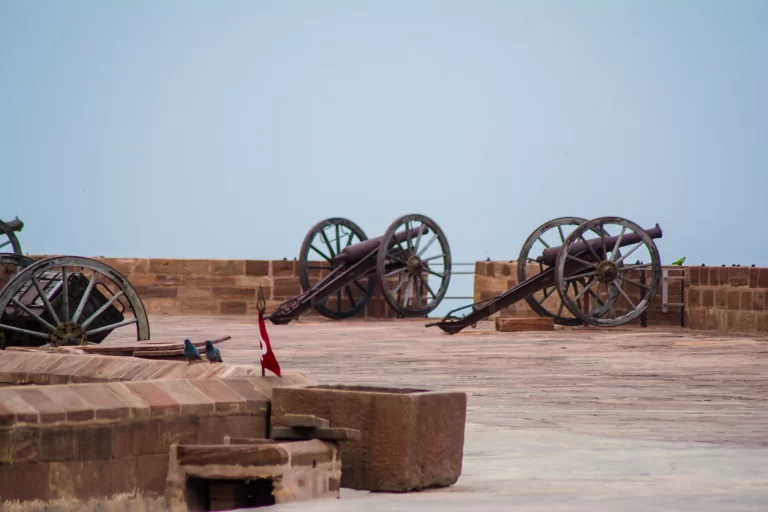
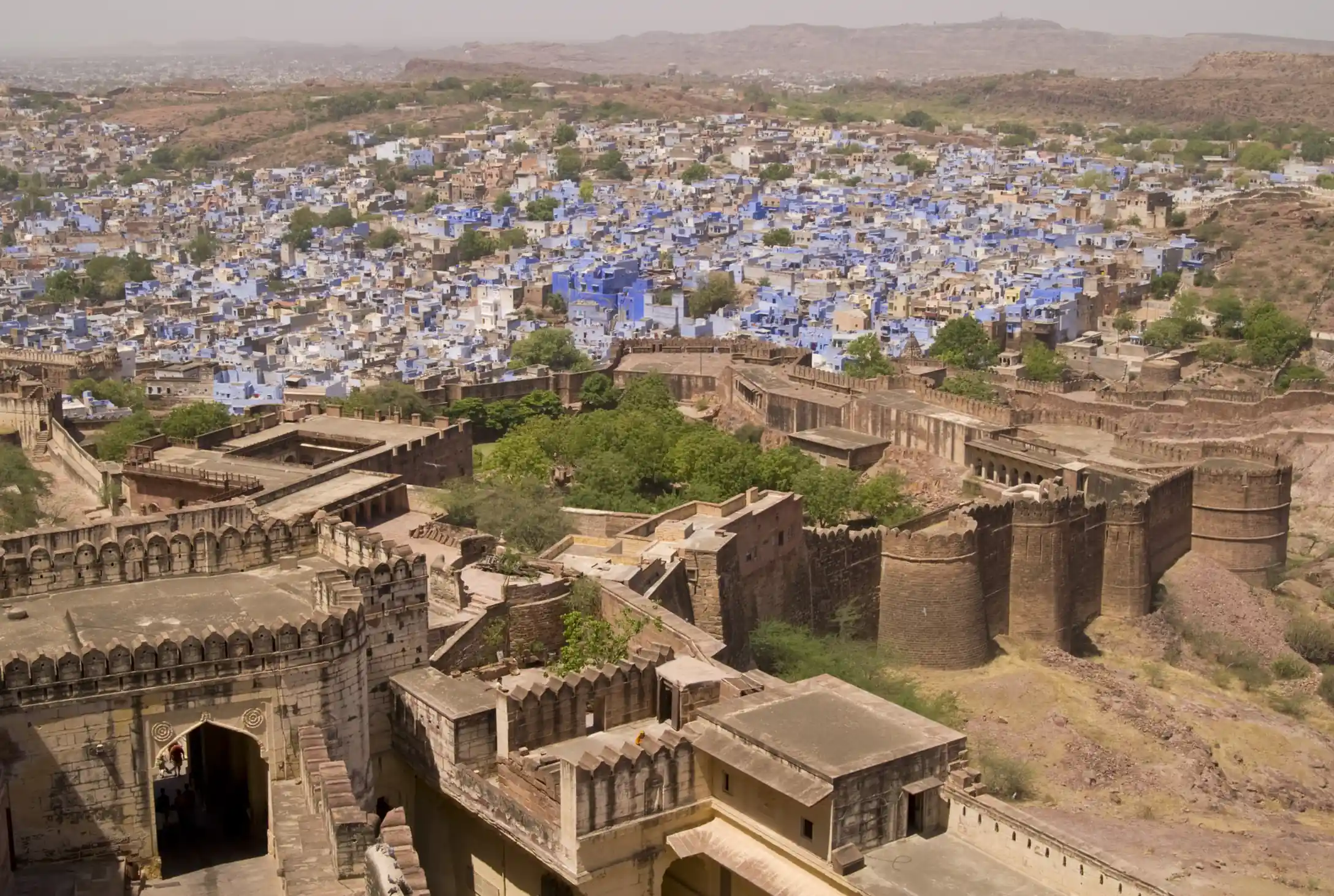
Jodhpur’s story begins in 1459, when Rao Jodha of the Rathore clan moved Marwar’s capital from Mandore to a defensible rocky ridge that became Mehrangarh Fort. Over the centuries that followed, Marwar balanced conflict and alliance with the Mughals, then came under British paramountcy as a princely state before acceding to independent India in 1947. For the fuller arc — the Rathore migration from Kannauj, Rao Jodha’s founding of the city, and Marwar’s passage through Mughal and British rule — see our detailed history of Jodhpur and the Marwar Kingdom.
Why Is Jodhpur Called the Blue City?
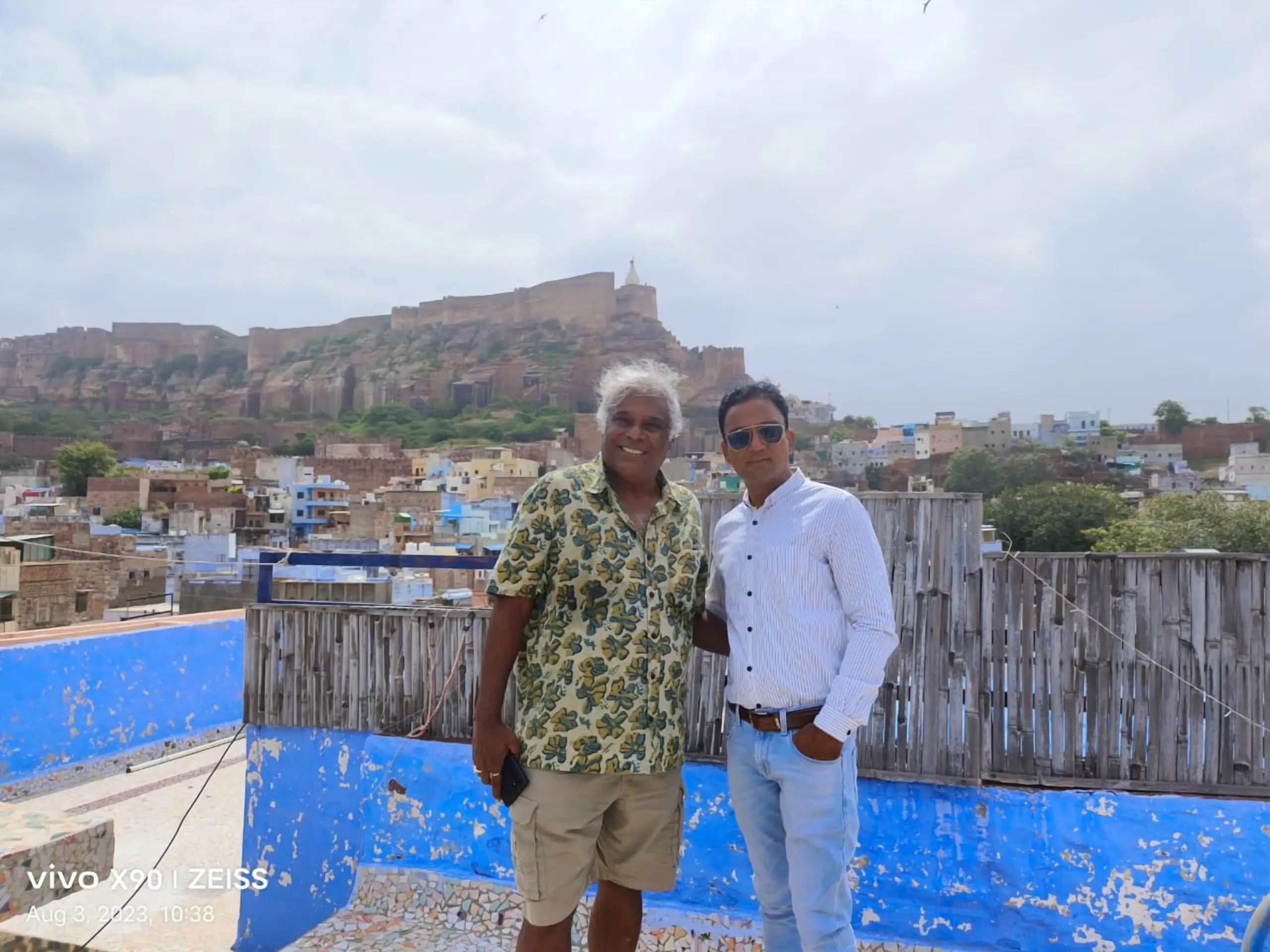
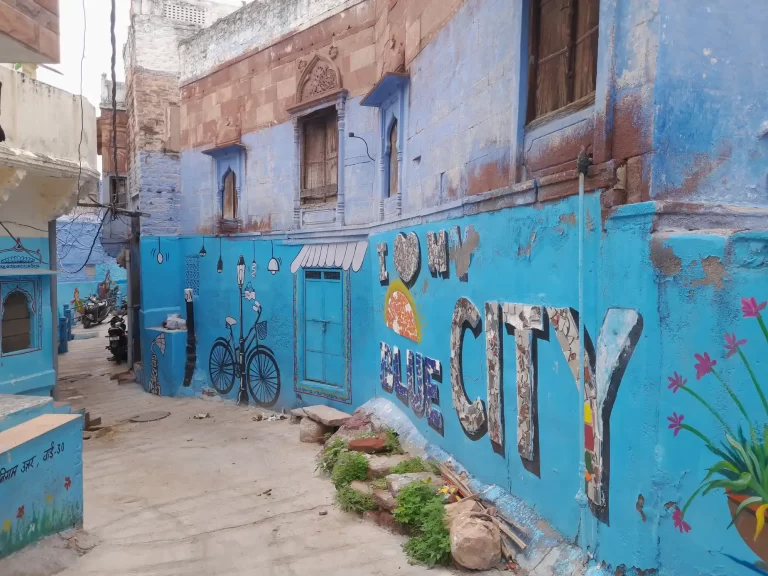
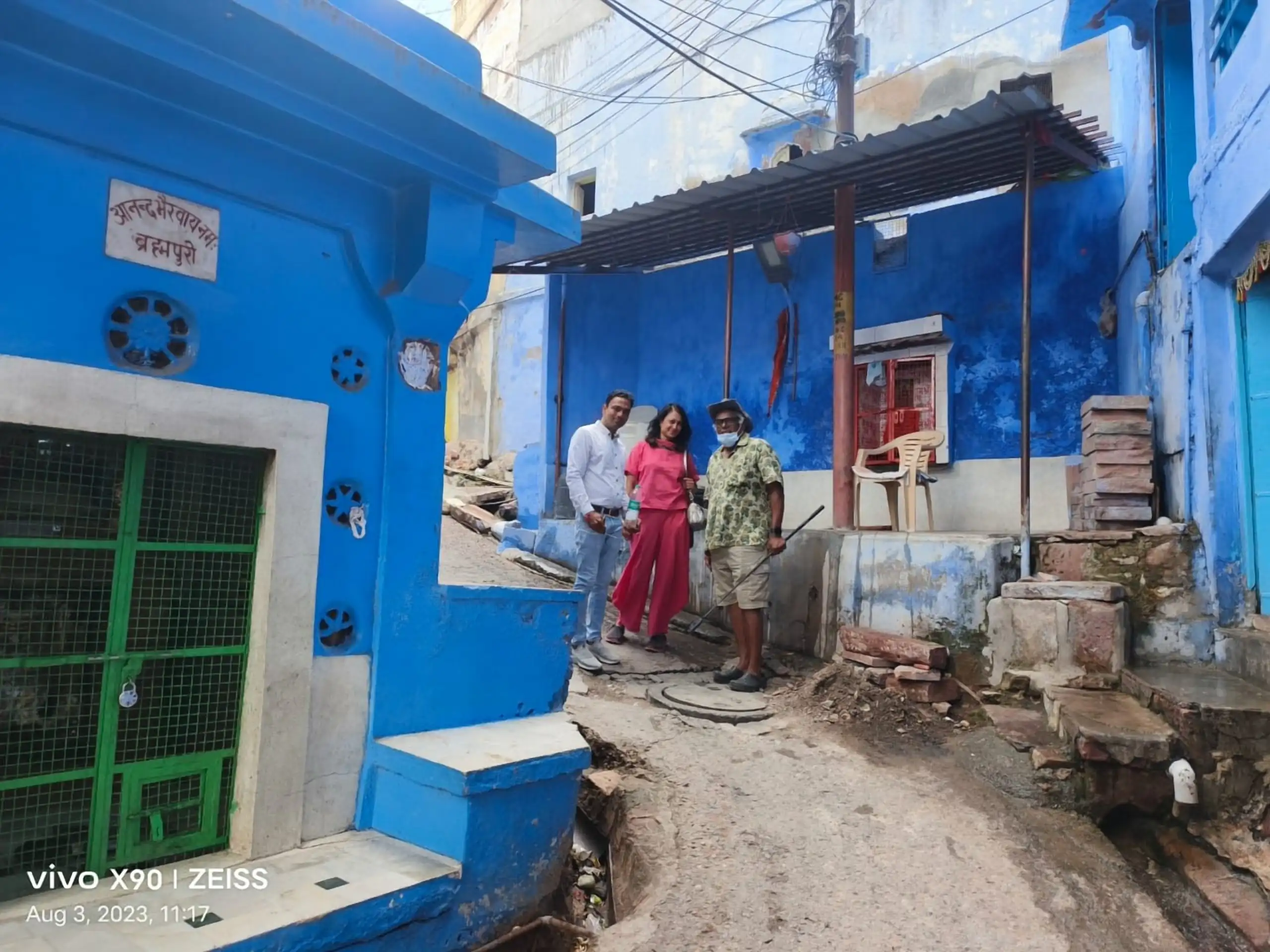
Jodhpur’s old city is washed in indigo blue, and more than one explanation for it is probably true at once — a Brahmin caste marker with a genuine insect-repelling benefit, an association with Lord Shiva, and eventually a self-reinforcing visual identity that residents and local building codes now actively preserve. Why Is Jodhpur Called the Blue City? walks through each explanation in full.
Jodhpur and Marwar: Kingdom and Cultural Region
“Marwar” names both the historic kingdom and the wider cultural-linguistic region around Jodhpur — including Osian, Nagaur, and Pali — and its desert-edge geography shaped the trade-route economy behind India’s well-known “Marwari” business tradition. Jodhpur and Marwar: History, Kingdom & Cultural Heritage covers the region’s geography, language, and legacy in more depth.
Rajput Heritage: Forts, Families, and Traditions
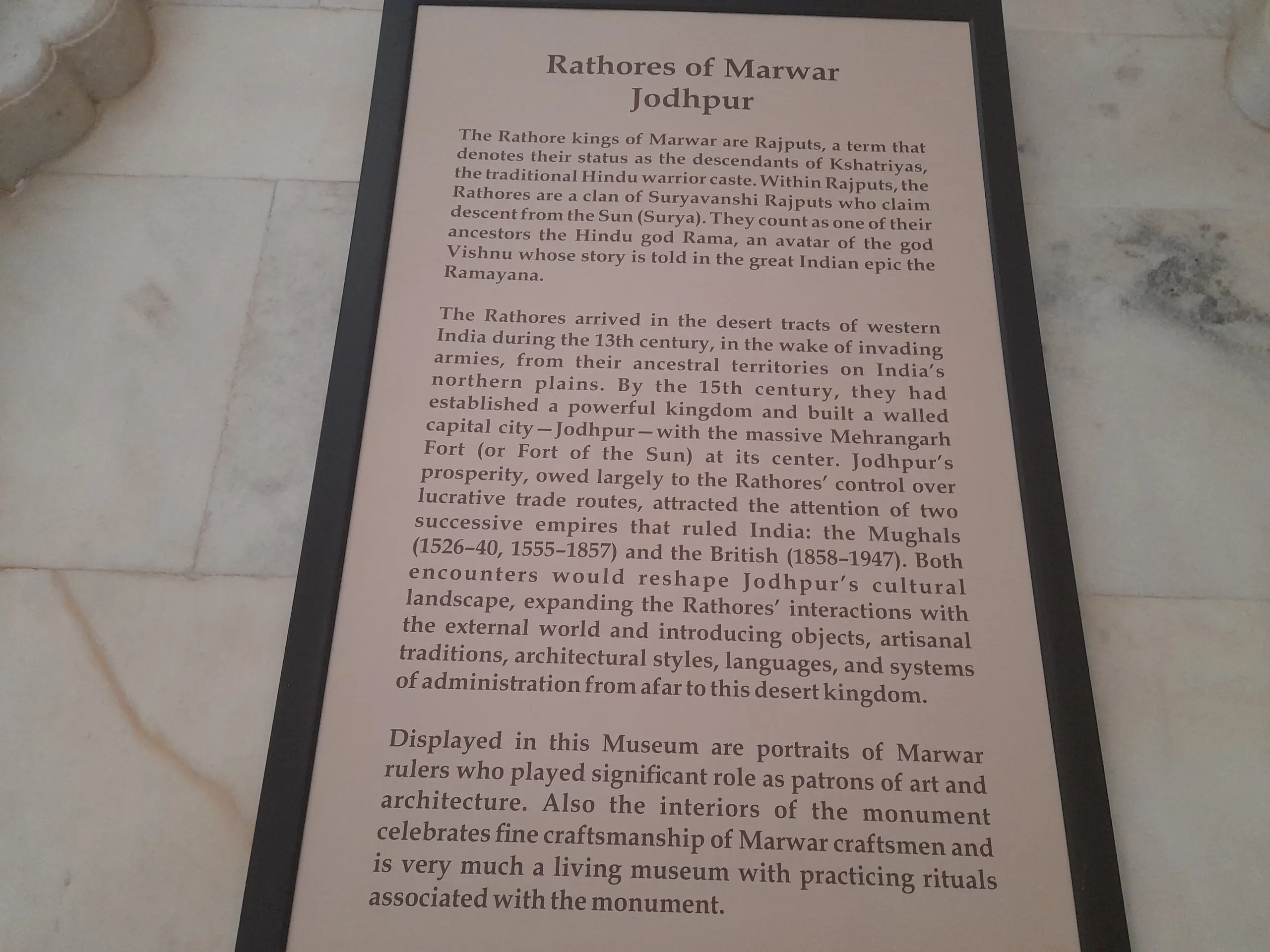
The Rathore Rajputs who founded and ruled Jodhpur belonged to a warrior aristocratic tradition built around clan loyalty and an elaborate code of honour, still visible in the forts, family crests, and clan histories many Marwar families maintain today — including the Mehrangarh Museum Trust, the former ruling family’s own shift from governance to heritage conservation. Rajput Heritage of Jodhpur explores the forts, families, and traditions behind it.
Jodhpur’s Local Culture: Everyday Life and Traditions
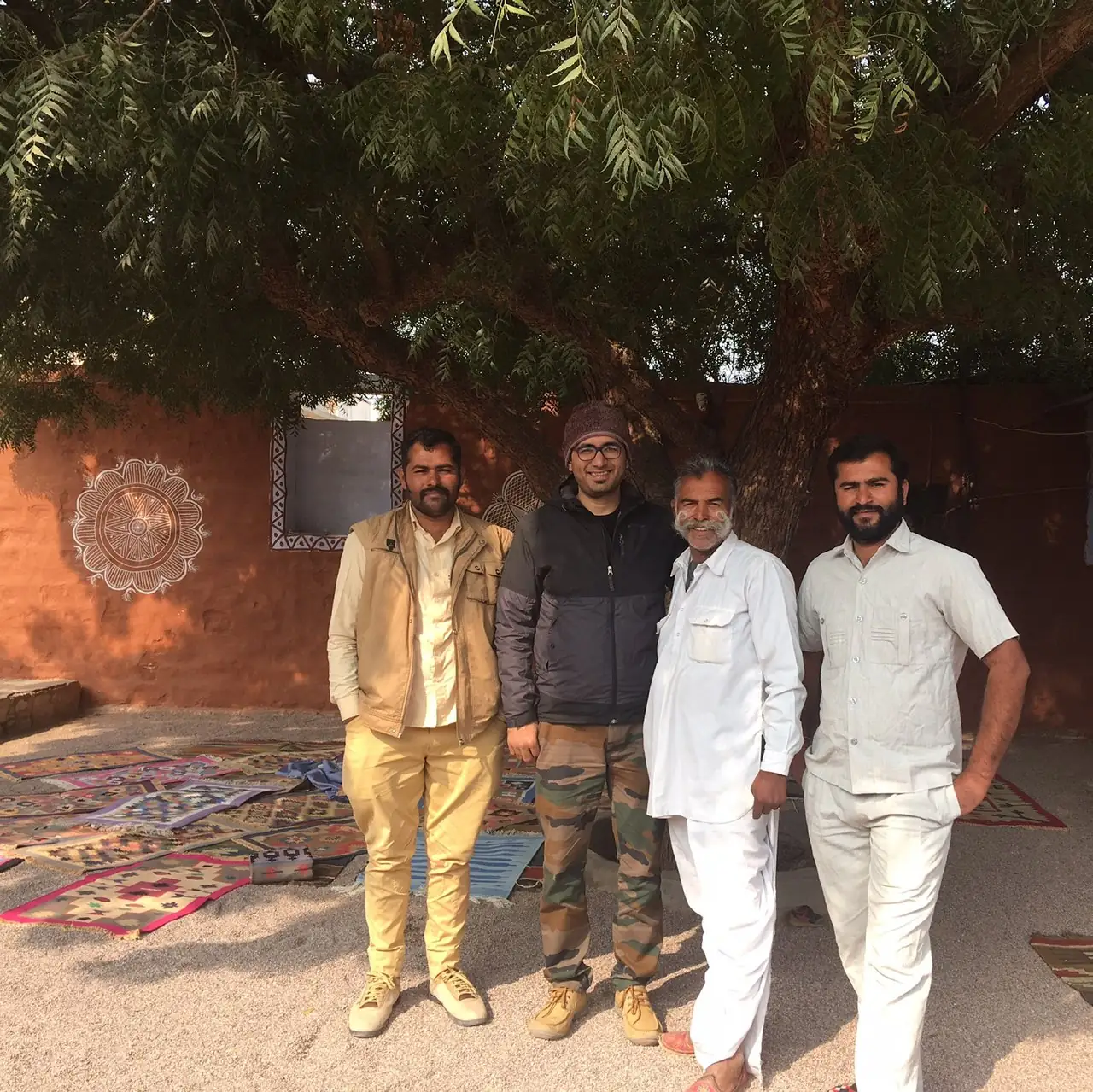
Away from the monuments, everyday life in Jodhpur is shaped by its desert-edge geography and long history as a trading hub — genuine hospitality (the regional “Padharo Mhare Desh,” Rajasthan’s welcome-to-my-land ethos), extended joint families, and traditional dress worn as daily life rather than reserved for festivals or photographs. Jodhpur’s Local Culture goes further into these everyday traditions and customs.
Bishnoi Culture Near Jodhpur
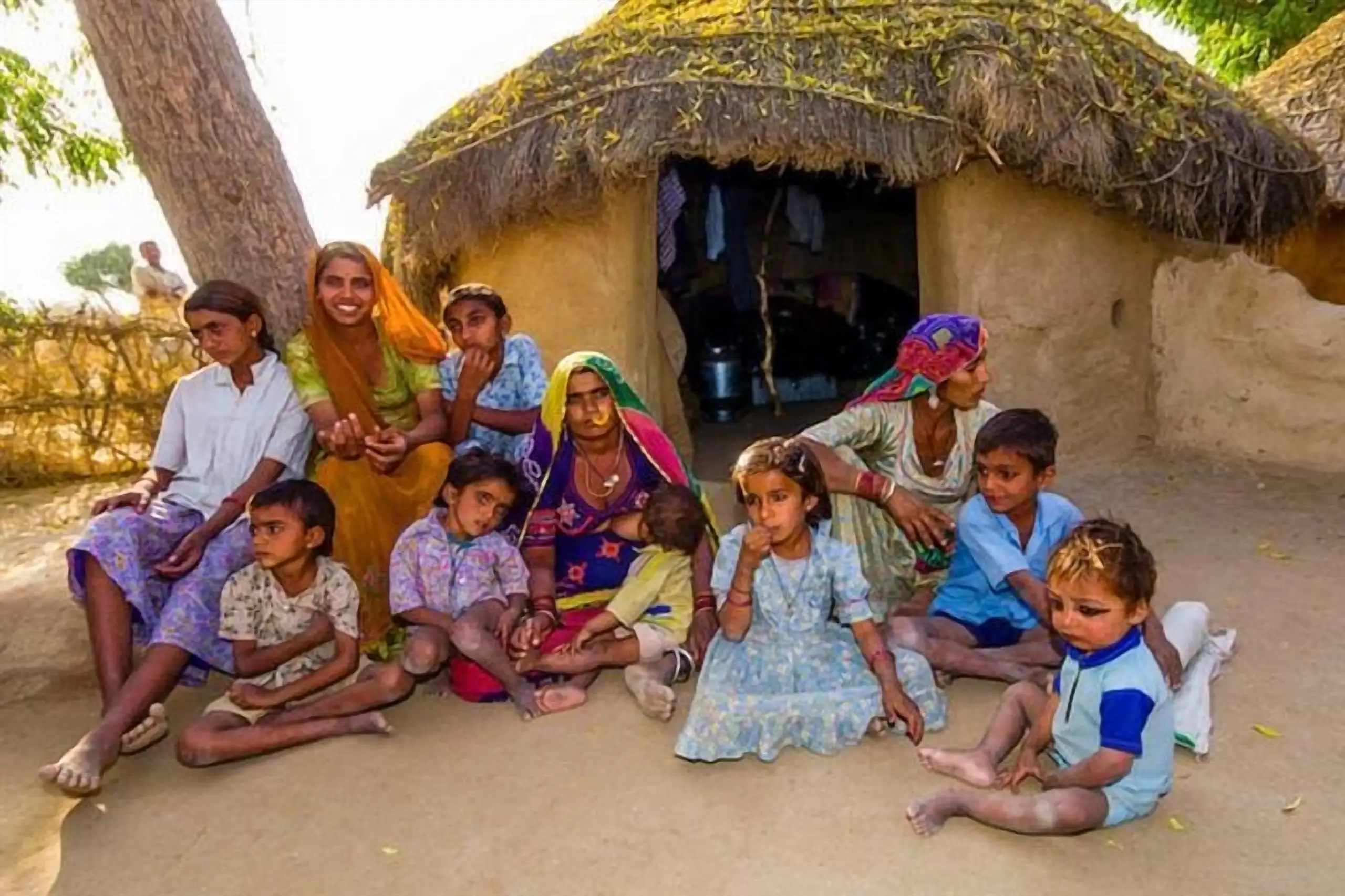
Bishnoi villages within about an hour of Jodhpur practise one of the world’s oldest organised conservation traditions, founded in the 15th century by Guru Jambheshwar and still marked by the 1730 Khejarli massacre, when 363 villagers led by Amrita Devi died protecting sacred khejri trees. Bishnoi Culture Near Jodhpur covers the community’s history, conservation ethic, and what a visit involves.
Mandore: Ancient Capital Before Jodhpur
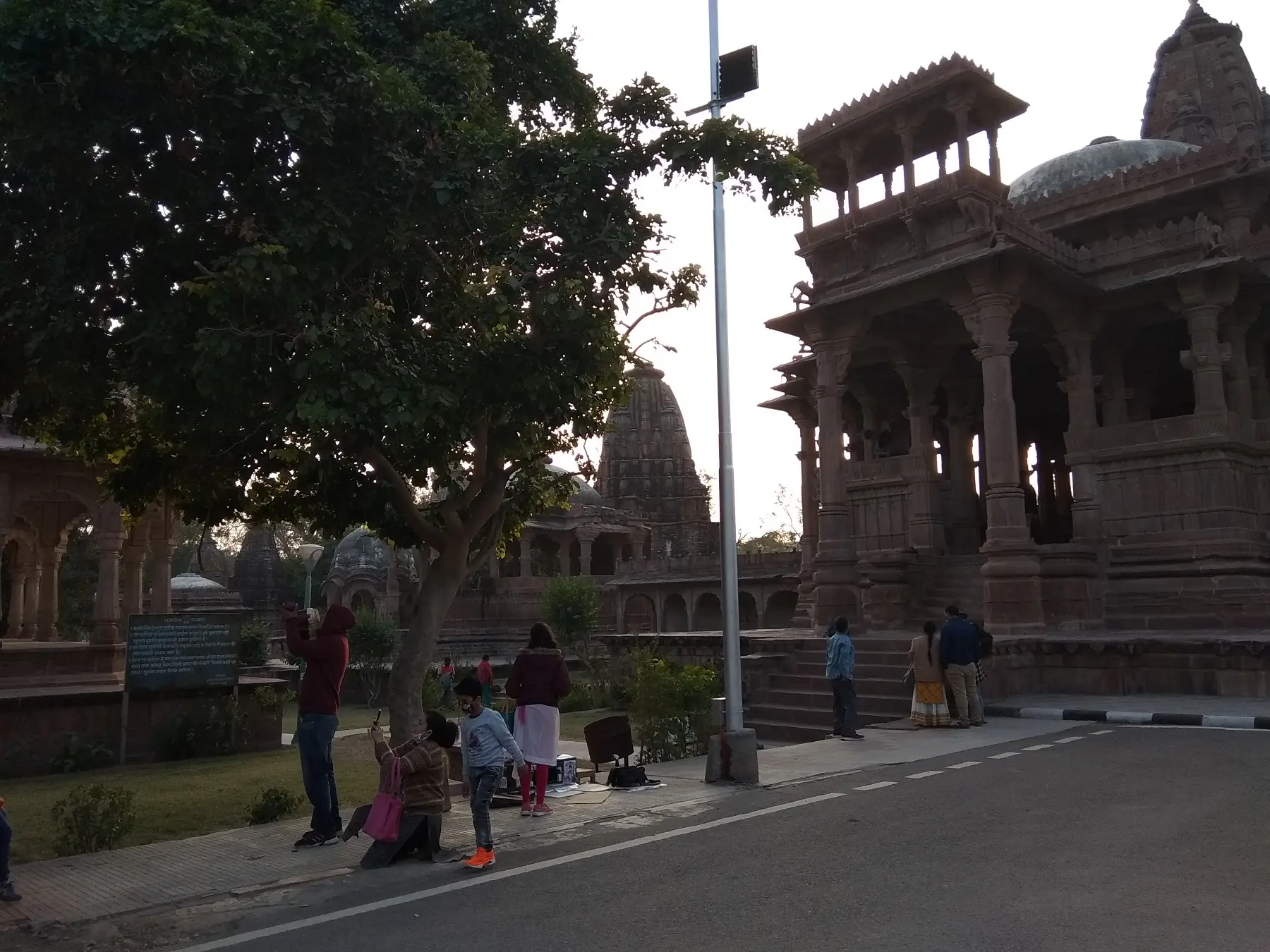
Before Rao Jodha founded Jodhpur in 1459, Mandore was Marwar’s capital, and its gardens today hold the older Rathore cenotaphs along with the Hall of Heroes, a rock-cut gallery of painted warrior and deity figures. Mandore: History, Heritage & Ancient Jodhpur has the fuller picture of the site.
Folk Music and Dance of Marwar
Marwar’s musical tradition is carried largely by hereditary Manganiar and Langa musician communities, alongside dances like Ghoomar and the UNESCO-recognised Kalbelia — commonly performed at festivals, weddings, and heritage-hotel evenings around Jodhpur, with the annual Rajasthan International Folk Festival at Mehrangarh Fort now one of its most significant platforms. Jodhpur Folk Music and Dance covers the instruments, communities, and performances in detail.
The Rathore Royal Family Today
Unlike many former princely families across India who have receded entirely from public life since the abolition of royal privileges in the 1970s, the Jodhpur royal family has remained unusually visible, largely through heritage and conservation work. The family retains a residential wing of Umaid Bhawan Palace, and the Mehrangarh Museum Trust, chaired by the family, is widely credited with setting a standard for heritage-site management that few other former princely properties in India have matched. This ongoing institutional role — part cultural custodian, part heritage-tourism steward — is part of why Jodhpur’s monuments feel noticeably better curated and maintained than comparable sites managed purely by government archaeology departments.
Trade, Merchants, and the Marwari Business Tradition
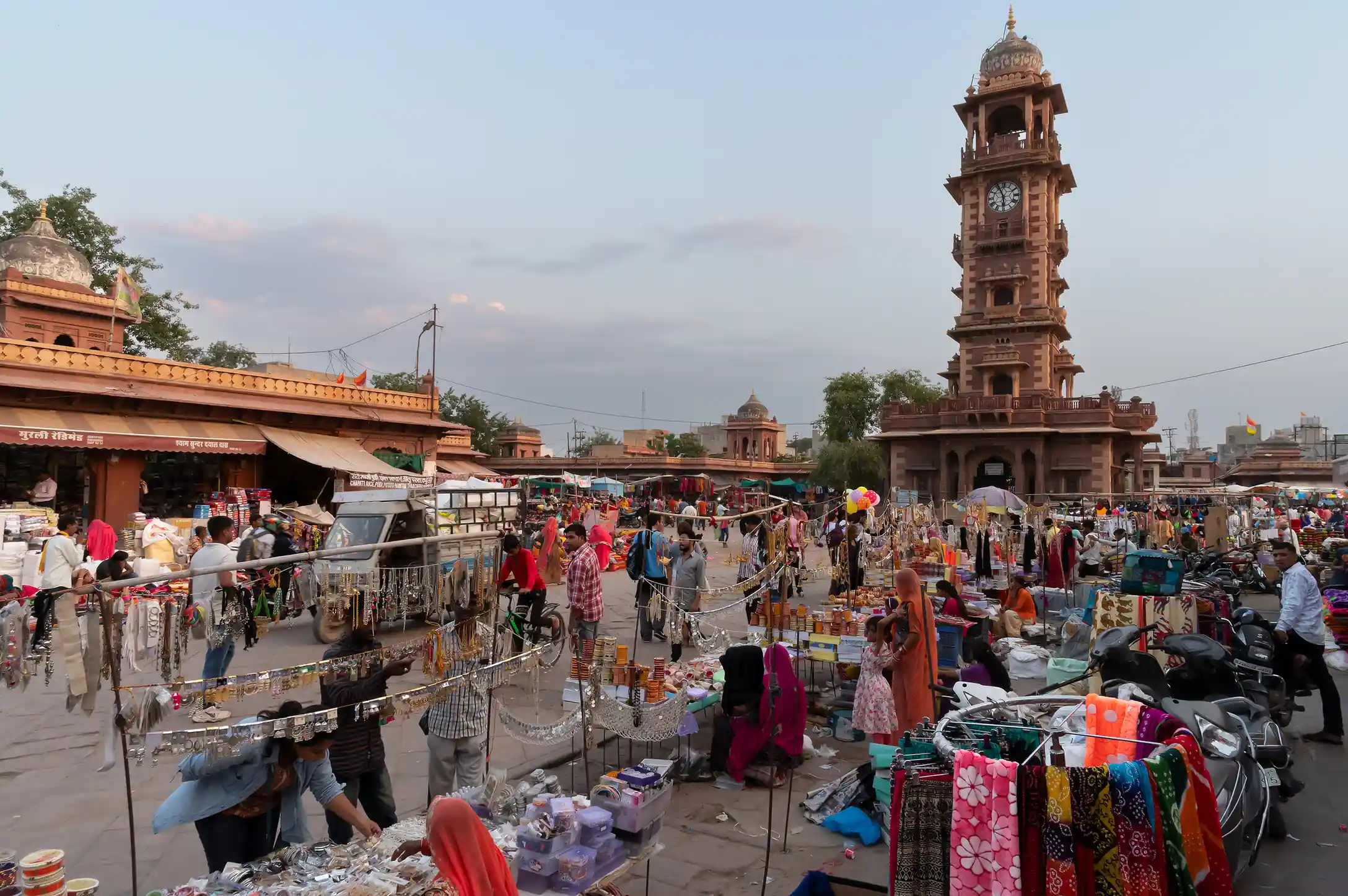
Long before it became a tourist destination, Jodhpur was a critical stop on trade routes linking Delhi and northern India to the ports of Gujarat, and the merchant communities who grew wealthy managing that trade left a visible architectural legacy — the ornately carved havelis scattered through the old city, built by trading families rather than royalty, with their own distinct decorative style. The term “Marwari,” now used across India to describe a prominent and historically influential business community with roots in this exact region, reflects just how significant that trading heritage became; Marwari merchant families expanded from Rajasthan into commercial centres across India over the 19th and 20th centuries, and many of India’s largest business houses today trace their family origins back to towns in the Marwar region surrounding Jodhpur.
Religious Traditions and Sacred Sites
Jodhpur’s religious landscape reflects the layered history of the region — Hindu temples dedicated to regional deities sit alongside Jain temples reflecting the historic prominence of Jain merchant communities in Marwar’s trading economy, and folk-religious shrines connected to local saints and warrior-heroes are woven throughout the old city and surrounding villages. Ravan, in a detail that surprises many visitors, is worshipped rather than vilified in parts of the Marwar region, including at a temple in Jodhpur maintained by a community claiming descent from him — a reminder that Rajasthan’s religious traditions are considerably more locally varied than a generic pan-Indian narrative suggests. The wider Marwar countryside is also dotted with cenotaphs and shrines to local folk deities and historical figures venerated by specific communities, several of which remain active pilgrimage sites for residents rather than tourist attractions.
Crafts, Cuisine, and Everyday Heritage
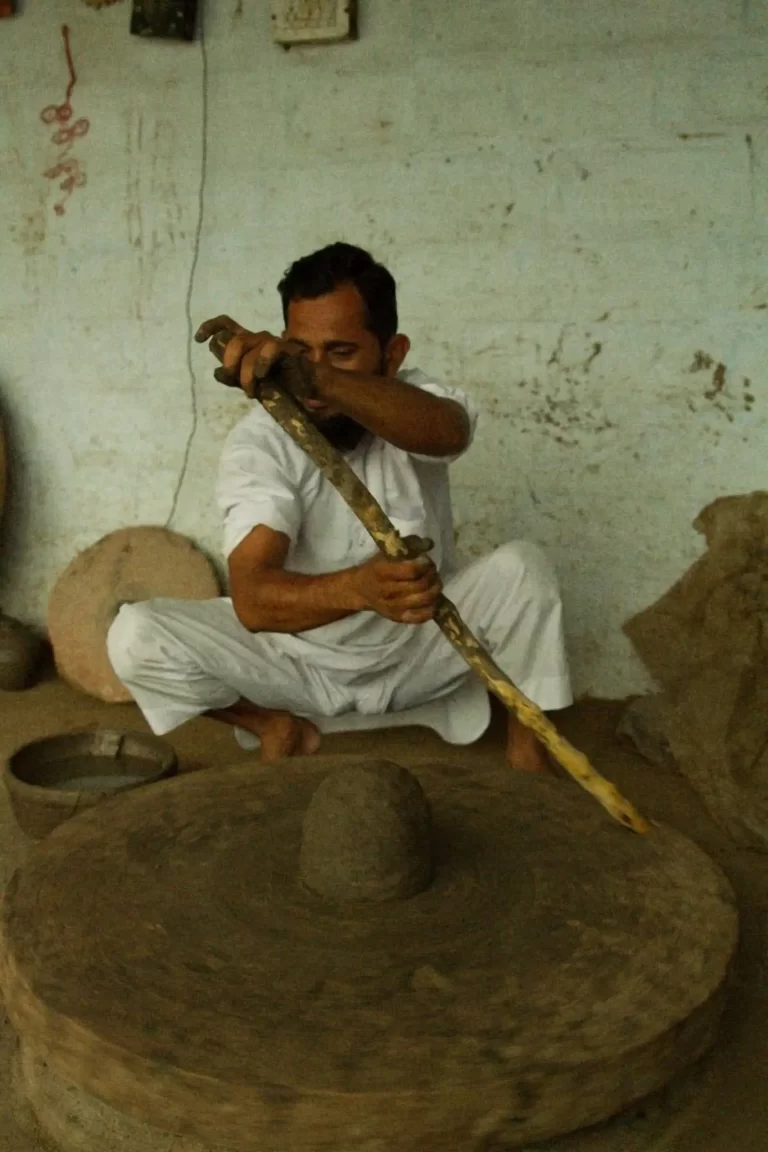
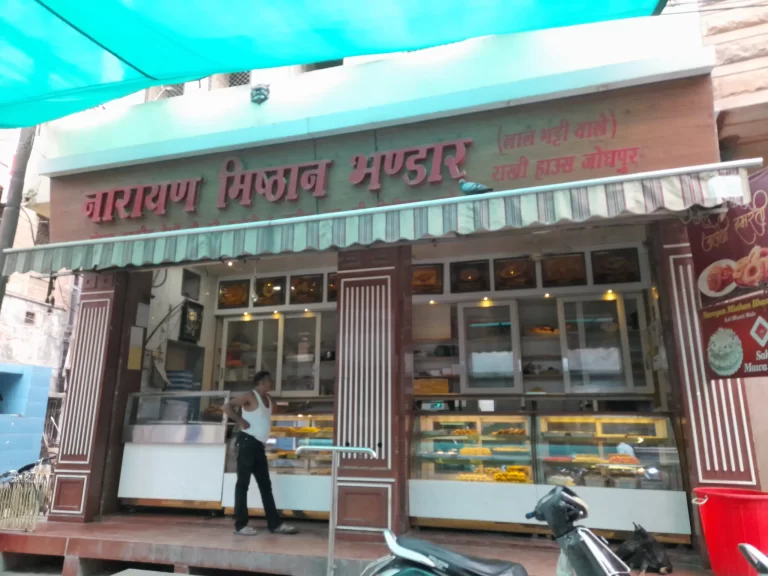
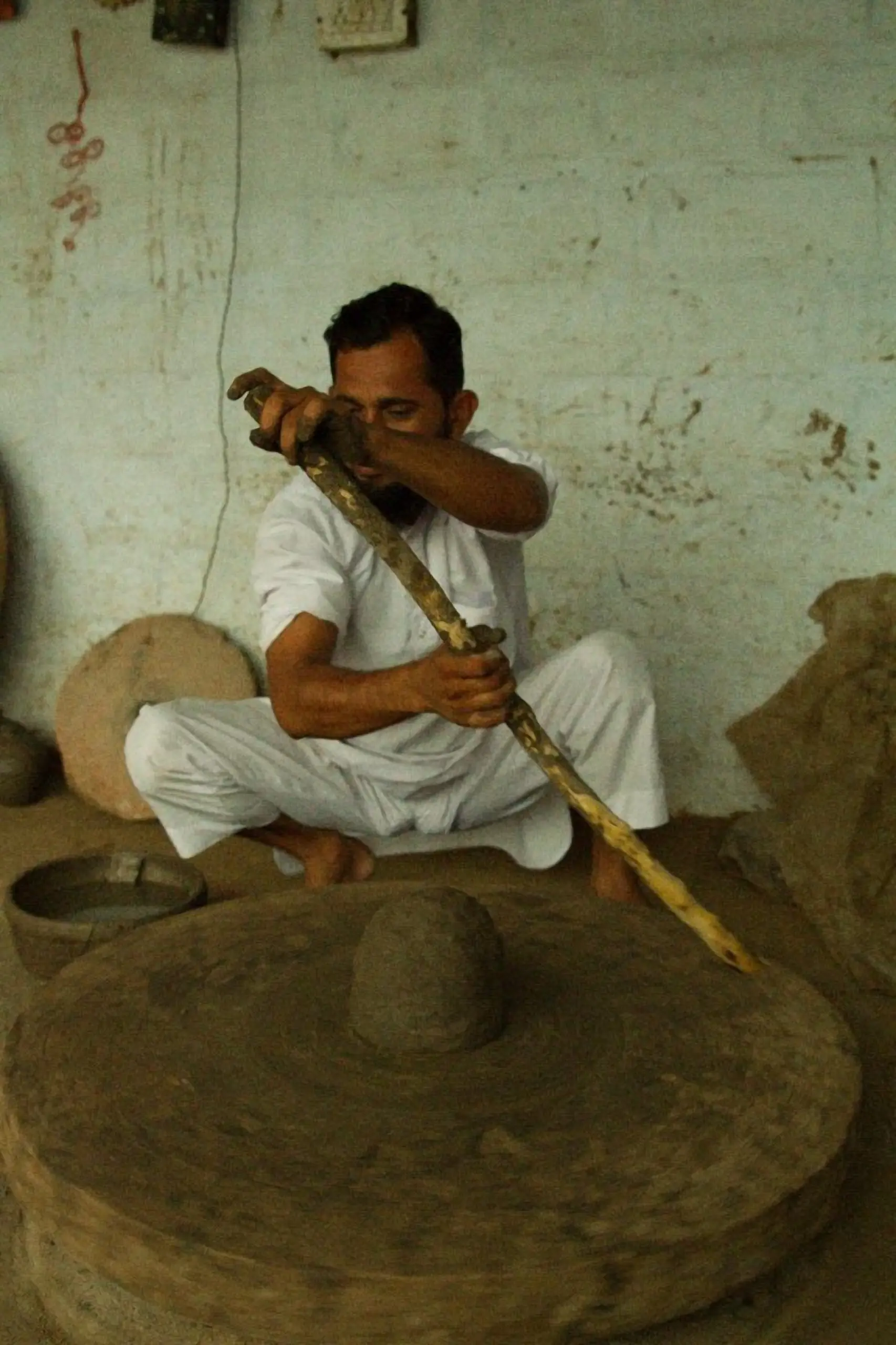
Much of Jodhpur’s living heritage shows up not in monuments but in everyday practice — the bandhani tie-dye and block-printing traditions still worked by hand in old-city workshops, the specific spice blends and preservation techniques (like sun-dried vegetables and legumes) that developed as practical adaptations to a desert climate with limited fresh produce, and traditional silver jewellery-making techniques passed down within specific artisan families for generations. These traditions are covered in more depth in our dedicated guides to Jodhpur’s markets and crafts and its food and culinary scene, but they’re worth flagging here as continuations of the same historical forces — trade, desert geography, and royal patronage — that shaped the city’s monuments.
Jodhpur and the Integration of Princely India
Like most princely states, Marwar acceded to the Indian Union following independence in 1947, with the Rathore royal family transitioning from ruling power to a ceremonial and cultural role that continues today, most visibly through their ongoing stewardship of Umaid Bhawan Palace and Mehrangarh Fort.
Preserving Heritage Through Trusts and Foundations
Much of Jodhpur’s historical preservation, including Mehrangarh Fort’s widely praised museum standards, is managed not by the government but by charitable trusts connected to the royal family, a model that has allowed for higher curatorial standards than many government-run sites in India typically achieve.
Modern Jodhpur: Balancing Heritage and Growth
As Jodhpur has grown into a significant regional city and tourism hub, local authorities and heritage bodies have worked to balance modern infrastructure needs with preservation of the old city’s distinctive blue-washed character, an ongoing tension visible in debates over new construction near the historic core.
Jodhpur’s Language and Everyday Speech
While Hindi is widely understood, many locals speak Marwari as a first language at home, a distinct dialect with its own vocabulary and expressions that reflects the region’s long independent cultural identity within the broader Rajasthani linguistic family.
Why Heritage Matters to Jodhpur’s Identity Today
Beyond tourism revenue, Jodhpur’s heritage institutions play an active role in sustaining traditional crafts, music, and cultural knowledge that might otherwise fade, making preservation as much a matter of living cultural continuity as of historical record-keeping.
How Jodhpur’s Heritage Differs from Jaipur and Udaipur
Visitors doing a multi-city Rajasthan trip often notice that Jodhpur’s heritage feels distinctly different in character from Jaipur’s or Udaipur’s, and the reason is largely geographic and economic rather than purely aesthetic. Jaipur was a planned 18th-century capital built with a deliberate emphasis on urban design and courtly grandeur; Udaipur’s Mewar kingdom cultivated a reputation for cultural refinement and lake-palace architecture partly as a contrast to its long military resistance against Mughal rule. Marwar, by contrast, built its identity around defensibility, desert trade, and pragmatic alliance — reflected in Mehrangarh’s imposing, fortress-first design and in Jodhpur’s continued identity as a working merchant city rather than a purely ceremonial capital. None of the three is more “authentic” than the others; they simply represent different historical strategies for surviving and prospering in Rajasthan’s competitive kingdom politics.
What’s the connection between Jodhpur and the riding trousers named after it?
“Jodhpurs,” the fitted riding trousers, take their name directly from the city, popularised internationally in the early 20th century by Maharaja Sir Pratap Singh, an avid polo player and horseman whose distinctive riding attire was adopted by British and European riders and eventually became a standard equestrian garment worldwide — one of Jodhpur’s more unexpected global cultural exports.
Are there living descendants of the Manganiar and Langa musician communities still performing today?
Yes — these are hereditary musical communities where the tradition is passed down within families rather than taught formally, and performers active today are often direct descendants of musicians who served the Marwar royal court for generations. Several well-known Manganiar and Langa musicians now perform internationally as well as at events around Jodhpur, helping keep the tradition both economically viable and visible to new audiences.
FAQ
What is the historical connection between Jodhpur and Marwar?
Jodhpur served as the capital of the Marwar Kingdom, ruled by the Rathore dynasty for centuries.
What defines Jodhpur’s local culture today?
A blend of Rajput traditions, Bishnoi community values, and everyday customs still visible in daily life.
Is Bishnoi culture unique to villages near Jodhpur?
Bishnoi communities are concentrated in villages around Jodhpur, known for their strong conservation traditions.
What is Mandore’s significance to Jodhpur’s history?
Mandore served as the ancient capital before Jodhpur was founded, preserving royal cenotaphs and gardens.
Where can visitors experience Jodhpur’s folk traditions?
Cultural festivals, folk music performances, and village visits offer the most direct exposure to local traditions.