Jodhpur Food Guide: Best Local Food & Restaurants
Jodhpur’s food culture is shaped, more than almost anything else, by desert geography. Centuries of limited fresh water and produce pushed Marwari cooks toward dried lentils and beans, clarified butter (ghee) as a primary fat, and bold spicing that could carry flavour without relying on fresh vegetables in short supply. The result is one of India’s most distinctive regional cuisines — rich, spiced, and built to survive both a harsh climate and long journeys along historic trade routes. This guide covers what to eat in Jodhpur, where locals actually go, and the dishes worth planning a meal around — for the fuller single-article walkthrough, see our complete Jodhpur food guide.
Laal Maas: Jodhpur’s Signature Dish

No dish is more associated with Marwar than laal maas — a fiery mutton curry built on a base of Mathania red chillies, grown in villages near Jodhpur and prized for their deep colour and relatively manageable heat compared to their intensity of flavour. Traditionally a royal hunting-camp dish, meant to use up game meat and warm hunters through cold desert nights, laal maas is typically slow-cooked until the meat is completely tender, finished with a generous layer of ghee. The best versions are found less often in high-end hotel restaurants and more often in smaller, family-run Marwari kitchens and a handful of specialist restaurants in the old city that have built their reputation on this single dish for generations. If you order only one thing in Jodhpur, most locals would tell you to make it this. Our dedicated laal maas guide covers where to find the best versions.
Traditional Rajasthani Dishes to Try
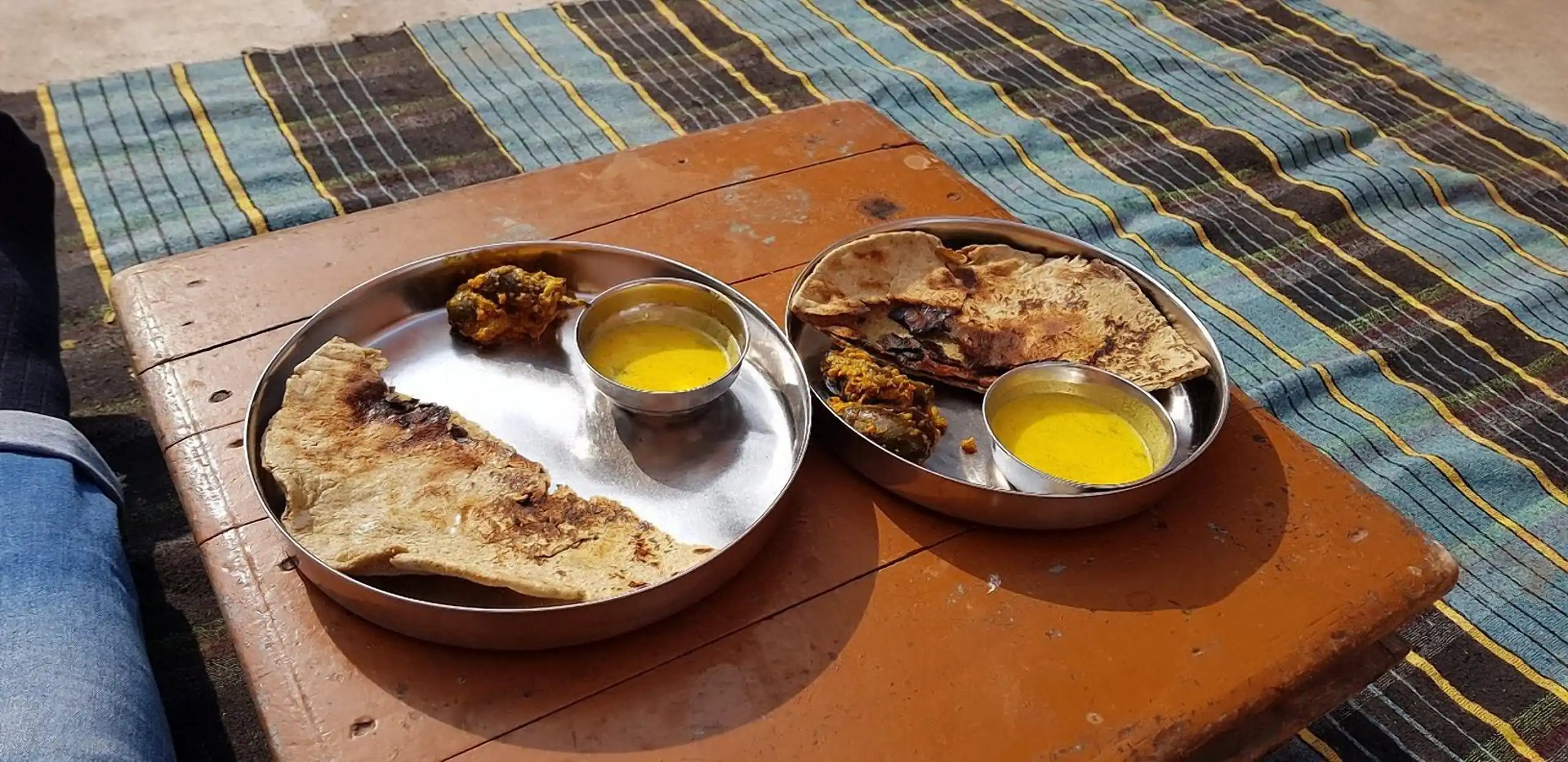
Beyond laal maas, a handful of dishes define the wider Rajasthani and specifically Marwari table. Dal baati churma — hard-baked wheat rolls (baati) cracked open and doused in ghee, served with a mixed lentil dal and a sweet crumbled wheat-and-jaggery churma — is the closest thing Rajasthan has to a national dish, and Jodhpur’s versions are considered among the state’s best. Gatte ki sabzi, gram-flour dumplings simmered in a spiced yogurt gravy, developed as another practical solution to limited fresh vegetables. Ker sangri, a dry preparation of desert beans (sangri) and berries (ker) unique to arid Rajasthan, is a distinctly regional dish rarely found outside the state and worth seeking out specifically for that reason. Mirchi bada — a large green chilli stuffed with spiced potato and deep-fried in gram-flour batter — is Jodhpur’s most famous savoury street snack, sold from carts across the old city, especially near the Clock Tower. Our full guide to traditional Rajasthani dishes covers these and more in depth.
Best Street Food in Jodhpur
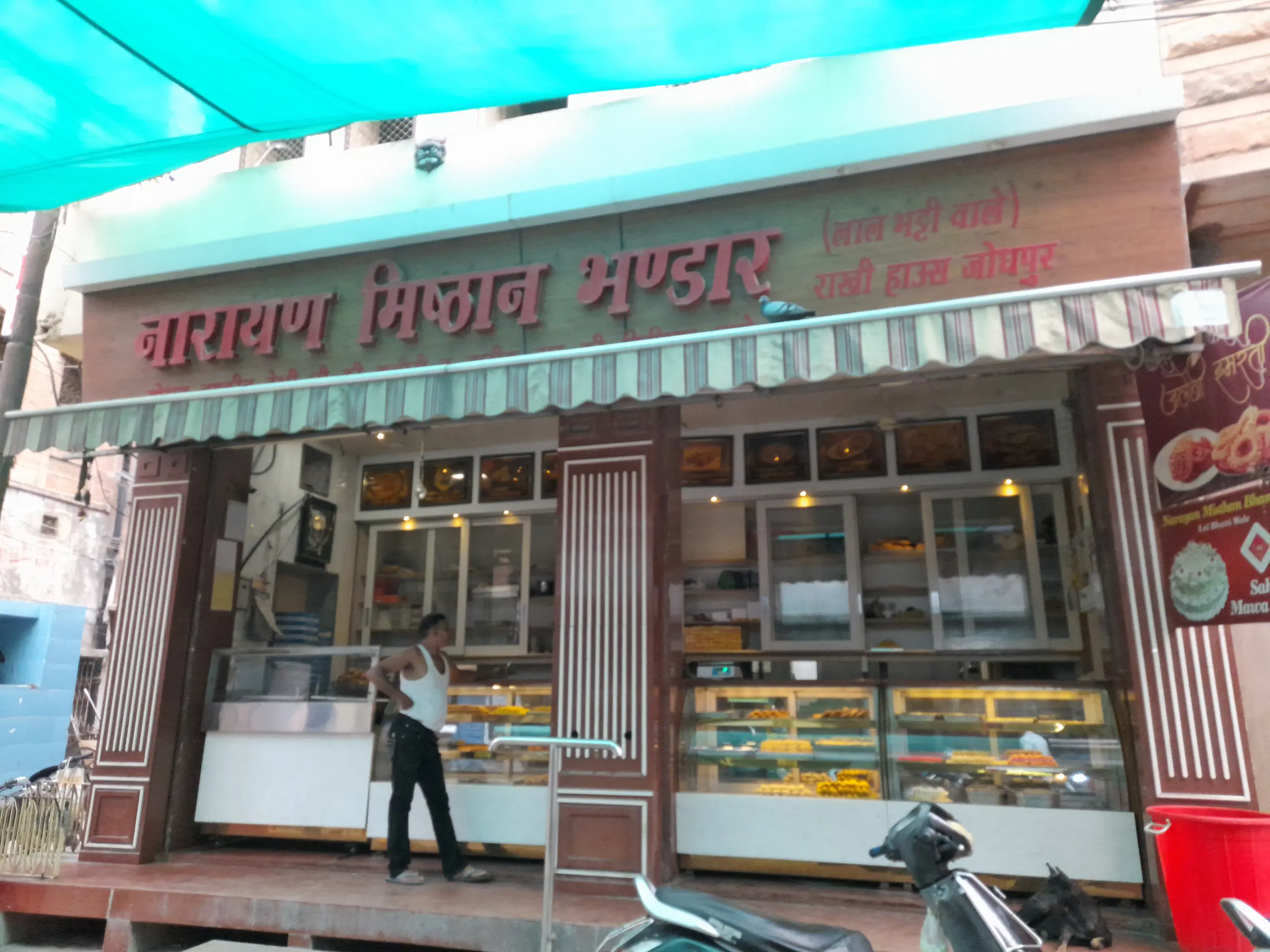
Sardar Market and the lanes around the Clock Tower are the centre of Jodhpur’s street food scene. Beyond mirchi bada, look for pyaaz kachori (onion-stuffed fried pastry, best eaten hot with tamarind and mint chutney), mawa kachori (a sweeter version filled with a khoya-based mixture, dusted in sugar), and Jodhpur’s take on samosas, typically spicier and more densely spiced than versions found elsewhere in India. Makhaniya lassi — a thick, saffron-and-cream-topped yogurt drink, considerably richer than a standard lassi — is practically a required stop, with a handful of long-running specialist shops near the Clock Tower drawing queues of both locals and visitors. Street food in Jodhpur, as with most of India, is best approached by following where the local queues are longest and turnover is fastest, which generally indicates fresh preparation and lower food-safety risk than a stall with food sitting out. See our full Jodhpur street food guide for more must-try stalls and dishes.
Best Vegetarian Food in Jodhpur
Rajasthan overall has one of India’s strongest vegetarian culinary traditions, driven partly by the Marwari and Jain business communities historically concentrated in the region, and Jodhpur is no exception. Thali restaurants serving a full spread of dal, gatte ki sabzi, ker sangri, seasonal vegetable preparations, roti, rice, and a sweet in one sitting are widely available and offer one of the most efficient ways to sample the range of Marwari vegetarian cooking in a single meal. Panchmel dal, a mixed five-lentil preparation, and besan-based dishes generally are particularly strong here, reflecting the historic reliance on lentils and gram flour over fresh produce. Our dedicated vegetarian food guide has the fuller picture.
Best Vegan Food in Jodhpur
Vegan dining requires a bit more care in Jodhpur specifically, since ghee is used liberally across almost the entire traditional repertoire, including in dishes that otherwise contain no animal products. Dry vegetable sabzis, dal preparations made without a ghee tempering, and plain roti are usually safe defaults, but it’s worth explicitly requesting dishes be prepared without ghee or dairy when ordering, since it won’t be assumed by default the way it might be in more internationally-oriented vegan destinations. A small but growing number of newer cafés in the Toorji Ka Jhalra and old-city guesthouse district cater specifically to international travellers and are generally more reliable for confidently vegan options, including plant-milk coffee and dedicated vegan menu items. See our full guide to vegan food in Jodhpur for specific recommendations.
Best Sweets in Jodhpur
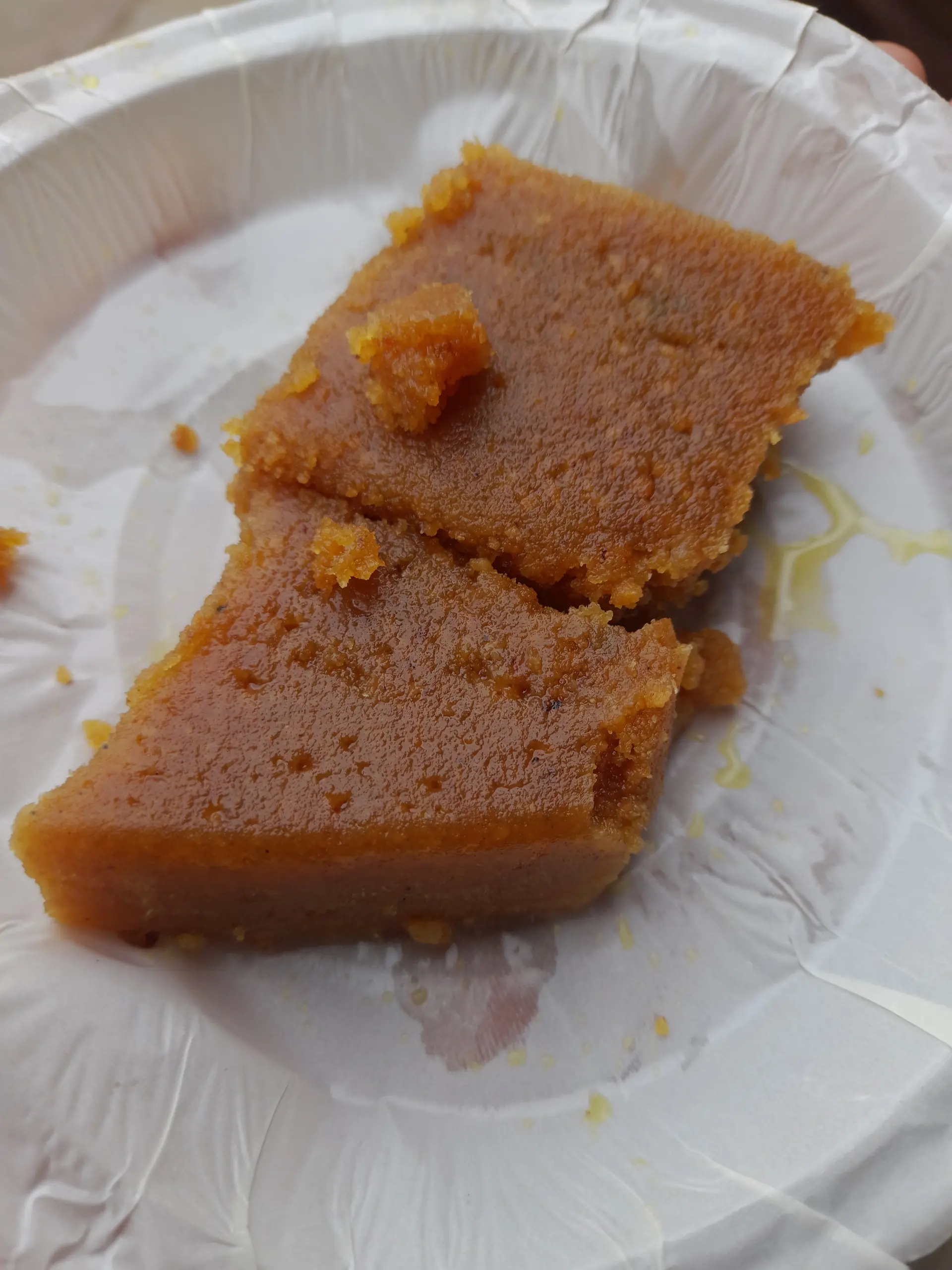
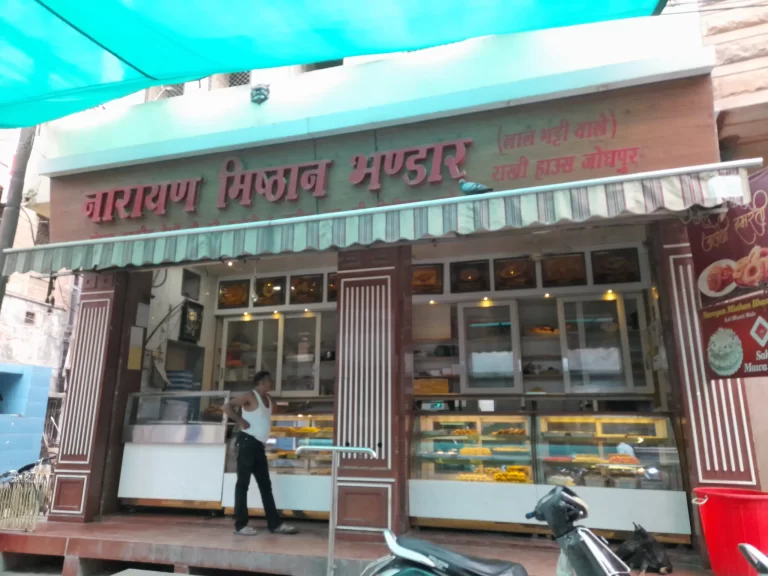
Jodhpur’s sweet shops are as much a local institution as its restaurants. Mawa kachori aside, the city is particularly known for besan chakki (a dense, ghee-rich gram-flour fudge), mawa lassi, and its own take on ghewar, a disc-shaped, honeycomb-textured sweet traditionally associated with the monsoon and the Teej festival, though widely available year-round in Jodhpur’s better sweet shops. Several long-established mithai shops near the old city have been run by the same families for multiple generations, and are generally a safer bet for quality and freshness than newer or more tourist-oriented outlets. Our full guide to Jodhpur’s best sweets covers more shops and mithai varieties.
Best Restaurants for Authentic Rajasthani Food
Jodhpur’s dining scene spans everything from rooftop restaurants with fort views aimed squarely at visitors, to unmarked family kitchens where laal maas has been cooked the same way for decades. Rooftop restaurants around the old city and near the fort tend to offer the most reliable combination of good views and solidly executed Rajasthani classics, making them a sensible choice for a first proper meal in the city. For a more local experience, smaller thali restaurants away from the immediate tourist circuit, often identifiable by a lunchtime queue of local office workers and families rather than visitors, tend to offer better value and, frequently, better food. Heritage hotels including Umaid Bhawan Palace also run high-end restaurants serving refined versions of traditional dishes, worth considering for a special-occasion meal even if you’re not staying there. See our dedicated restaurant guide for more on choosing where to eat.
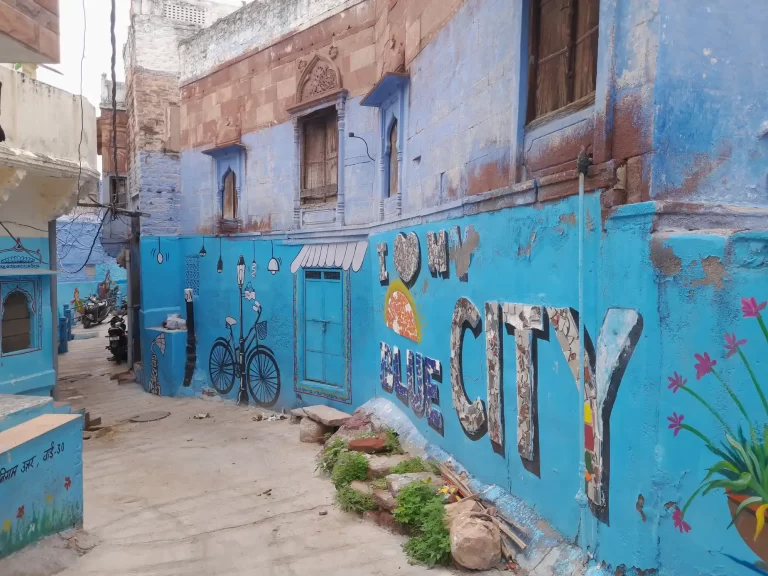
Jodhpur Cafes: Coffee, Food, and Blue City Views
Jodhpur’s café scene has grown considerably in recent years, concentrated particularly around Toorji Ka Jhalra, where restored heritage buildings house a cluster of rooftop and terrace cafés with direct views over the stepwell and, from higher terraces, the Blue City and fort beyond. These cafés typically serve a mix of Western breakfast and coffee-shop staples alongside lighter Indian dishes, and function as a useful midday break between old-city sightseeing — air-conditioned or well-shaded, with distinctly good espresso-based coffee, which isn’t a given everywhere in Rajasthan. Our full Jodhpur cafes guide has more on where to find them.
Practical Tips for Eating in Jodhpur
- Spice levels: Marwari food, laal maas especially, runs seriously hot by most international standards — ask for it mild if you’re spice-sensitive, rather than assuming “medium” will be manageable.
- Water and ice: Stick to bottled or filtered water, and be cautious with ice at street stalls specifically, even if the food itself is freshly cooked and safe.
- Meal timing: Local lunch service tends to run from around midday to early afternoon, and dinner rarely gets going before 8 PM — arriving at a local thali spot at a Western dinner hour of 6 PM may mean an emptier, less lively restaurant.
- Thali etiquette: At most thali restaurants, staff will continue refilling your plate unless you clearly signal you’re finished — a hand held flat over the plate is the usual local gesture.
A Food-Focused Half-Day in Jodhpur
For visitors who want to build part of a day specifically around eating, a reasonable route starts with a late breakfast at a café near Toorji Ka Jhalra, a mid-morning stop for mirchi bada and makhaniya lassi near the Clock Tower, a proper thali lunch at a local (non-touristic) restaurant, and dinner built around laal maas and dal baati churma at either a rooftop restaurant with fort views or a specialist old-city kitchen recommended by your hotel — the latter is usually the better option for the dish itself, even if the setting is less photogenic.
Marwari Thali: How It’s Structured
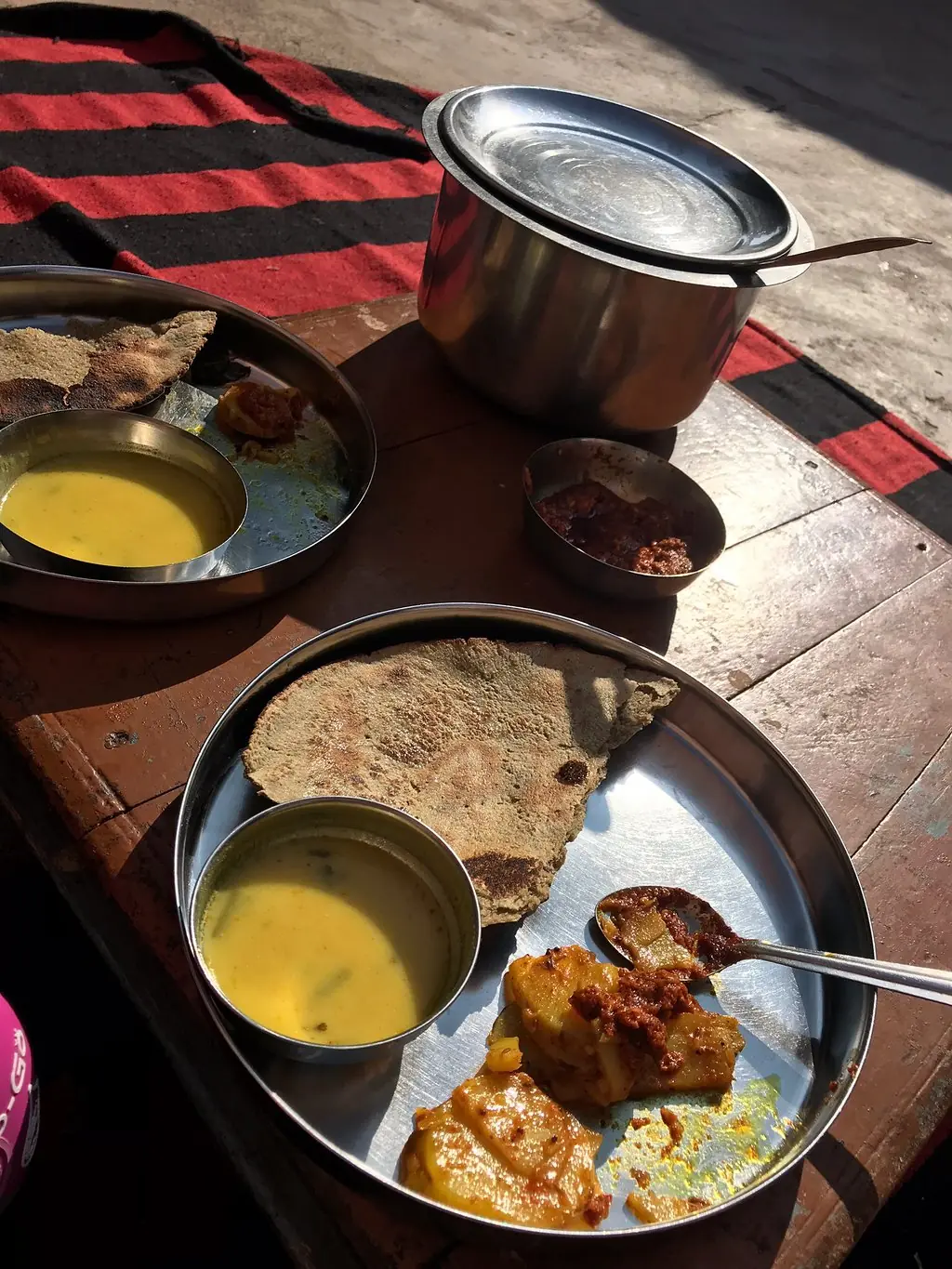
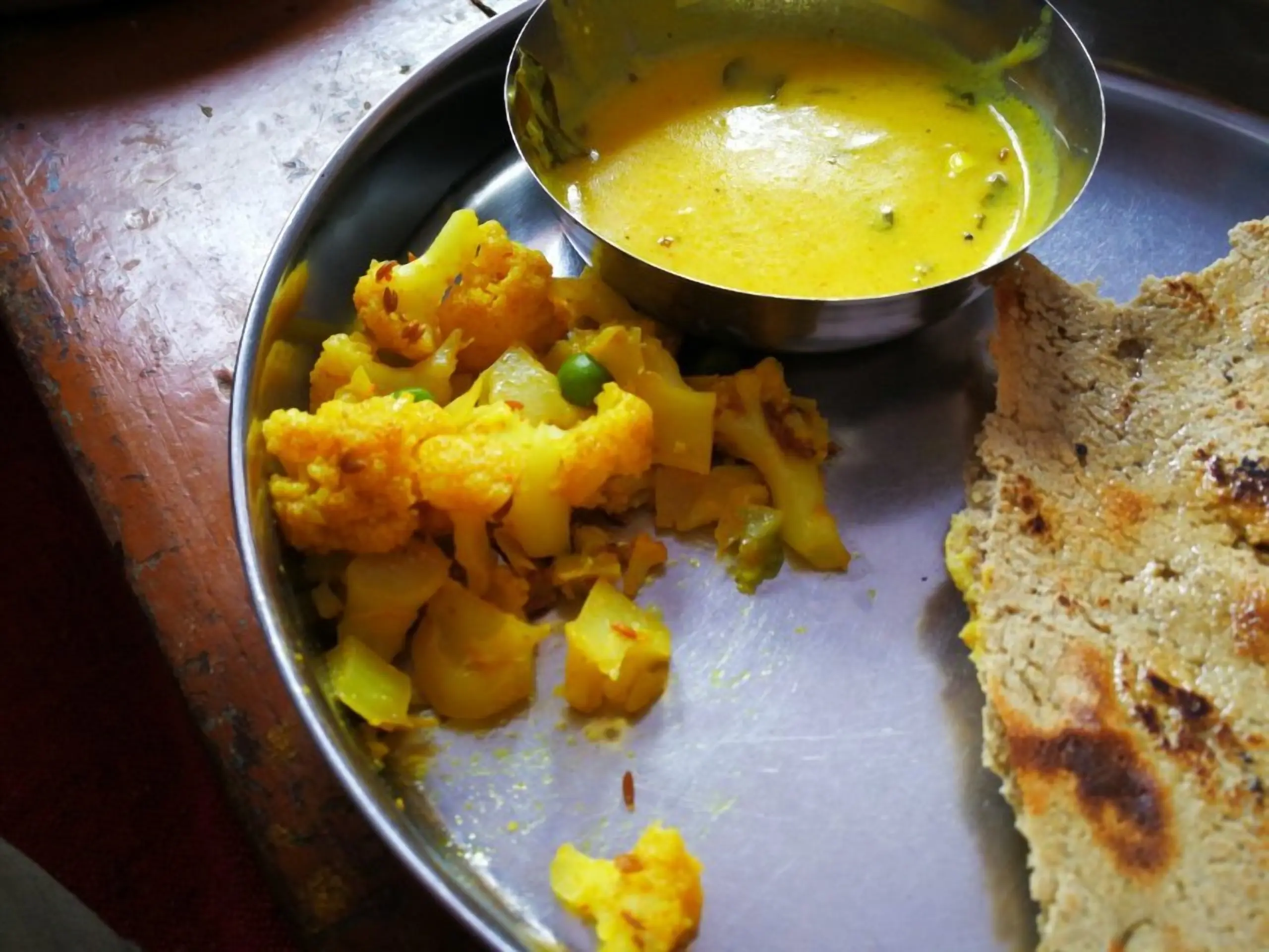
A traditional Marwari thali is built around balance rather than a single centrepiece dish — typically two or three lentil or vegetable preparations of varying spice levels and textures, a yogurt-based dish or plain curd to cool the palate, roti or bajra (pearl millet) flatbread depending on the season, rice, and at least one sweet to close the meal. Bajra roti in particular is a Marwar speciality tied directly to the region’s arid farming conditions, where pearl millet grows more reliably than wheat, and it’s worth trying specifically in Jodhpur rather than assuming standard wheat roti is the only option. The sequencing matters too — many traditional households and restaurants serve the sweet partway through rather than strictly at the end, a regional convention that surprises first-time visitors expecting a Western-style dessert course.
Opium Ceremony and Ceremonial Hospitality

Related to food culture, though not food itself, the traditional Marwari opium ceremony (afeem) is a ritualised welcome gesture historically extended to guests in Bishnoi villages and some rural Marwar communities — a small, ceremonial amount dissolved in water and passed among guests as a mark of respect and hospitality, distinct from recreational drug use and typically offered only in a supervised, cultural context rather than something a visitor would encounter casually in the city itself. Travellers curious about the practice should experience it, if at all, only through a reputable guide or organised village visit rather than seeking it out independently.
Seasonal Eating in Jodhpur
What’s actually fresh and best in Jodhpur shifts noticeably with the seasons, more than in cities with more consistent year-round produce. Winter (roughly November to February) brings the widest range of fresh vegetables and is generally considered the best season for Marwari vegetarian cooking at its most varied. Ghewar and other monsoon-associated sweets peak around the Teej and Gangaur festivals in the monsoon and pre-monsoon months. Summer, by contrast, leans more heavily on the dried-lentil and preserved-vegetable dishes the cuisine is built around in the first place — not a lesser season for food, but a distinctly different one, closer to the historic, water-scarce roots of Marwari cooking.
Cooking Classes and Food Experiences
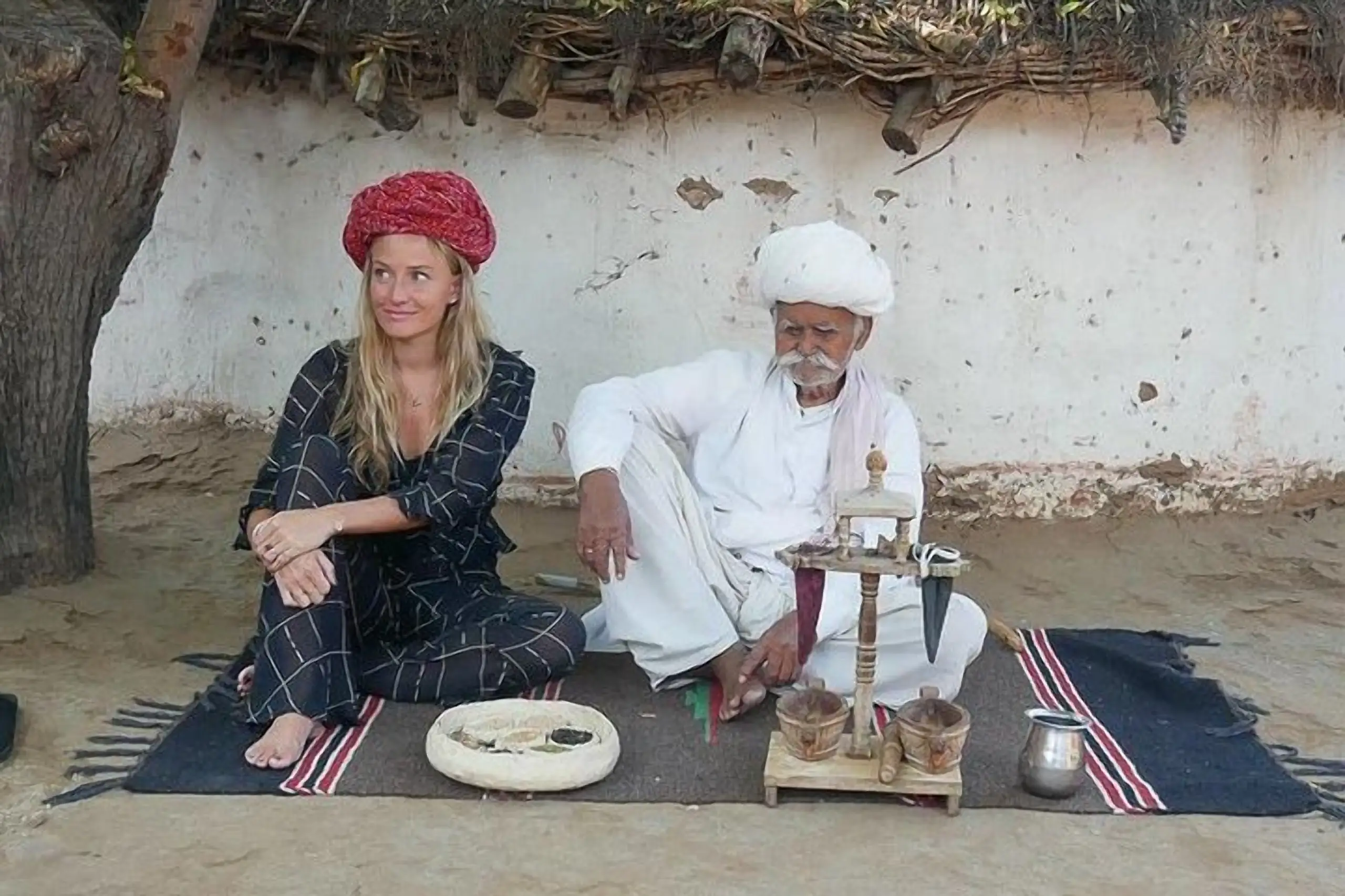
A growing number of guesthouses and home-stays in and around Jodhpur offer hands-on cooking classes, typically half-day sessions covering a small thali of classic dishes — dal baati churma is a near-universal inclusion given how emblematic it is of the region. These sessions tend to work best when run by a family in their own kitchen rather than a hotel’s demonstration kitchen, both for authenticity and for the conversation that tends to come with it. Market tours through Sardar Market, often paired with a cooking class, are a useful way to understand the raw ingredients — Mathania chillies, specific lentil varieties, local spice blends — before seeing them combined into finished dishes.
Drinks: Beyond Lassi
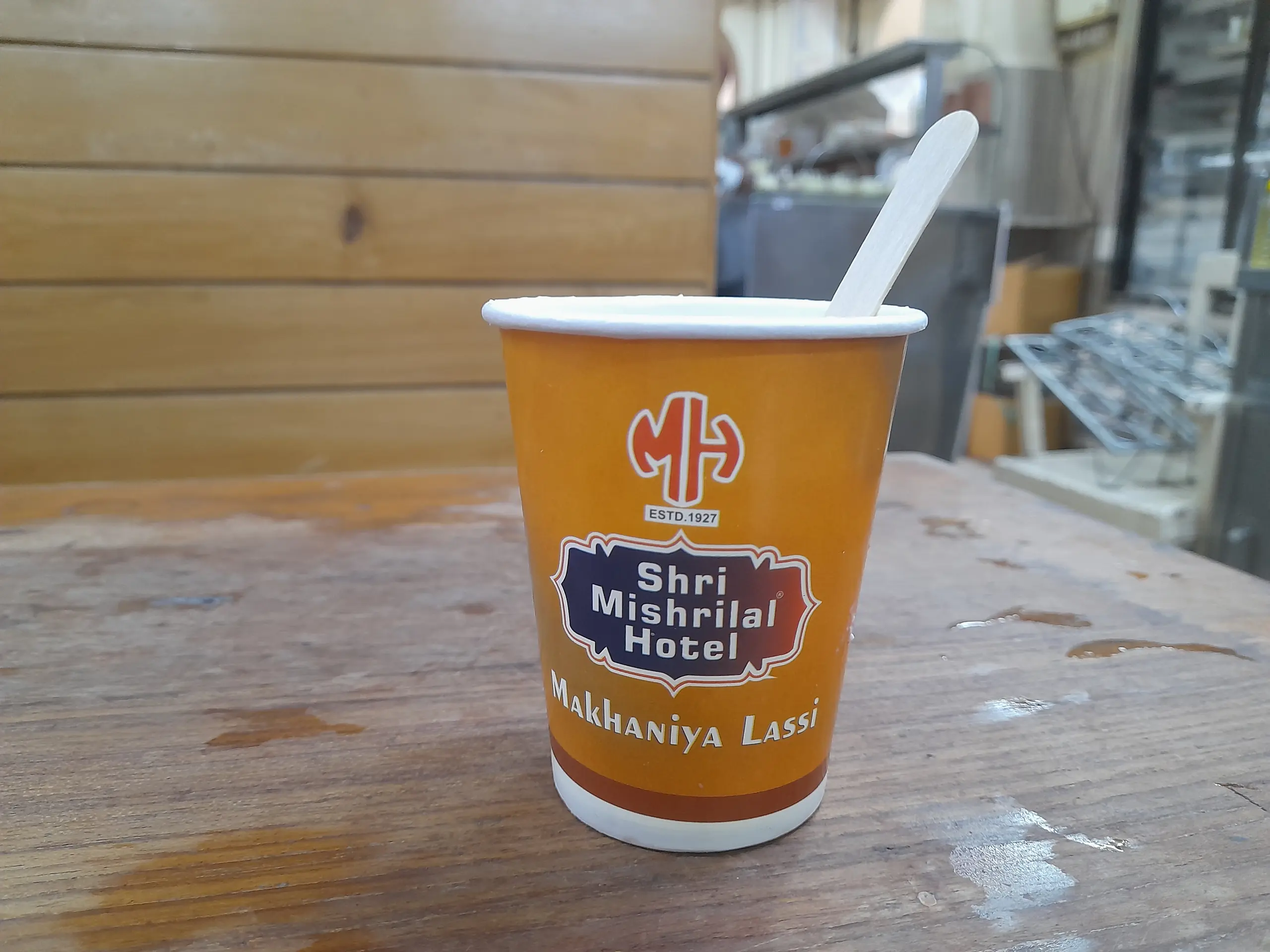
Makhaniya lassi gets most of the attention, but Jodhpur’s drink culture extends further. Chaas (spiced buttermilk) is a common cooling accompaniment to spicy meals, particularly in summer, and masala chai served from roadside stalls remains the default social drink throughout the day, brewed strong with milk and a warming spice mix that often includes ginger and cardamom. Rooftop bars near the old city and at heritage hotels have also grown in number in recent years, several building cocktail menus around local ingredients like Mathania chilli or desert herbs — a newer addition to the food scene, aimed squarely at visitors, but a genuine reflection of how the city’s dining scene has diversified beyond purely traditional options.
FAQ
What food is Jodhpur famous for?
Mirchi bada, kachori, mawa kachori, and laal maas are among the city’s signature dishes.
Is Jodhpur’s food mostly vegetarian?
Yes, Rajasthani cuisine leans heavily vegetarian, though non-vegetarian dishes like laal maas are also popular.
Where is the best place to try local food?
Old-city street stalls and established local restaurants both offer authentic Jodhpur flavors.
Is street food in Jodhpur safe for tourists?
Choosing busy, high-turnover stalls generally ensures freshness and a safer street food experience.
What sweets should I try in Jodhpur?
Mawa kachori and other local mithai varieties are worth trying at established sweet shops.