Jodhpur Night Photography: Best Locations & Tips
Jodhpur after dark offers photographers a distinctly different set of subjects from daytime shooting — the dramatically illuminated silhouette of Mehrangarh Fort, the warm glow of market stalls, and the old city’s blue-washed lanes taking on a completely different character under streetlight. This is the technical, dedicated guide to Jodhpur night photography specifically: equipment, camera settings, and the locations that reward the extra effort of shooting after the sun goes down.
Illuminated Mehrangarh Fort
The fort’s nightly illumination is the single most striking subject in Jodhpur night photography, visible from numerous vantage points across the old city. Several rooftop cafes and restaurants open directly onto views of the fort, and most are happy to let a photographer linger over a slow dinner while composing shots as the light changes — the fort is lit warmly after sunset and stays illuminated for a few hours, creating a dramatic backdrop against the darkening sky that works particularly well during blue hour, the twenty or so minutes after sunset when the sky still holds deep blue tones alongside the artificial lighting.
Essential Night Photography Equipment
A tripod is the single most useful piece of equipment for Jodhpur night photography, since most of the striking shots of the illuminated fort or the blue-washed lanes need shutter speeds too slow to hold steady by hand. A wide-angle lens works well for fort and cityscape shots from rooftop vantage points, while a mid-range zoom is handy for isolating details like painted doorways or lantern-lit stalls. A remote shutter release, or even the camera’s self-timer, helps avoid the small blur that comes from pressing the shutter button directly during a long exposure.
Camera Settings for Night Photography
Manual mode, with a longer shutter speed, a moderate aperture, and a carefully balanced ISO, generally produces the best results — the exact numbers depend on the specific lighting and the camera in hand, but that combination is the right starting point for almost any scene here.
What ISO Works Best for the Illuminated Fort?
A moderate ISO paired with a stable tripod and a longer exposure generally produces cleaner results than pushing ISO very high, since the fort’s illumination provides reasonably bright, consistent light to work with compared to fully dark astrophotography conditions.
Long Exposure Techniques
Longer exposures can capture motion within moving elements — market crowds, passing vehicles — creating a sense of energy in night street photography that a frozen shot misses entirely. It requires a stable tripod and careful attention to overall exposure balance, since it’s easy to blow out the brighter, lit sections of a frame while the exposure is stretching to capture the darker ones.
Photographing the Blue Lanes and Old City Streets at Night
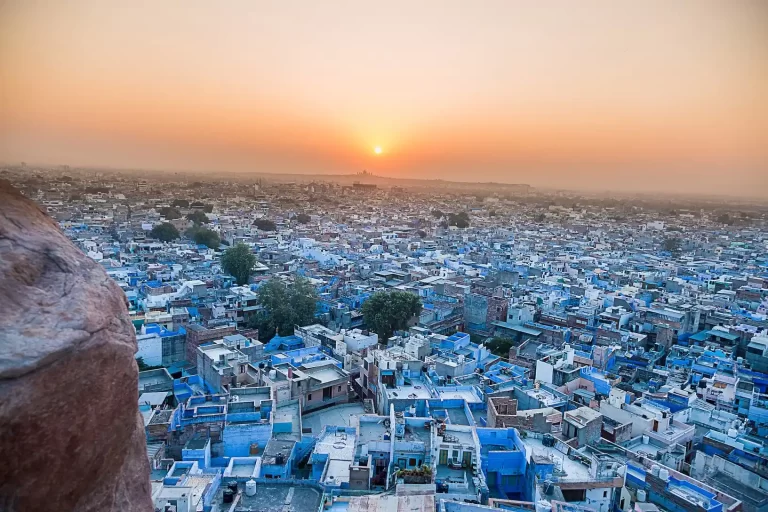
The old city’s blue-washed lanes look different after dark than they do in daytime photographs, taking on deeper indigo tones under streetlight, with the occasional lit doorway creating pools of warm light against the cool blue. Early evening — just as shops turn on their lights but before the lanes are fully dark — tends to produce the most balanced exposures without needing to push ISO too high. The warm lighting of the markets themselves adds a distinctly atmospheric layer too, capturing the evening energy of local life alongside the architectural character of the illuminated buildings and narrow passages. For handheld shots in these lit market areas, a wider aperture and a moderately high ISO usually gets acceptable results without excessive noise.
Handling Mixed Lighting Conditions
Night photography in Jodhpur often means working with mixed light sources at once — warm tungsten market lights, cooler LED illumination on the monuments, and ambient moonlight — which calls for a careful white balance decision, both while shooting and again during editing, to land on a coherent, accurately rendered final image rather than a frame with clashing color casts.
Photographing Jaswant Thada and Toorji Ka Jhalra
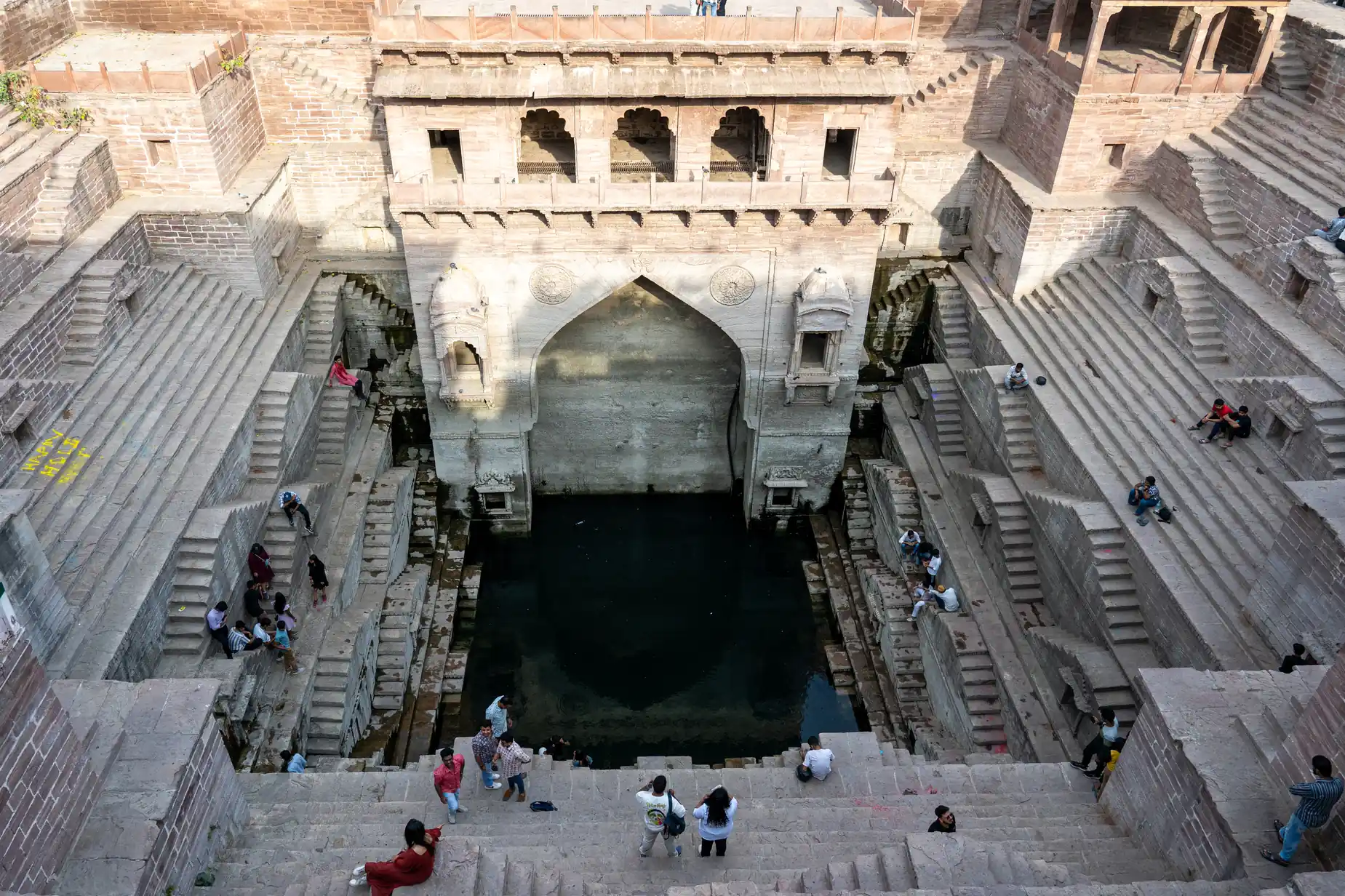
Jaswant Thada, its white marble catching whatever light remains at dusk, offers a quieter and far less crowded photography spot than the fort, especially useful for portrait-style shots against the memorial’s architecture. Toorji Ka Jhalra, lit from within after dark, produces striking geometric patterns and reflections that photograph well with a wide lens pointed down into the stepped tank from ground level.
Best Time of Evening for Photography
Arriving thirty to forty-five minutes before full darkness gives enough time to scout a location, set up a tripod if needed, and capture the transitional blue hour light before switching to fully dark conditions. Many photographers find the window right as streetlights and building illumination switch on, while some daylight still lingers in the sky, produces the most balanced and usable images of the evening.
How Long Should I Plan for a Session?
Two to three hours, spanning from blue hour through full darkness, generally allows enough time to properly work a range of lighting conditions and experiment with different compositions and settings without feeling rushed through any one of them.
Astrophotography Beyond the City
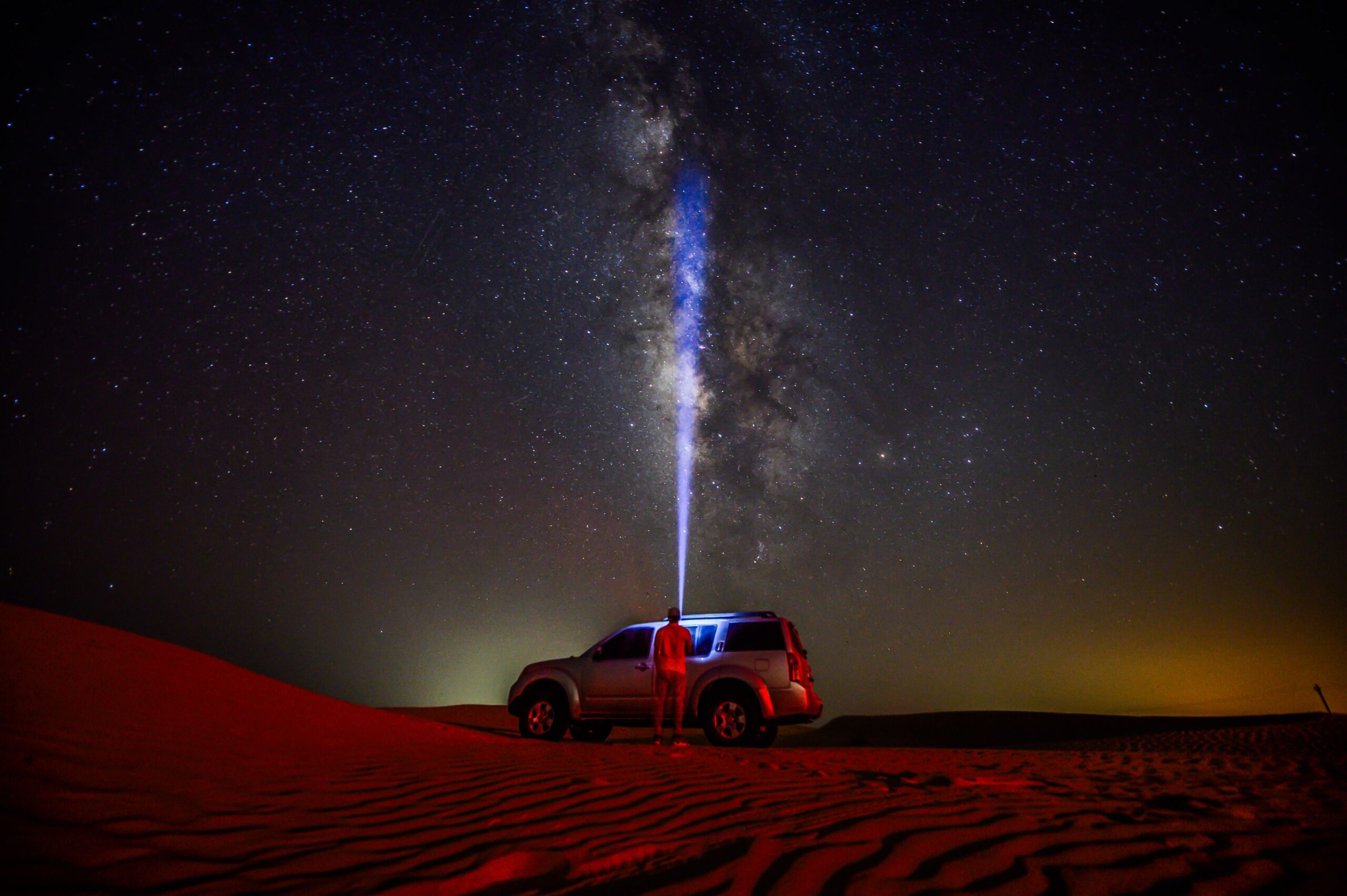
For anyone specifically after stars or the Milky Way, travelling out to the desert near Osian, well beyond Jodhpur’s light pollution, is a different exercise altogether — very long exposures, high ISO, and a different set of techniques suited to extremely low ambient light. Our stargazing guide covers the fuller picture of where and when to go for that specifically.
Night Photography Tours and Guides
Some local photography guides offer specifically evening or night-focused tours, giving access to good vantage points and technical guidance for anyone less experienced with low-light shooting — a worthwhile investment for travellers who are prioritising night photography specifically during their visit, rather than treating it as an afterthought.
Do I Need a Professional Camera, or Will a Smartphone Work?
Modern smartphones with dedicated night modes can produce surprisingly good results for casual night photography, though a dedicated camera with manual controls and a tripod offers significantly more flexibility and quality for anyone taking night or astrophotography seriously.
Editing Night Photos: Smartphone or Desktop?
Modern smartphone editing apps handle basic night-photo adjustments reasonably well, though desktop software offers more precise control for photographers wanting to fine-tune noise reduction and color balance on the more challenging low-light images.
Practical Notes for a Night Photography Session
If only one evening is available for Jodhpur night photography, a rooftop restaurant or cafe with a clear, unobstructed view of the illuminated fort is the single most rewarding option — comfort combined with Jodhpur’s most iconic illuminated subject. Flash is generally unhelpful for distant subjects like the fort, and can be disruptive at intimate rooftop dining venues besides, so relying on longer exposures and available light instead is both the better technical choice and the more considerate one. Many photographers combine a session with dinner at one of these same rooftop restaurants, getting productive shooting time before, during, and after the meal rather than treating photography as a separate, time-consuming errand. The main tourist areas and rooftop venues stay generally safe for evening photography, though the usual precautions — securing equipment, staying aware of surroundings, more caution in quieter or less populated areas — are worth keeping in mind, and our guide to Jodhpur at night covers the broader safety picture in more detail.
FAQ
What are the best night photography locations in Jodhpur?
The illuminated fort viewed from old-city rooftops offers the most striking night shots.
Do I need a tripod for night photography?
Yes, a tripod is essential for the long exposures needed in low-light conditions.
What camera settings work best for night shots?
A low ISO, small aperture, and longer shutter speed generally produce the cleanest results.
Are rooftop cafes accessible for night photography?
Many welcome photographers, sometimes with a minimum order requirement.
Is night photography safe in Jodhpur’s old city?
Main tourist routes remain safe, though staying aware of surroundings is always wise after dark.