Jodhpur Shopping Guide: Markets, Handicrafts & Souvenirs
Jodhpur has been a trading city since long before it was a tourist destination, and its markets and workshops still reflect that heritage — this is a place where crafts are actually made locally, not simply imported and rebranded for visitors. From the chaos of Sardar Market to quiet artisan workshops on the old city’s edges, here’s a practical guide to shopping and crafts in Jodhpur. For the fuller single-article walkthrough, see our complete Jodhpur shopping guide.
Best Markets in Jodhpur
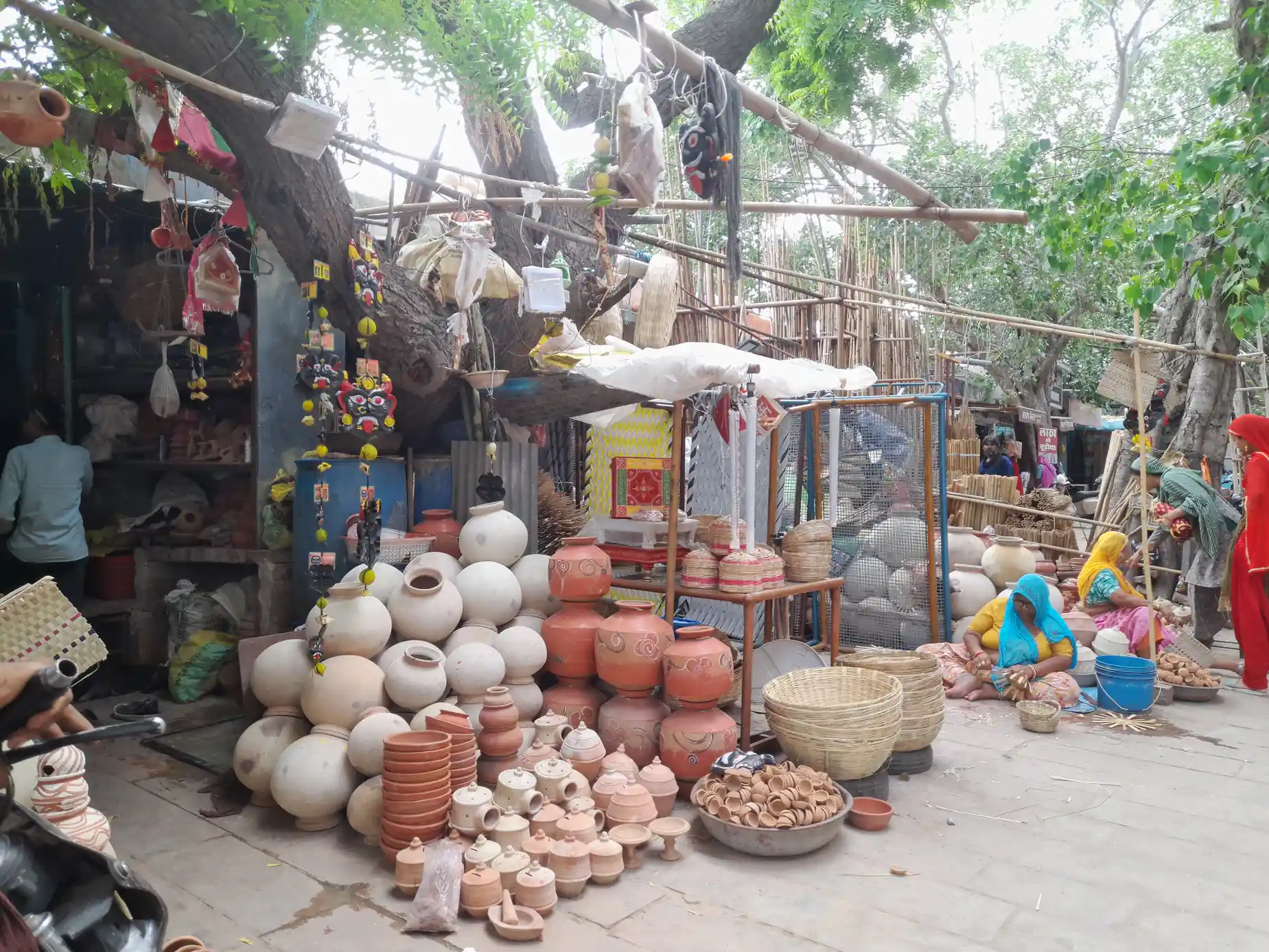
Sardar Market, anchored by the Clock Tower, is the largest and most central market in the old city — a dense grid of lanes selling everything from spices and textiles to silver jewellery and leather goods, with specific lanes historically dedicated to particular trades (a spice lane, a textile lane, a vegetable and flower lane), a layout pattern common to old Indian bazaars. Beyond Sardar Market, the lanes immediately surrounding Toorji Ka Jhalra have developed into a more curated, design-oriented shopping district over the past decade, with boutique stores selling contemporary takes on traditional textiles and crafts at fixed, generally higher prices than the bargaining-based stalls of Sardar Market. Mochi Bazaar, historically the leatherworkers’ lane, remains a good source for traditional mojari shoes made by hand rather than mass-produced. Our full guide to Jodhpur’s best markets covers each in more depth.
Clock Tower Market: A Closer Look
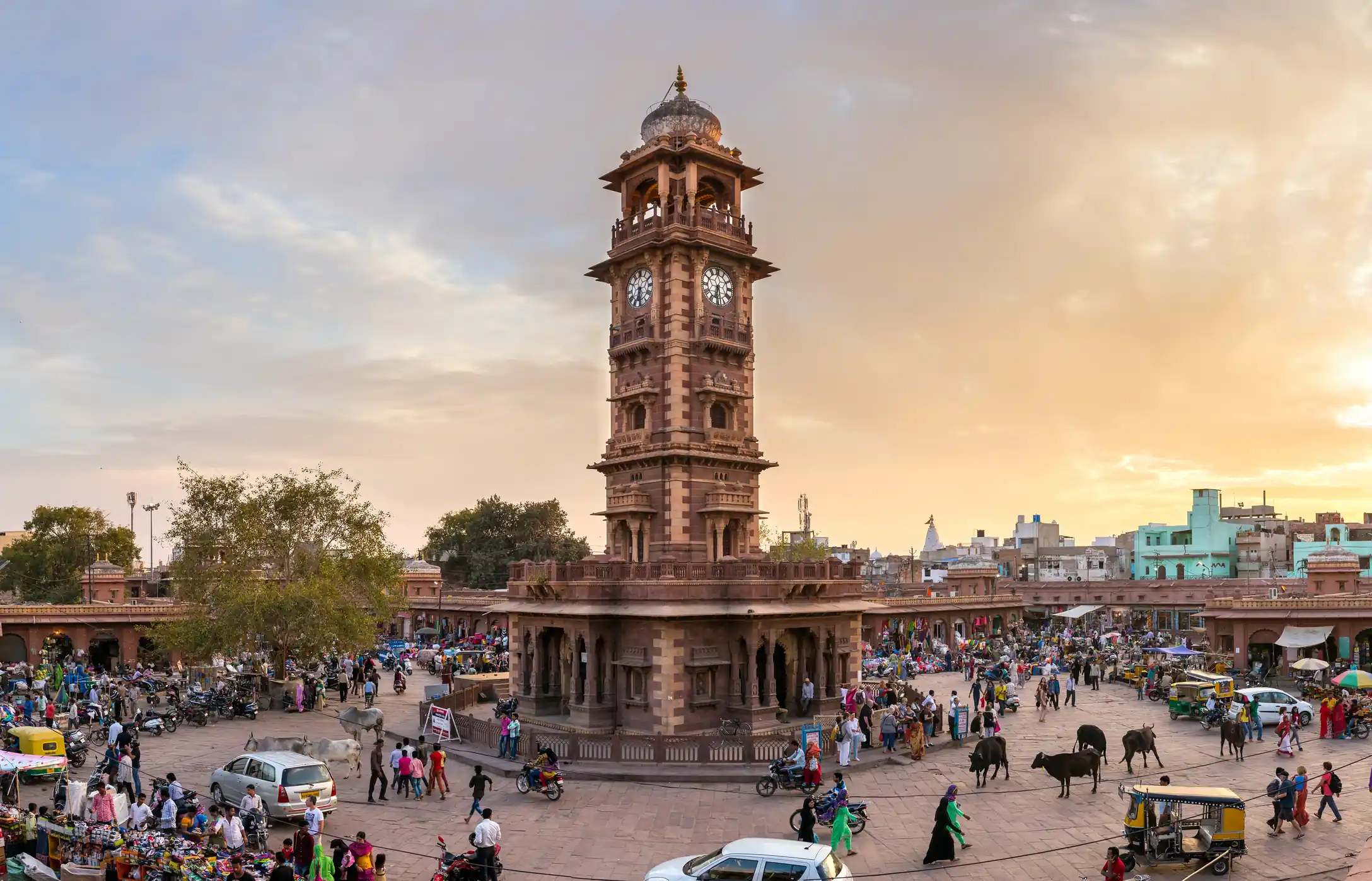
The market immediately surrounding the Ghanta Ghar (Clock Tower) is Jodhpur’s most concentrated shopping experience, and also its most overwhelming for first-time visitors — narrow lanes, constant motorbike and cart traffic, and vendors calling out from every direction. It rewards a slower approach: come without a fixed shopping list, walk the perimeter first to get oriented, and expect to circle back to specific stalls once you’ve compared a few options. Spice vendors here sell not just standard Indian spice blends but Jodhpur specialities like Mathania chilli, worth buying dried or ground to take home if you’re interested in cooking Rajasthani food afterward. See our dedicated Clock Tower Market guide for a closer look.
Best Handicrafts and Souvenirs to Buy
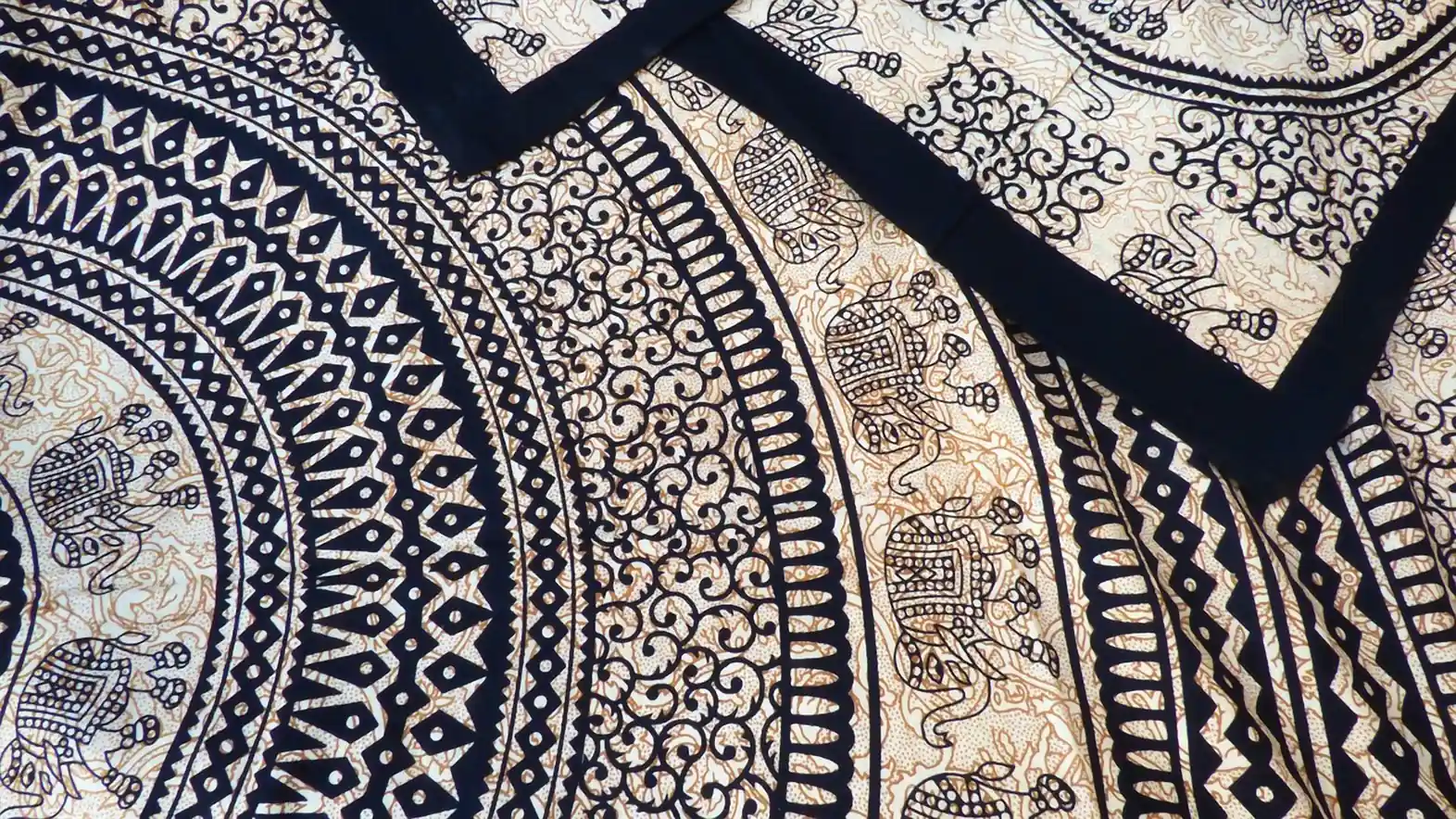
Jodhpur is particularly strong on a handful of specific craft categories rather than generic souvenirs. Hand-block-printed textiles, miniature paintings in the traditional Rajput court style, hand-carved wooden items (including small furniture pieces and decorative boxes), leather mojari shoes, and blue pottery (though more strongly associated with nearby Jaipur, also sold here) are among the most distinctive options. Puppets (kathputli) — a traditional Rajasthani art form performed with wooden marionettes — make for a distinctly regional souvenir rarely found with the same quality outside Rajasthan. As with most craft shopping in India, prices and quality vary enormously between tourist-oriented shops and workshops that primarily supply local or wholesale buyers, and it’s worth comparing a few options before committing to a larger purchase. Our full guide to Jodhpur’s best handicrafts and souvenirs covers more of these in depth.
Jodhpur Textiles: Bandhani and Block Prints
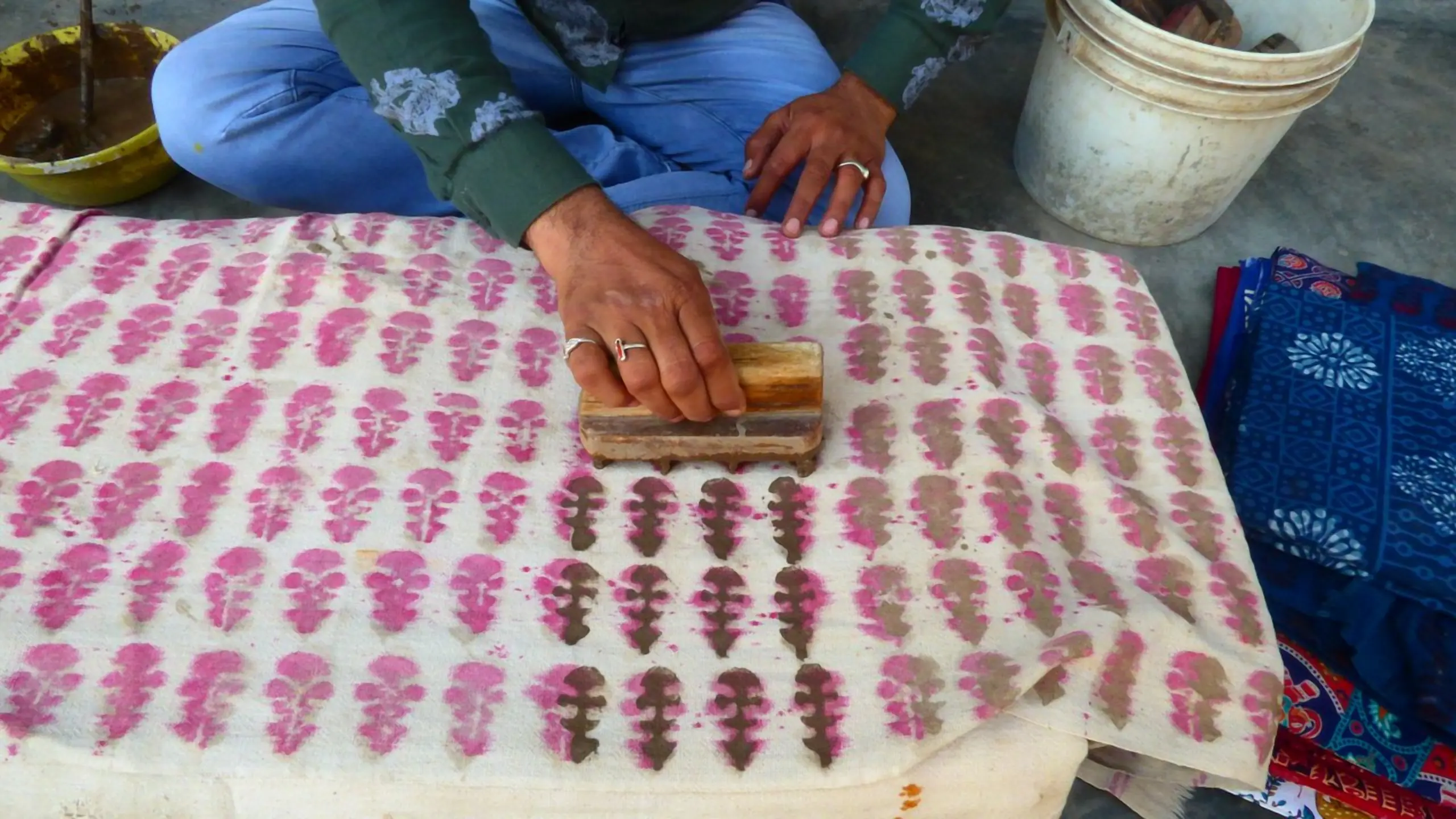
Bandhani, a resist tie-dye technique producing distinctive small dotted patterns, is one of Rajasthan’s signature textile traditions, and while more strongly associated with Jaipur and Gujarat, Jodhpur has its own active bandhani trade, particularly in sarees and dupattas. Hand block printing — carved wooden blocks used to stamp repeating patterns onto cotton or silk — is practised extensively across the wider Marwar region, with specific villages near Jodhpur known for particular colour palettes and motifs passed down through generations of printer families. Authentic hand-blocked textiles are more expensive and slightly irregular compared to machine-printed imitations, and that irregularity is actually a mark of authenticity worth looking for rather than a flaw. See our dedicated Jodhpur textiles guide for more on bandhani and block prints.
Furniture and Larger Handicrafts
Jodhpur has become a distinctly significant global export hub for antique-style and reproduction furniture, particularly restored and repurposed wooden pieces — a substantial part of what’s sold in Western “colonial” or “industrial” furniture stores actually originates from workshops in and around Jodhpur. For visitors, this means access to furniture and larger decorative items at a fraction of the price they’d command after export markup, though shipping large items home requires planning and typically works through a shop’s own export and freight arrangements rather than carrying items in luggage. Our full furniture and handicrafts guide has more on materials and shipping logistics.
Best Antique and Vintage Shops
A cluster of antique and vintage shops, several connected to the same furniture-export trade, operate around the edges of the old city and along roads leading out toward the newer parts of Jodhpur. Genuine antiques (versus artificially aged reproductions, which are common) are worth verifying with a knowledgeable dealer or guide if authenticity matters to your purchase, and India has specific export restrictions on items over a certain age classified as antiquities — reputable exporters will handle the necessary documentation, but it’s worth asking directly before purchasing anything represented as a genuine historic antique. See our dedicated antique and vintage shops guide for the fuller export-law picture.
Craft Workshops: Meeting Local Artisans
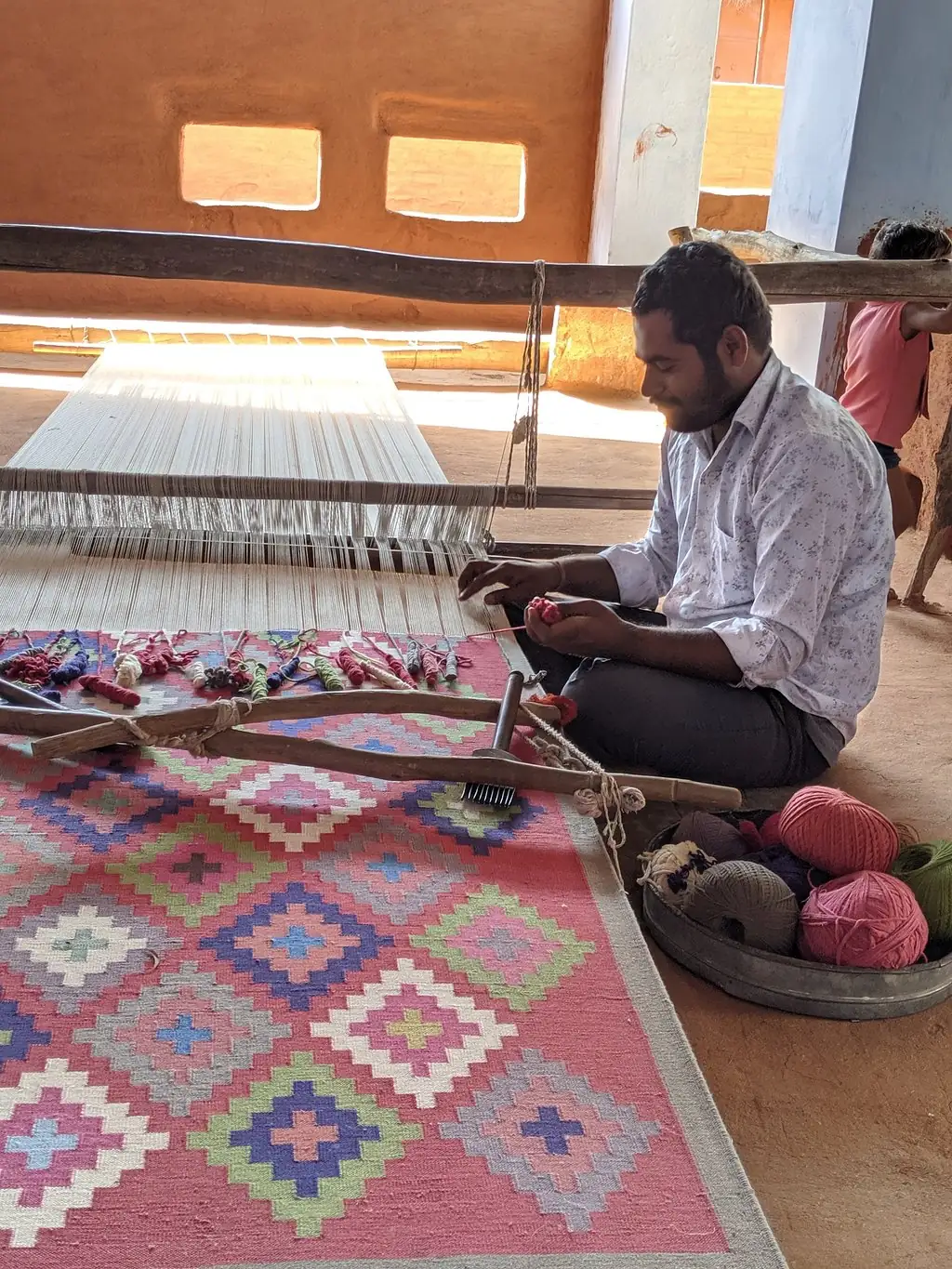
Beyond simply buying finished goods, a growing number of workshops around Jodhpur welcome visitors to watch — and sometimes try — traditional techniques directly: block printing demonstrations, pottery, miniature painting, and textile dyeing among them. These visits tend to be arranged either through a hotel or a specialist local guide rather than by walking in unannounced, and they’re one of the more genuine ways to understand how much skill and time goes into items that can look deceptively simple once finished. Buying directly from an artisan or workshop, rather than a middleman retail shop, is also generally the most direct way to ensure more of what you pay reaches the actual maker. Our full craft workshops guide covers specific workshops open to visitors.
Bargaining Etiquette
Bargaining is expected at Sardar Market and most craft stalls, though not at fixed-price boutiques (usually indicated clearly, often in the more curated Toorji Ka Jhalra shopping district) or government emporiums. A reasonable approach is to ask the price, offer somewhere around half, and negotiate toward a middle ground — done with good humour rather than aggression, which is how most local bargaining actually proceeds. It’s considered poor form to negotiate a price down and then walk away without buying; only start bargaining seriously once you actually intend to purchase if a fair price is reached.
Shipping Purchases Home
For larger items — furniture especially, but also bulk textile or handicraft purchases — most established shops in Jodhpur’s export-oriented trade offer international shipping as a standard service, generally more reliable and cost-effective than attempting to carry oversized items as luggage. It’s worth confirming shipping costs and estimated delivery timelines before finalising a purchase, since these can add meaningfully to the total cost, and asking for a shop’s export track record if you’re making a significant purchase from an unfamiliar seller.
Silver Jewellery and Lac Bangles
Silverwork is one of Jodhpur’s stronger traditional crafts, with tribal and folk-influenced jewellery designs — heavy anklets, cuffs, and statement necklaces — sold both by weight and by design complexity, so it’s worth asking how pricing is calculated before comparing across shops. Lac bangles, made from a resin-based material coloured and shaped into intricately decorated bangles, are a Rajasthan speciality with a strong Jodhpur presence, sold in dedicated bangle shops that stock dozens of colours and styles, often made to fit while you wait. Both crafts have their own specific quality markers — for silver, purity is usually indicated (look for hallmarking); for lac bangles, quality shows mainly in the fineness of the decorative work rather than the base material itself.
Leather Goods and Mojari Shoes
Jodhpur’s Mochi Bazaar has specialised in leatherwork for generations, and mojari — traditional pointed-toe, flat leather shoes, often embroidered or embellished — remain one of the city’s signature products. Hand-stitched pairs from established workshops cost meaningfully more than machine-made versions sold in tourist-focused shops, but tend to be more durable and, for many buyers, a more satisfying souvenir precisely because the difference in craftsmanship is visible. Sizing can run differently from Western shoe sizes, so trying pairs on in person rather than ordering online or through a middleman is generally advisable.
Miniature Paintings
The Rajput miniature painting tradition — detailed court, hunting, and mythological scenes originally painted for royal manuscripts and palace walls — is still practised by artist families in and around Jodhpur, using techniques including natural pigments and, in higher-end pieces, genuine gold leaf detailing. Quality and price vary enormously, from quick tourist-market reproductions to museum-quality pieces taking weeks to complete; asking to see an artist actually working, where possible, is one of the more reliable ways to judge whether you’re buying from a genuine practising artist rather than a mass-production workshop.
Government Emporiums and Fixed-Price Options
For visitors who prefer to avoid bargaining entirely, Rajasthan’s state-run handicraft emporiums (present in Jodhpur as in most major Rajasthan cities) offer a curated, fixed-price alternative to market shopping, generally at a modest premium over what a confident bargainer might achieve at Sardar Market, but with more consistent quality control and, often, a wider single-location selection across multiple craft categories. These are a reasonable starting point for understanding fair price ranges before heading into the markets to negotiate directly.
What to Avoid
- Commission-driven “guide” recommendations: Some drivers and informal guides steer visitors toward specific shops in exchange for a commission baked into inflated prices — a recommendation from your actual hotel or a guide you’ve vetted independently is more trustworthy than one from a driver who approached you on the street.
- Assuming “antique” claims at face value: Actually old items are less common than sellers sometimes suggest; treat antiquity claims as a starting point for questions rather than fact.
- Buying the first version you see: Sardar Market in particular has enough stalls selling similar goods that a bit of comparison shopping, even over twenty minutes, often reveals a meaningfully better price or quality for the same item.
Are prices in Jodhpur’s markets generally lower than in Jaipur or Udaipur?
Broadly comparable, though Jodhpur is somewhat less saturated with large-scale tourist shopping infrastructure than Jaipur, which can mean slightly more room for negotiation on certain items, particularly furniture and leather goods where Jodhpur has a stronger direct manufacturing base.
Can I pay by card in Sardar Market, or is it cash-only?
Many established stalls now accept digital payments via UPI or card readers, but smaller vendors, especially for lower-value items, still often prefer or require cash — carrying some smaller-denomination notes is a sensible backup.
A Half-Day Shopping Route Through the Old City
For visitors with limited time, a sensible route starts at the Clock Tower end of Sardar Market for spices and general browsing, moves through Mochi Bazaar for leather goods, and finishes in the Toorji Ka Jhalra district for textiles, design-oriented boutiques, and a coffee break — roughly covering the full range from chaotic bazaar to curated fixed-price shopping in a single afternoon. Starting in the morning before the markets get fully crowded and the heat builds makes the Sardar Market portion considerably more comfortable.
Supporting Artisan Communities Directly
A meaningful share of what’s sold in Jodhpur’s markets passes through several layers of middlemen before reaching a shop shelf, with individual artisans often receiving a small fraction of the final retail price. Where possible, buying directly from workshop visits, artisan cooperatives, or shops that are explicit about sourcing directly from named makers tends to put more of what you spend into the hands of the people actually producing the craft — worth factoring in if supporting the tradition itself, not just acquiring an object, is part of why you’re shopping in the first place.
What’s the best time of day to shop in Sardar Market?
Mid-morning to early afternoon offers the best balance of open shops and manageable crowds; late afternoon into evening is when the market is busiest and most atmospheric, but also most crowded and harder to browse unhurried.
Do shops in Jodhpur typically offer tax-free shopping or refunds for international visitors?
India does not have a broad tourist VAT-refund scheme comparable to some countries, so factor the full quoted price into your budget rather than expecting a refund process at departure. A small number of larger, export-oriented shops may offer duty assistance specifically for shipped items — worth asking directly if relevant to a significant purchase.
Is it rude to walk away from a stall without buying after negotiating?
Walking away before serious negotiation has started is completely normal and expected. Once you’ve gone back and forth on price a few times, however, walking away is generally understood as a genuine signal that the price isn’t acceptable to you — most vendors won’t take offence, though some may call out a final offer as you leave, which you’re free to accept or decline.
Are there fixed opening hours for Sardar Market, or does it vary by shop?
It varies by shop, but as a general pattern, most stalls open by mid-morning and stay active into the evening, with the market noticeably quieter on Sunday mornings when some vendors take a partial or full day off. Evenings tend to be the busiest and most atmospheric time to visit, once the day’s heat has eased.
A Final Word on Jodhpur Shopping
Jodhpur’s markets reward travelers who move beyond a single souvenir purchase toward actually understanding the craft traditions behind textiles, leather jootis, and antique furniture that define the city’s trading reputation across Rajasthan. Pairing a Sardar Market visit with a quieter stop at a smaller Old City workshop, where possible, gives a fuller sense of both the bustling retail side and the quieter production side of Jodhpur’s shopping economy.
FAQ
What is Jodhpur best known for shopping?
Textiles, handicrafts, antique furniture, and traditional jewellery draw most shoppers to the city.
Where is the main shopping area in Jodhpur?
Sardar Market and the Clock Tower area form the city’s primary shopping hub.
Is bargaining expected in Jodhpur markets?
Yes, gentle bargaining is standard practice in most markets and smaller shops.
What souvenirs are worth bringing home from Jodhpur?
Bandhani textiles, block-printed fabrics, and small handicraft pieces make popular, packable souvenirs.
Are Jodhpur’s markets open every day?
Most markets operate daily, though timings and crowd levels vary by day and season.