Jodhpur History: From Marwar Kingdom to the Blue City
Jodhpur history stretches back to 1459, when Rao Jodha, a Rathore clan chief, founded the city as the new capital of the Marwar kingdom, relocating from the older capital at nearby Mandore in search of a more defensible location. The rocky outcrop he chose became the foundation for Mehrangarh Fort, and the city that grew up around and below it developed over the following centuries into one of Rajasthan’s most significant princely states, its fortunes closely tied to trade routes connecting India’s interior with ports on the Arabian Sea.
The Rathore Dynasty’s Origins
The Rathore clan traces its origins to Kannauj in present-day Uttar Pradesh, migrating westward into the Marwar region following political upheaval and eventually establishing Mandore as their capital before Rao Jodha founded Jodhpur in 1459 as a more defensible seat of power on a rocky hilltop. Legend holds that the fort’s construction displaced a hermit named Cheeria Nathji, whose curse is still popularly cited as an explanation for various difficulties the fort’s builders reportedly encountered. Once established as the new capital, Jodhpur quickly grew from a defensive fortress into the political and economic center of the Marwar kingdom, one of Rajasthan’s largest and most powerful princely states, controlling significant trade routes across the Thar Desert that brought considerable wealth to the ruling Rathore family.
Jodhpur Under the Mughals
Like many Rajput kingdoms, Marwar navigated a complex relationship with the Mughal Empire from the sixteenth century onward, alternating between conflict and alliance depending on the specific ruler and period. Several Marwar rulers served as Mughal generals and administrators while retaining considerable autonomy over their own territory, providing military service and administrative cooperation in exchange for continued control of their home territory. This pragmatic arrangement left a lasting architectural and cultural influence still visible in aspects of Mehrangarh Fort’s later additions.
British Paramountcy and the Colonial Period
Marwar State entered British paramountcy in the early nineteenth century, retaining internal self-governance while ceding control over external affairs and defence to the British administration. This era saw significant infrastructure development, including the railway that connected Jodhpur to wider trade networks, and ultimately culminated in the construction of Umaid Bhawan Palace in the early twentieth century, itself partly funded as a famine-relief employment project during a period of drought in the region.
Independence and Integration
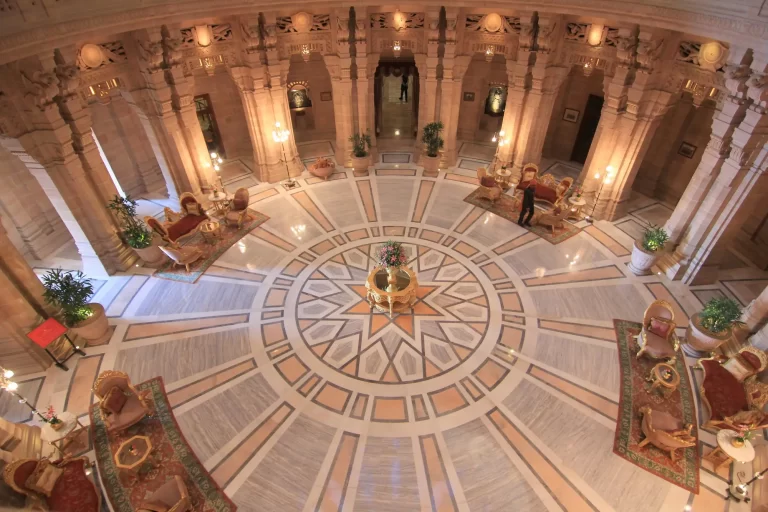
Following India’s independence in 1947, Jodhpur’s ruling family, like other princely states, faced the question of integrating Marwar into the newly formed Indian union. Maharaja Hanwant Singh, the last ruling Maharaja of Jodhpur, eventually signed the instrument of accession, though negotiations were reportedly more complex here than in some other states, given various political considerations at the time. This moment remains a well-documented chapter of Jodhpur history, and the Rathore royal family transitioned into a more ceremonial role afterward while retaining ownership of key properties including Umaid Bhawan Palace, portions of which continue to serve as the family’s private residence today.
The Rathore Dynasty’s Legacy
The Rathore clan, which founded and ruled Marwar continuously from 1459 until India’s independence, remains closely connected to Jodhpur’s identity today, with descendants continuing to reside at Umaid Bhawan Palace and playing an active role in heritage preservation, tourism development, and various charitable trusts connected to the family’s former royal properties.
Why Jodhpur Is Called the Blue City
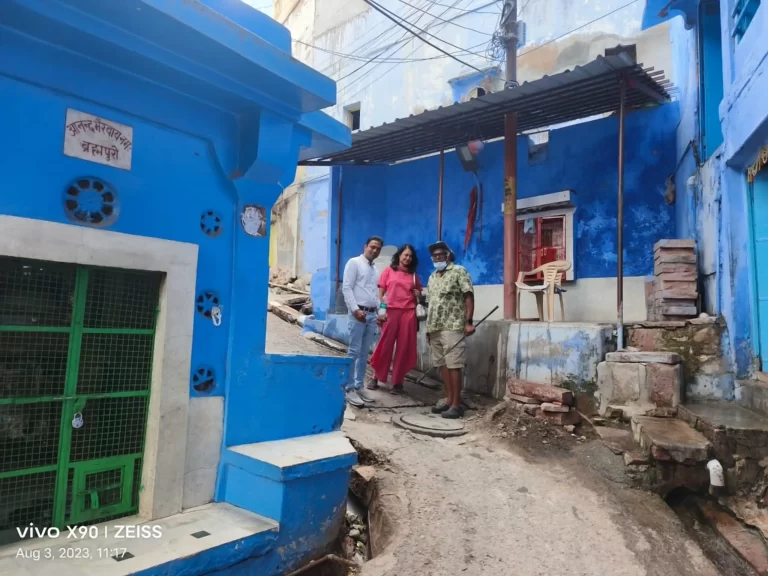
The distinctive blue-painted houses concentrated in the old city near Mehrangarh Fort give Jodhpur its popular nickname, with various theories offered for the tradition’s origins, including associations with the Brahmin caste, and practical heat-reflecting and insect-repellent qualities attributed to the copper sulfate traditionally mixed into the lime wash. Whatever the original reason, the color has become central to Jodhpur’s identity, extending well beyond its historic Brahmin quarters into much of the wider old city.
Marwar’s Broader Regional Significance
As the historical capital of the Marwar region, Jodhpur’s influence extended across a substantial territory covering much of western Rajasthan, and understanding this broader Marwar context helps explain the cultural and architectural connections visible in surrounding towns like Osian, Nagaur, and Pali, all of which fell historically within Marwar’s sphere of influence.
Jodhpur’s Trade and Economic History
Beyond its political and military history, Jodhpur developed significant economic importance as a trading hub connecting inland Rajasthan with ports on the Gujarat coast, with opium, textiles, and spices historically passing through the city’s markets. This trading wealth helped fund much of the city’s architectural development, including many of the merchant havelis still visible throughout the old city today, built by trading families who accumulated considerable wealth through this commercial activity.
Jodhpur’s Connection to the Bishnoi Community
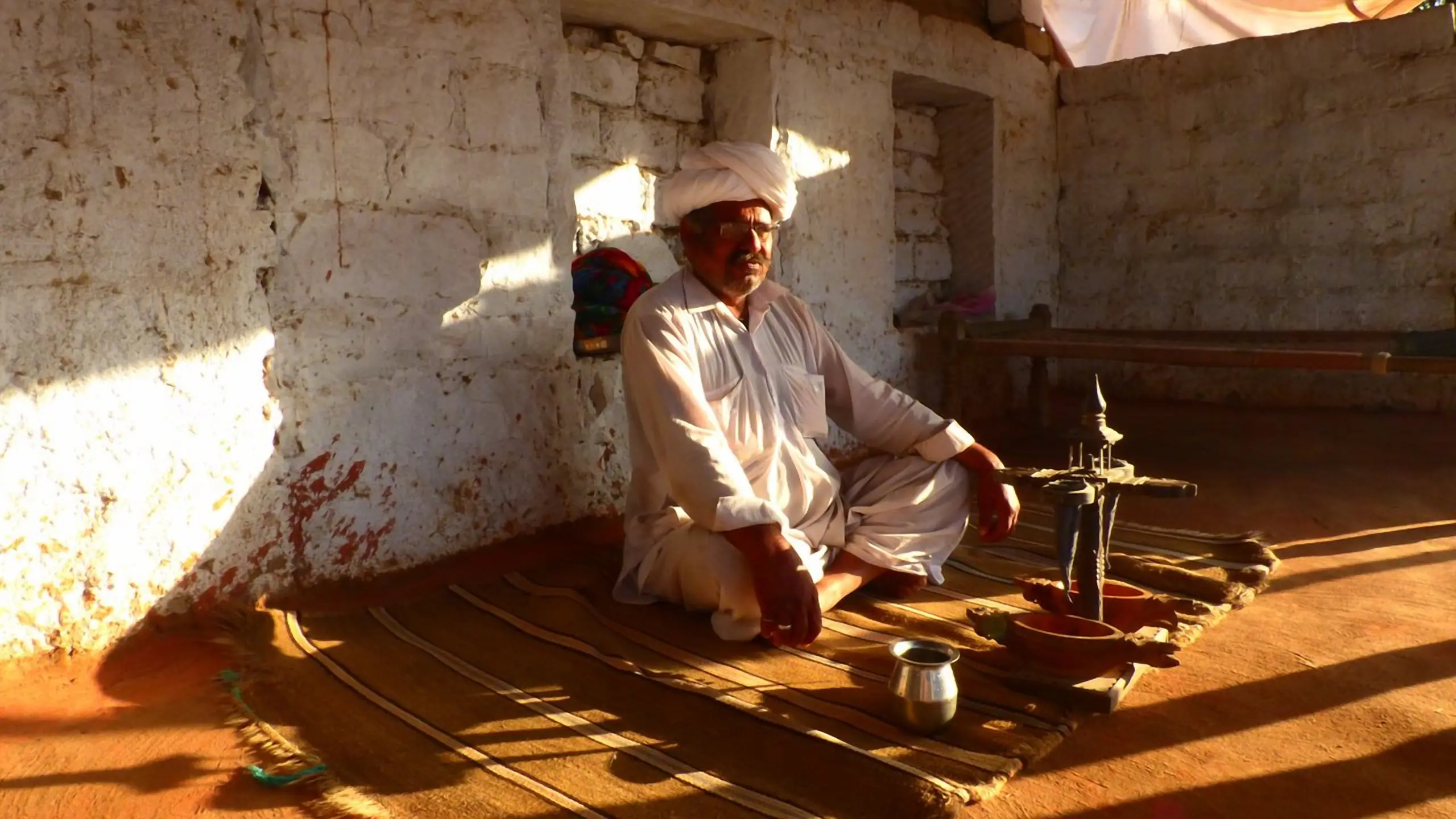
The Bishnoi community, followers of a distinct religious tradition emphasizing environmental conservation and non-violence toward animals, have lived in villages around Jodhpur for centuries and maintain a close historical relationship with the Rathore rulers, who reportedly relied on Bishnoi communities for various services while respecting their strict conservation practices, a relationship still reflected in the well-preserved wildlife found in Bishnoi areas today. Our dedicated guide to Bishnoi village visits near Jodhpur covers this community in more depth.
Jodhpur’s Role Within Modern Rajasthan Tourism
Today Jodhpur functions as one of Rajasthan’s most important tourism gateways, often paired with Jaisalmer and Udaipur on standard travel circuits. Its blend of accessible heritage sites, well-preserved old city, and reputation for hospitality has helped it grow steadily as an international destination over the past few decades, building on the historical foundations laid by centuries of Rathore rule.
Sources for Learning More About Jodhpur’s History
Mehrangarh Fort’s museum offers the most accessible and thorough introduction to Jodhpur’s history for casual visitors, supplemented by its well-regarded audio guide, while more academically inclined travelers may find additional depth in published histories of the Rathore dynasty and Marwar available through the fort’s own gift shop and research library. This layered Jodhpur history, from medieval hill fortress to Mughal-era princely state to modern heritage tourism destination, gives visitors a rich narrative they can trace directly through its surviving monuments. For travelers who want to go deeper into Jodhpur history than a single museum visit allows, the fort’s research library and published Rathore-dynasty histories are the best starting point.
FAQ
When was the Marwar Kingdom founded?
The Rathore dynasty established Marwar in the 13th century, later founding Jodhpur in 1459.
Who founded the city of Jodhpur?
Rao Jodha, a Rathore ruler, founded Jodhpur in 1459 as the new capital of Marwar.
What role did Jodhpur play in Rajasthan’s history?
It served as the capital of the powerful Marwar Kingdom, one of Rajasthan’s most influential Rajput states.
How is Jodhpur’s royal history visible today?
Through Mehrangarh Fort, Umaid Bhawan Palace, and the continued presence of the royal family.
Is Jodhpur’s history well documented for visitors?
Yes, museums and guided tours provide detailed context on the Marwar Kingdom’s history.